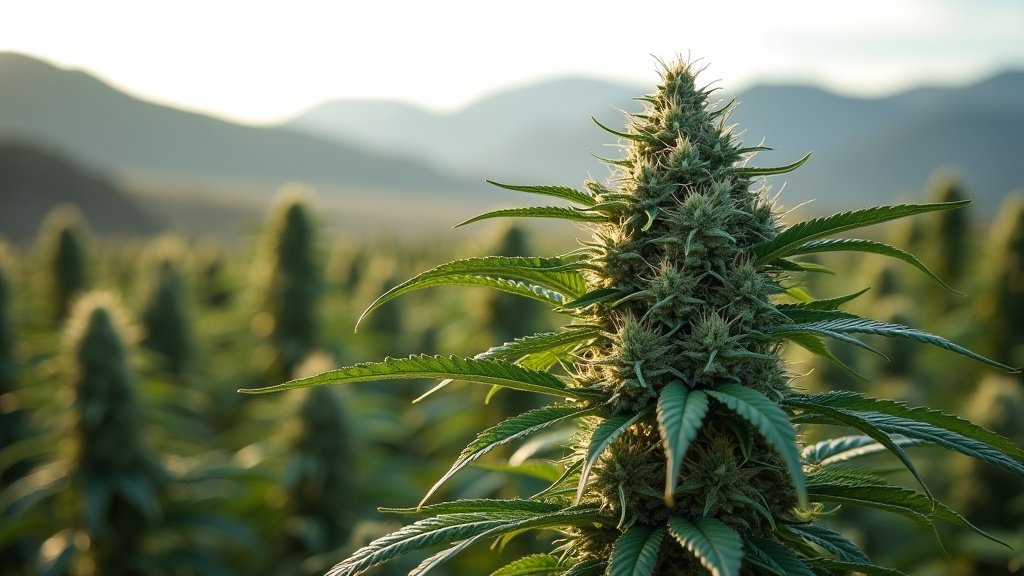
As the 2026 harvest season descends upon Northern California’s Emerald Triangle, cultivators are shifting focus from high-yield industrial biomass to hyper-specific, boutique terpene profiles. Leafly’s latest industry report confirms a massive market pivot, highlighting the dominance of four specific, high-demand genetics—Jade Skunk, King’s Poison, Rose Fuel, and Peach Headies—that are currently reshaping the market’s trajectory and consumer preference. This season represents a critical juncture for the region, as legacy farms increasingly rely on these distinct genetic profiles to differentiate themselves from corporate competitors.
Key Highlights
- Shift from Volume to Quality: The market is moving aggressively away from “cannabis commodity” toward distinct, complex terpene profiles that prioritize flavor and effect over raw THC percentages.
- The Emerald Triangle Remains the Epicenter: Despite global competition and regulatory pressures, Humboldt, Mendocino, and Trinity counties remain the primary source of global genetic innovation.
- The “Big Four” Genotypes: Jade Skunk, King’s Poison, Rose Fuel, and Peach Headies have emerged as the standard-bearers for premium shelf space in 2026.
- Economic Resilience: Premium retail pricing is increasingly tied to specific strain lineage and farm-direct heritage rather than generic potency metrics.
The New Emerald Standard: Genetics Over Gridlock
The Emerald Triangle has long functioned as the North Star for global cannabis genetics, but the 2026 harvest marks a departure from previous years. For the better part of the last decade, the race was focused on potency—the highest possible THC percentage often dictated market value. However, data from the current harvest cycle indicates that consumers, particularly those in the connoisseur demographic, are pivoting toward complex terpene profiles. This “Flavor First” movement is fundamentally changing what cultivators are choosing to plant in the rich soils of Humboldt and Mendocino.
The Anatomy of the 2026 Trend
The industry is seeing a stabilization of supply, which has allowed growers to move away from the high-yield, “fast-to-flower” varieties that defined the legalization boom. Instead, farmers are returning to longer-flowering, more temperamental heirloom and cross-bred genetics. The four standouts—Jade Skunk, King’s Poison, Rose Fuel, and Peach Headies—represent this shift perfectly. Each offers a unique sensory experience that cannot be replicated in a lab-controlled, mass-production facility. This provides the Emerald Triangle a defensive moat: heritage-based quality that is increasingly recognized by discerning buyers.
Breaking Down the “Big Four”
To understand the 2026 market, one must understand the profiles driving current sales.
Jade Skunk: This strain is the quintessential “old school” revival. Characterized by a sulfurous, pungent nose that many veteran smokers associate with the early 2000s, it has become the gold standard for extractors. The high resin production makes it a favorite for hash makers, driving demand in both the flower and concentrate markets.
King’s Poison: A formidable, heavily sedative variety that is capturing the “nighttime” consumer segment. It balances a deep, earthy spice profile with a terpene structure that anecdotal reports suggest provides significant physical relief. It is arguably the most resilient strain of the four, making it popular among outdoor farmers dealing with late-season humidity.
Rose Fuel: Perhaps the most avant-garde of the bunch, Rose Fuel offers a complex, floral-meets-gas profile. It appeals directly to the high-end boutique market where flavor profiles are becoming as nuanced as fine wines. It is currently commanding the highest wholesale price-per-pound among the four strains, primarily due to its striking bag appeal and unique aromatic profile.
Peach Headies: This is the crowd-pleaser. Featuring a sweet, tropical fruit nose with a clean, uplifting finish, Peach Headies is capturing the casual, social-smoker demographic. Its consistent growth patterns and relatively high yield make it a profitable backbone for farms that need to balance their premium offerings.
Economic Impacts: The Value of Heritage
The economics of the 2026 harvest are telling. While the wholesale price of generic, mid-tier flower remains compressed due to state-wide oversupply issues, the price for these specific genetics has remained stable, and in some cases, increased. This creates a two-tiered economy: a race-to-the-bottom for commodity flower, and a premium tier for those growing recognizable, high-demand genetics like the “Big Four.” For small-to-mid-sized farms, the strategy is clear: focus on brand recognition through genetics. By partnering with processors who specialize in these specific terpene profiles, farmers are insulating themselves from the volatility of the general market.
Future Outlook: Can the Triangle Maintain Dominance?
As we look beyond 2026, the question for the Emerald Triangle is sustainability. Climate change continues to force farmers to adapt, with water management and heat-tolerant genetics becoming non-negotiable. However, the intellectual property of these genetics—the breeding work done by local experts—remains the region’s greatest asset. As long as the Emerald Triangle can continue to produce “the next big thing” in terpene profiles, the global market will continue to look to Northern California for direction. The 2026 harvest proves that quality is not just a marketing term; it is the only viable path forward for the region’s legacy operators.
FAQ: People Also Ask
Why are Jade Skunk, King’s Poison, Rose Fuel, and Peach Headies trending?
These strains are trending because they represent a departure from generic high-THC cultivars. They offer specific, distinct terpene profiles that are highly valued by connoisseurs and extractors, moving the market toward flavor and experience rather than just raw potency.
What makes the Emerald Triangle unique in 2026?
The region remains the world’s most dense cluster of legacy cannabis knowledge. Even as other regions increase production, the Emerald Triangle’s ability to innovate genetically—and the micro-climates that allow for specific flavor expressions—keep it at the center of the global cannabis conversation.
How can consumers identify these genetics?
Look for farm-direct labeling or “single-origin” certifications at licensed dispensaries. As the market matures, more brands are highlighting specific genetic lineages on their packaging to appeal to informed consumers who recognize these names.