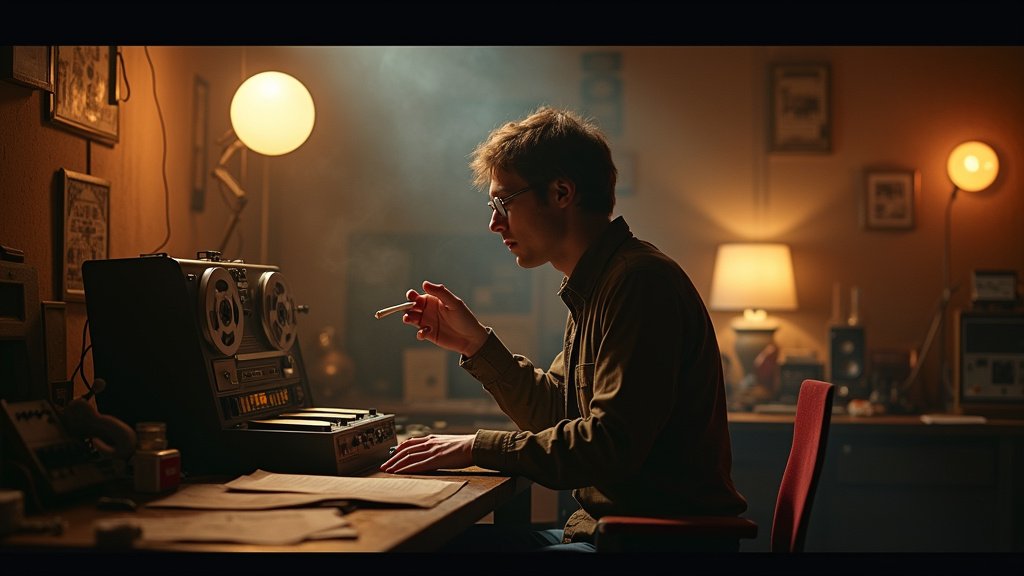
London, UK – A pivotal moment in The Beatles’ sonic evolution, marked by the pioneering use of backward vocals on the song “Rain,” reportedly stemmed from a late-night, marijuana-induced epiphany by John Lennon. This unexpected creative surge, as recounted by Lennon himself, unlocked a new dimension of studio experimentation for the band and contributed significantly to their increasingly psychedelic sound during the mid-1960s.
The Accidental Genius of “Rain”
The song “Rain,” released in 1966 as the B-side to the chart-topping single “Paperback Writer,” emerged from recording sessions for the seminal album Revolver. John Lennon, the song’s principal writer, shared in interviews that after a lengthy studio session, he took a tape of the day’s work home. It was during this solitary listening session, while under the influence of marijuana and with a “big hash joint” in hand, that he inadvertently played the song backward. This disorienting yet captivating playback sparked an immediate creative insight. Lennon famously described the experience, attributing the idea to “the gift of God, of Jah, actually, the god of marijuana,” and rushed back to the studio the following day to share his discovery.
Pioneering Soundscapes Through Studio Innovation
“Rain” is celebrated not only for its lyrical depth but also for its innovative production. Alongside the now-famous backward vocals, the track features a slowed-down rhythm track, a distinctive droning bass line, and tape speed manipulation that lent the song its signature ethereal, almost trance-like quality. While both Lennon and producer George Martin had roles in the technical aspects, Lennon’s recollection of a cannabis-influenced revelation as the catalyst for the backward vocal technique is widely documented. This experimental approach was remarkably ahead of its time, predating similar techniques employed by artists like Jimi Hendrix and Led Zeppelin. Lennon himself reportedly wished the entire song could have been played backward, a testament to how profoundly the reversed sounds affected him.
Cannabis and The Beatles’ Psychedelic Shift
The creative explosion that birthed “Rain” occurred during a transformative period for The Beatles. The mid-1960s saw the band move away from their earlier pop formula towards more complex, introspective, and experimental music, a shift heavily influenced by their embrace of psychedelic substances, including cannabis. Albums such as Rubber Soul (1965) and Revolver (1966), during which “Rain” was recorded, are considered landmarks in this transition, reflecting a growing fascination with LSD, Eastern philosophy, and avant-garde artistry.
Cannabis, or “pot” as Lennon often referred to it, became a common element in the band’s creative process during this era. Following their introduction to the drug by Bob Dylan in 1964, The Beatles began to explore its effects on their songwriting and studio work. Lennon himself characterized Rubber Soul as their “pot album,” noting the increased lyrical introspection and musical complexity it represented. This period marked a deliberate departure from their earlier, more conventional sound, paving the way for the sonic explorations that would define their later work.
“Rain” as a Lasting Musical Legacy
Despite its groundbreaking nature and Lennon’s vivid account of its creation, “Rain” was released as the B-side to “Paperback Writer.” While “Paperback Writer” achieved greater chart success, reaching number one, “Rain” still made a significant impact, charting at number 23 in the US. Band members, including Paul McCartney, acknowledged that while “Rain” was a beloved track, “Paperback Writer” was deemed more immediately radio-friendly.
Nevertheless, “Rain” is now recognized as a crucial piece in music history. Its pioneering use of backward vocals and other studio effects not only showcased The Beatles’ growing experimentalism but also laid groundwork for future sonic innovations across the music industry. The song continues to be a fan favorite, embodying Lennon’s candid insights into the creative process and the profound, sometimes unexpected, influences that shape artistic endeavors. This enduring appeal ensures that the story of “Rain” remains a trending topic in music news, highlighting the indelible mark The Beatles left on popular culture.