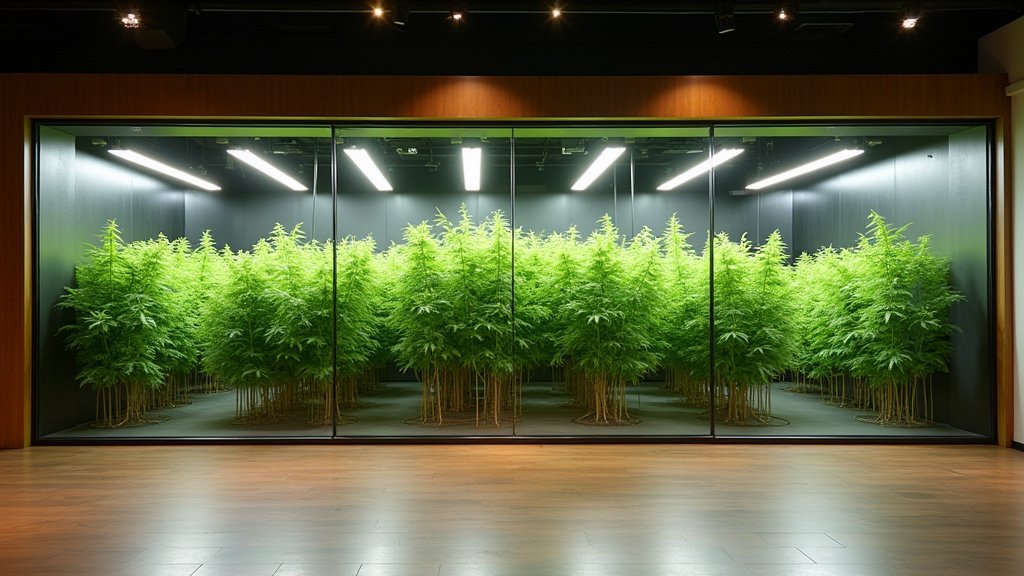
The global cannabis market is experiencing remarkable expansion. Projections indicate a significant rise in market value. This growth is driven by increasing legalization and consumer demand. Companies are also innovating rapidly. This creates new product categories. It also broadens market appeal.
Market Growth Projections
The legal cannabis market was valued at approximately $33.8 billion in 2024. Analysts expect it to reach $110.1 billion by 2030. This represents a compound annual growth rate (CAGR) of 21.8%. Some forecasts predict even higher figures. One report suggests the market could reach $1433.73 billion by 2034. Another estimates the market at $125.76 billion by 2030. The U.S. market alone is projected to be worth $76.39 billion by 2030. U.S. cannabis sales may reach $71 billion by 2030 if state-level legalization continues.
Key Drivers of Expansion
Several major forces propel this market forward. Legalization remains a primary driver. As more regions legalize cannabis for medical and recreational use, access expands. This creates legitimacy and attracts investment. Governments recognize its economic and medicinal potential. The U.S. has seen many states legalize cannabis. Canada, Germany, and Thailand are also embracing legalization.
Consumer demand is also shifting significantly. There is a growing interest in wellness-oriented products. People seek cannabis for relaxation, pain relief, and overall health. This trend moves beyond traditional recreational use. Consumers are increasingly choosing non-smokable formats [Context]. Edibles and beverages are particularly popular. These offer convenience and controlled dosing.
Innovation in products and technology is another critical factor. Companies are developing new formulations. Minor cannabinoids like CBG and CBN are being researched. Fast-acting delivery systems improve consumer experience. Innovations include nanoemulsions for quicker effects. Precise dosing in edibles and tinctures is a focus.
Emerging Product Innovations and Trends
The cannabis industry sees a surge in new cannabis products. Companies are focusing on diverse offerings. Edibles and beverages lead this innovation wave. Infused drinks are gaining traction. Aurora, a leading cannabis company, launched new infused beverages. These products cater to patients needing alternative forms of cannabis. They offer taste and controlled potency.
Wellness products are a major trend. CBD-infused nutraceuticals are the fastest-growing segment. These target stress, anxiety, and sleep issues. They come in oils, capsules, gummies, and topicals. The market is also seeing strain-specific offerings [Context]. This premiumization appeals to discerning consumers [Context].
Non-smokable formats are in high demand [Context]. This includes gummies, chocolates, and beverages. The convenience of these formats appeals to a broad audience. Many consumers, especially younger demographics like Millennials and Gen Z, prefer these options. They often view cannabis as a more healthful choice than alcohol.
Leading Companies and Market Dynamics
Major players are actively involved in this booming market. Companies like Trulieve, Curaleaf, and Green Thumb Industries are entering the THC beverage segment. Canopy Growth Corporation is a key innovator. They have launched new products targeting high-demand formats like vapes, flower, pre-rolls, and edibles. Their strategy focuses on premium and mainstream cannabis brands.
The market is competitive. Companies are adapting to consumer needs and regulatory changes. Product launches are frequent. Aurora’s new infused RTD beverage is an example [Context]. These launches aim to capture market share in fast-growing categories. The focus on cannabis brand development is crucial for consumer trust and loyalty.
Future Outlook
The cannabis industry is poised for sustained expansion. Legalization will continue to spread globally. This opens new markets and drives investment. Consumer demand for diverse, wellness-focused, and convenient new cannabis products will increase. Technological advancements will further refine product development and consumer experience. The market’s trajectory suggests a bright future driven by ongoing innovation and evolving regulations.