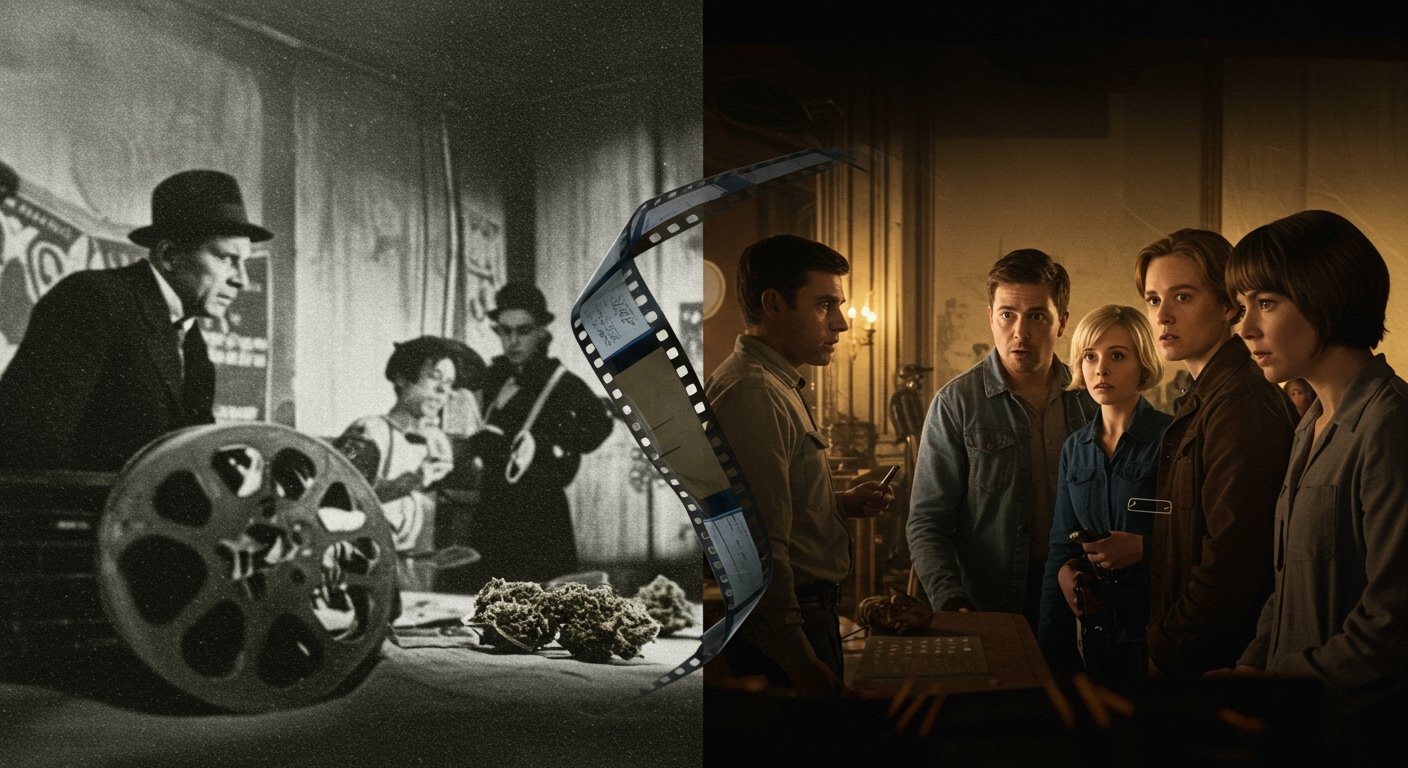
The cinematic portrayal of cannabis has undergone a profound and dramatic transformation, moving from cautionary tales rooted in fear and exaggeration to more nuanced, genre-diverse narratives that reflect evolving societal perspectives.
Decades ago, films depicting cannabis were often characterized by blatant misinformation and scare tactics. A prime example is “Reefer Madness” (1936), a notorious propaganda film that depicted cannabis use leading to insanity, violence, and death. Such early depictions established a long-standing stereotype of the cannabis user as irresponsible, dangerous, or purely comedic, framing the substance itself as a societal ill.
Shifting Perspectives and Expanding Genres
While the “stoner comedy” genre has persisted, often leveraging comedic tropes associated with cannabis use, recent years have witnessed a significant expansion in how the substance is represented on screen. Filmmakers are increasingly integrating cannabis into stories spanning a wider array of genres, moving beyond simple comedic effect to explore more complex themes.
This shift is evident in diverse productions. For instance, the 2015 horror/sci-fi/thriller “Star Leaf” incorporates elements of the supernatural and science fiction by featuring extraterrestrial marijuana with unique properties. This represents a clear departure from traditional narratives, embedding cannabis within speculative fiction.
Another notable example is the 2020 drama “The Marijuana Conspiracy.” This film is based on a real-life 1972 experiment where a group of young women were isolated for 98 days to study the effects of cannabis. By drawing on historical events and focusing on a controlled scientific study, the film grounds its narrative in reality and explores the human experience under specific, documented conditions, offering a more serious and fact-based look at cannabis consumption and its study.
These examples highlight a trend towards portraying cannabis and its effects within varied narrative contexts, acknowledging its presence in different facets of life and storytelling, rather than confining it to a single, often caricatured, archetype.
Dedicated Platforms for Cannabis Cinema
The increasing maturity and diversity of cannabis-centric filmmaking have also fostered the growth of dedicated platforms for these works. Cannabis film festivals are emerging as crucial venues for independent and mainstream filmmakers alike to showcase stories where cannabis plays a central role, whether thematic, plot-driven, or cultural.
Festivals such as the SPLIFF Film Fest and the Colorado International Cannabis & Hemp Film Festival provide important exhibition spaces. They not only celebrate existing films but also encourage the creation of new content that explores the myriad dimensions of cannabis in contemporary society. These festivals signify a growing recognition of cannabis as a valid subject for serious artistic exploration across genres.
The Future of Cannabis on Screen
The trajectory of cannabis representation in cinema suggests several key trends for the future. Experts and observers anticipate that cannabis will be integrated more seamlessly into narratives, appearing organically within characters’ lives and plotlines rather than being the sole focus or a mere punchline.
Furthermore, future films are expected to move further beyond outdated stereotypes, presenting characters who use cannabis as complex individuals with diverse backgrounds and motivations. This reflects a broader societal shift towards destigmatization and a more nuanced understanding of cannabis users.
The evolution also points towards a deeper exploration of the wider world surrounding cannabis. This includes delving into the burgeoning business and political dimensions of the cannabis industry, examining the economic impacts, regulatory challenges, social justice issues, and political debates that accompany legalization and market growth. Such narratives will likely mirror the increasing real-world complexities of cannabis in the 21st century.
In conclusion, cinema’s journey with cannabis has been a long and winding one, moving from the fear-mongering of the 1930s to the diverse and increasingly sophisticated portrayals seen today. This evolution in filmmaking not only reflects changing cultural attitudes towards cannabis but also pushes the boundaries of storytelling, offering audiences more realistic, varied, and thought-provoking perspectives on a plant that continues to shape legal, social, and economic landscapes worldwide.