HarmonyFest Announces Significant Shift in Cannabis Policy for 2025 Event
HarmonyFest, a premier annual summer music festival held in California, has officially announced substantial revisions to its policy regarding cannabis, set to take effect for the highly anticipated 2025 event. The updated guidelines, published on June 8, 2025, represent a notable departure from the festival’s previously stringent prohibition on cannabis possession by attendees. This policy adjustment aligns with California’s evolving legal landscape surrounding adult-use cannabis and aims to provide clearer directives for patrons while upholding public safety and regulatory obligations.
Under the new policy, attendees aged 21 and over will now be permitted to possess a specific amount of cannabis for personal use within the festival grounds. The permissible limits are set at up to one ounce (approximately 28.5 grams) of non-concentrated cannabis flower or up to eight grams of cannabis concentrates. This change brings the festival’s rules into closer alignment with the possession limits established under California state law for individuals aged 21 and older.
Prior to this announcement, HarmonyFest maintained a zero-tolerance policy for cannabis possession, requiring patrons to discard any cannabis products upon entry, regardless of state legality. This often created confusion and frustration for attendees from California or other states where cannabis is legal for adult use. The revised policy acknowledges the reality of state law and seeks to facilitate a smoother, more compliant experience for eligible festival-goers.
Navigating Consumption: Designated Zones Remain Key
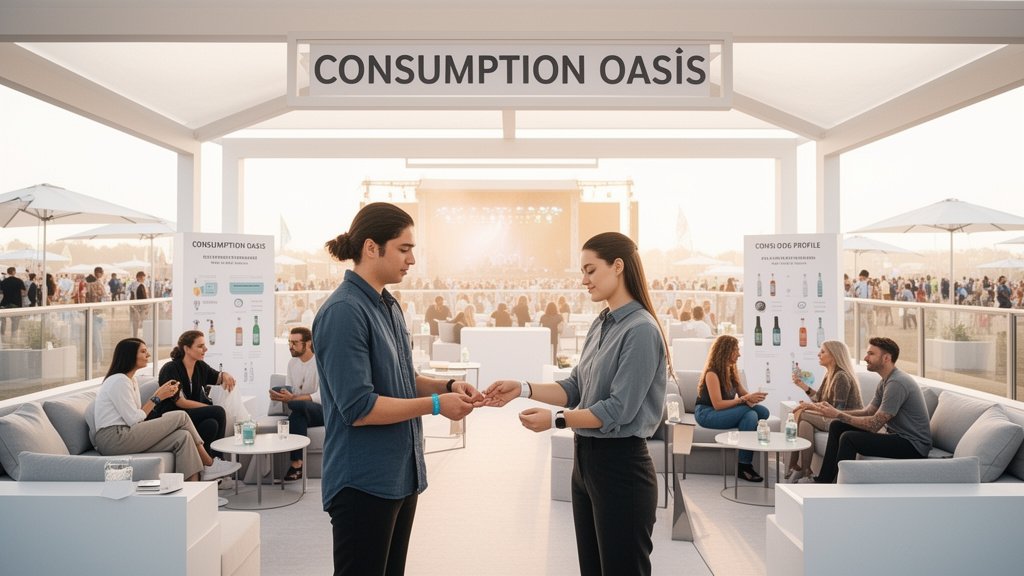
While the new policy liberalizes rules around possession, it maintains strict regulations concerning cannabis consumption on site. The updated guidelines explicitly state that on-site consumption remains confined to designated licensed zones. These areas are specifically established and licensed for cannabis use, adhering to state regulations for public consumption. Crucially, consumption is restricted entirely in public areas across the general festival grounds, including performance stages, walkways, food vendors, and camping areas (unless specifically within a designated, licensed consumption zone).
The distinction between possession and consumption is critical. The festival emphasizes that merely possessing the legal limit does not grant permission to consume it anywhere within the venue. This approach is necessitated by state and local regulations, venue permits, and the need to manage public health and safety across a large event space. Operating a major event like HarmonyFest requires navigating a complex web of permits and ordinances, which often include specific restrictions on public consumption of substances, even those legal for possession in private.
Festival organizers are expected to provide clear signage and information regarding the location of the designated licensed consumption zones well in advance of the 2025 event. The capacity and amenities within these zones will be crucial factors in their effectiveness and attendee experience. Managing the flow of people and ensuring compliance within these controlled environments presents logistical challenges that the festival must address.
Context: Evolving Laws and Festival Operations
California voters legalized adult-use cannabis for individuals 21 and older with the passage of Proposition 64 in 2016. Since then, the state has developed a comprehensive regulatory framework for the cultivation, manufacturing, testing, and retail sale of cannabis. However, applying these statewide laws to specific contexts, particularly large-scale public or private events like music festivals, remains complex. While possession is legal within limits, public consumption remains restricted in many areas, including places where the public gathers, unless specifically permitted through local ordinances or state-approved event licenses.
Music festivals, by their nature, are large public gatherings, making the application of consumption laws particularly challenging. Previous policies of outright prohibition, while perhaps simpler from an enforcement perspective, often conflicted with attendees’ understanding of state law and could lead to unnecessary confrontations at entry points.
The shift by HarmonyFest reflects a growing trend among event organizers to adapt to the evolving legal status of cannabis. By allowing legal possession while strictly controlling consumption locations, the festival aims to: clarify rules for attendees, reduce friction at security checkpoints, potentially enhance safety by directing consumption to monitored areas, and ensure compliance with the terms of their operating permits and agreements with local authorities and the venue.
This policy change was formally announced on June 8, 2025, allowing festival-goers and industry observers ample time to understand its implications ahead of the 2025 event. The announcement has already sparked considerable discussion online and among those familiar with festival operations and cannabis regulation. Attendees are keen to understand the practicalities of the designated consumption zones, while industry experts are watching how this policy will be implemented and enforced at such a large scale.
Looking Ahead to HarmonyFest 2025
The decision by HarmonyFest to revise its cannabis policy for 2025 signals a pragmatic approach to managing legal substances at a major cultural event in a state where cannabis is legal for adult use. By permitting personal possession within state-defined limits for eligible attendees, the festival acknowledges the legal rights of its patrons. However, by maintaining strict control over where consumption can occur, it prioritizes public safety, regulatory compliance, and adherence to venue-specific rules.
Attendees planning to bring cannabis to HarmonyFest 2025 should familiarize themselves thoroughly with the updated policy, paying close attention to both the possession limits (one ounce of flower or eight grams of concentrates for those 21+) and, critically, the restrictions on consumption location. The festival’s official website and communications channels will be the primary source for detailed information on the designated licensed consumption zones as the event date approaches.
This policy evolution at one of California’s major music festivals may also influence policies at other large events across the state and potentially nationwide, setting a precedent for how event organizers navigate the complexities of state-level cannabis legalization in large-scale public gatherings. The success of the implementation at HarmonyFest 2025 will likely be closely watched.