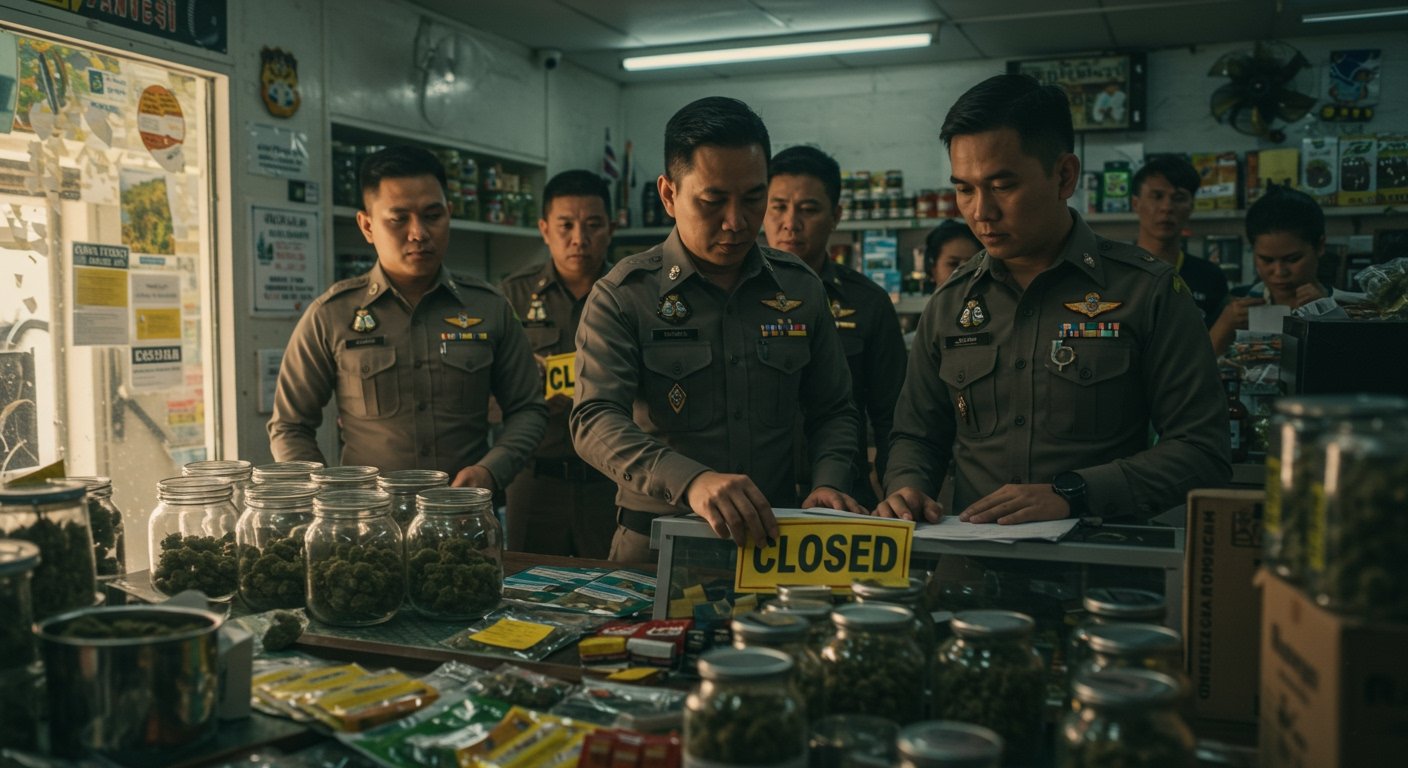
PHUKET, Thailand – Authorities in Phuket conducted a sweeping operation on July 2, 2025, targeting cannabis businesses in the popular Cherng Talay neighborhood. The coordinated enforcement action resulted in the immediate closure of seven retail establishments found to be in significant violation of regulatory guidelines governing Thailand’s evolving cannabis industry. The operation underscores the government’s commitment to maintaining control and order within the sector following its recent decriminalization steps.
Details of the Enforcement Operation
The raid, executed swiftly and decisively on the morning of July 2, 2025, was a joint effort involving multiple local enforcement agencies. These authorities received crucial support and coordination from the Thalang District Office, highlighting a concerted regional push to ensure compliance within the rapidly expanding cannabis landscape. The focus of the operation was specifically on retail shops operating within the bustling Cherng Talay area, known for its popularity among tourists and expatriates. Investigators entered the premises of several businesses, conducting thorough inspections of their operations, product offerings, and adherence to licensing conditions.
Catalogue of Regulatory Breaches Uncovered
During the inspections of the seven targeted shops, authorities meticulously documented a range of violations that contravened established laws and ministerial regulations. A primary finding across several locations was the permission of on-premises smoking. Despite the decriminalization of cannabis, specific rules prohibit public consumption, and allowing smoking within a retail environment falls under this restriction, creating potential nuisances and health concerns.
Investigators also identified instances of illicit cannabis sales. While the sale of cannabis flowers and some products is permitted under license, activities deemed “illicit” could range from selling products without proper taxation, operating outside designated hours or zones, or engaging in transactions that otherwise skirt the legal framework established for licensed vendors.
A significant area of non-compliance related to marketing and promotion. Authorities discovered that three of the seven closed establishments were actively engaged in the advertising of controlled cannabis products. Current regulations place strict limitations on how cannabis and related items can be marketed, particularly prohibiting messages that could encourage recreational use, appeal to minors, or misrepresent health benefits.
Furthermore, the operation revealed violations concerning the types of products being retailed. Specifically, two of the shuttered businesses were found to be engaged in the retailing of cannabis extracts without official approval. The sale of high-concentration extracts often falls under stricter regulations than that of dried flower, requiring specific permits and adherence to safety standards due to their potency. This violation points to potential risks regarding product quality, safety, and regulatory oversight.
Legal Basis and Evidence Collection
To support potential legal action and ensure thorough investigation, authorities collected samples of various cannabis products from the raided shops. These samples included dried plant material, extracts, and potentially infused products. The collected evidence is slated for detailed analysis in accredited laboratories.
The analysis aims to confirm the nature and concentration of the substances and will be pivotal in determining the specific legal statutes that may have been violated. Potential findings could fall under the Herbal Products Act, which governs the quality, production, and sale of products derived from plants, or the broader Narcotics Code, depending on the classification and legality of the specific products found and the nature of the violations. The outcome of these analyses will significantly influence the next steps in the legal process against the operators of the closed shops.
Immediate Repercussions and Ongoing Investigation
As a direct and immediate consequence of the regulatory breaches identified on July 2, 2025, the operating licenses for all seven of the affected cannabis shops have been immediately suspended. This swift administrative action legally requires the businesses to halt operations entirely, ceasing all sales and related activities. The suspension is not merely a temporary pause but a significant intervention designed to prevent further non-compliance while investigations proceed.
The authorities have indicated that the suspension will remain in effect as they continue their comprehensive investigations into the full extent of the violations at each location. The process will likely involve reviewing documentation, analyzing product samples, and potentially interviewing owners and staff. The ultimate fate of the licenses – whether they are permanently revoked or subject to other penalties – will depend on the findings of these ongoing probes and subsequent legal proceedings.
Implications for Phuket’s Cannabis Sector
The crackdown in Cherng Talay sends a clear message to all cannabis businesses operating in Phuket and across Thailand. While the country has moved towards greater liberalization of cannabis, this move is predicated on a foundation of strict regulatory control over sales, consumption, and product standards. Enforcement actions like this demonstrate that authorities are actively monitoring the sector and are prepared to take decisive action against businesses that fail to comply with the established legal framework. The events of July 2, 2025, in Cherng Talay highlight the critical importance for all licensed operators to understand and strictly adhere to Thailand’s complex and evolving cannabis regulations to avoid similar repercussions.