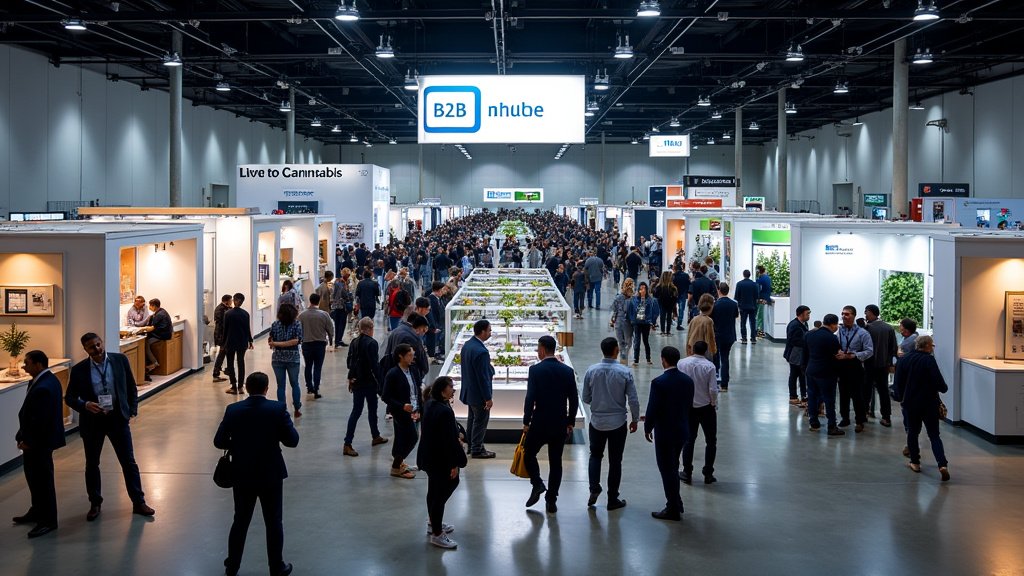
New York State’s burgeoning legal cannabis market, experiencing a significant surge in sales, finds itself at a pivotal juncture following a recent federal appeals court ruling that could reshape its licensing landscape. On August 12, 2025, the U.S. Court of Appeals for the Second Circuit declared a core component of New York’s adult-use cannabis licensing scheme unconstitutional, adding another layer of complexity to an already intricate regulatory environment. This development, while potentially disruptive to the state’s ambitious social equity goals, unfolds as the market demonstrates remarkable financial momentum, making it a key area of trending interest in the national cannabis industry.
Judicial Setback and the Dormant Commerce Clause
The U.S. Court of Appeals for the Second Circuit delivered a decisive blow to New York’s cannabis licensing process by ruling that the state’s “Extra Priority” system for applicants with New York State marijuana convictions violates the Dormant Commerce Clause of the U.S. Constitution. The case, Variscite NY Four, LLC v. New York State Cannabis Control Board, was brought by out-of-state applicants whose cannabis convictions occurred in California, rendering them ineligible for the priority status granted to in-state conviction holders. The court deemed New York’s prioritization a “protectionist measure” that discriminates against out-of-state economic interests. This ruling sets a precedent, marking the first time a federal appellate court has applied the Dormant Commerce Clause to an adult-use cannabis market, potentially influencing similar licensing structures in other states. While the decision does not immediately impact existing licensees, it has been vacated and remanded, signaling a likely re-evaluation of the application process for thousands of pending licenses and presenting a new legal hurdle for the Office of Cannabis Management (OCM) and the Cannabis Control Board (CCB).
This legal wrangling is not an isolated incident. The OCM and CCB have faced multiple legal challenges since the Marijuana Regulation & Taxation Act (MRTA) was passed in 2021, which aimed to establish an equitable cannabis industry. Prior lawsuits have targeted aspects of the Conditional Adult Use Retail Dispensary (CAURD) program, designed to prioritize individuals and communities disproportionately impacted by past cannabis prohibition. These legal battles have contributed to a slower-than-anticipated rollout of the market, with Governor Kathy Hochul previously acknowledging the difficulties.
New York’s Rapidly Expanding Cannabis Market
Despite the ongoing legal complexities, New York’s legal cannabis market is experiencing unprecedented growth. According to recent data, April 2025 sales reached approximately $115.64 million, representing a substantial 134.5% increase year-over-year. The state’s 2024 Market Report further underscores this robust expansion, revealing that legal adult-use cannabis sales surpassed $1 billion in 2024, with $869 million generated in that year alone. Projections indicate that the market could top an impressive $1.5 billion in sales in 2025. The number of licensed dispensaries has also swelled, nearly tripling in 2024 to 260 operational locations by year-end, and growing to 368 by April 2025. More than 5,250 licenses have been issued, with a commendable 54% to 55% awarded to social and economic equity (SEE) applicants, aligning with the state’s foundational goals for an inclusive industry.
Navigating Regulatory Hurdles and Legislative Actions
Beyond the court’s latest ruling, New York’s cannabis regulators are grappling with other significant challenges and legislative discussions. A notable issue concerns the proximity of dispensaries to sensitive locations. The OCM recently admitted to an error in interpreting the 500-foot buffer zone requirement from schools, having measured from the building’s entrance rather than the entire property line. This misinterpretation affects approximately 100 dispensaries, leaving their operational status uncertain. Senate Bill 7275 (SB 7275), introduced on April 8, 2025, seeks to address this by proposing stricter rules that would prohibit cannabis retailers and on-site consumption lounges within 500 feet of child day care centers, public parks, and playgrounds, while also clarifying proximity rules for mixed-use buildings containing schools or houses of worship. This bill is currently under review by the Senate Committee on Investigations and Government Operations, highlighting the continued legislative efforts to refine the regulatory framework.
Another key area of discussion for the cannabis industry involves tax payment schedules. Industry stakeholders are advocating for a shift from the current quarterly tax payments for wholesalers, cultivators, and processors to an annual cycle, similar to that of the alcohol industry. This proposed change, which was previously rejected by Governor Hochul, is seen as crucial for improving cash flow and financial stability for businesses, especially cultivators and processors. Meanwhile, the OCM continues to issue Marijuana Event Organizer Licenses, allowing for temporary consumption events, broadening the avenues for legal cannabis consumption and market participation.
The Path Forward for New York’s Green Economy
The recent court ruling on in-state preference, coupled with ongoing legislative debates and a rapidly expanding market, underscores the dynamic and often challenging environment for New York’s cannabis industry. The state’s commitment to social equity remains paramount, but its implementation faces rigorous constitutional scrutiny. As the legal news continues to unfold, the ability of the OCM and CCB to adapt their policies and navigate these complex legal and regulatory waters will be crucial for sustaining the impressive growth and realizing the full economic potential of New York’s burgeoning green economy. Clarity, consistency, and constitutional adherence will be key to fostering a stable and flourishing market for all stakeholders.