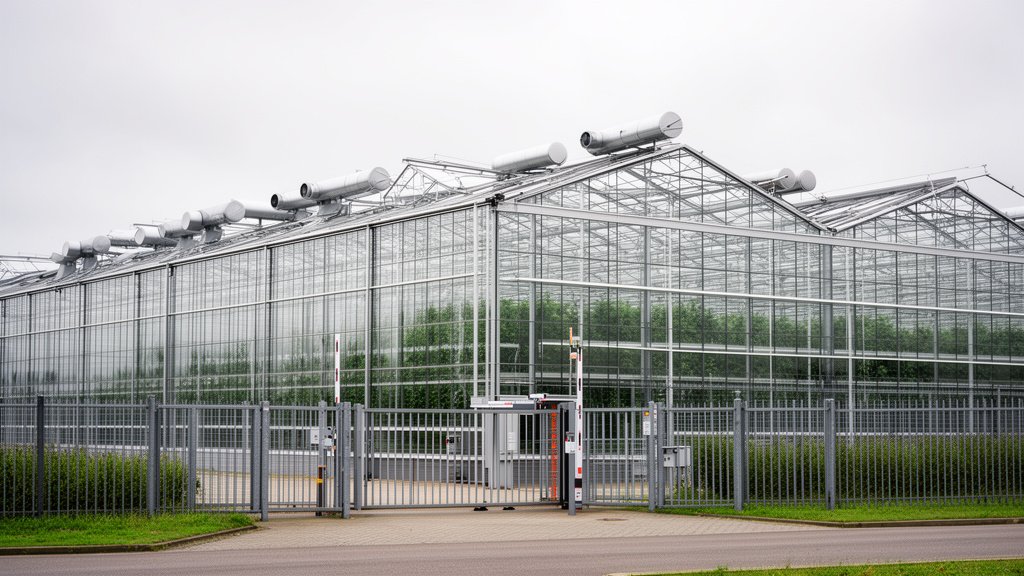
A significant shift is underway within the licensed, large-scale cannabis cultivation sector across key U.S. states. A recent analysis, released on June 8, 2025, by the prominent industry research firm AgriTech Insights, reveals a substantial increase in the adoption of advanced robotic and automated systems for post-harvest processing.
This trend marks a pivotal moment for an industry grappling with persistent challenges, including escalating labor costs and the need to scale operations efficiently while maintaining stringent quality standards. States like California, Colorado, and Massachusetts, which represent some of the most mature and competitive cannabis markets in the country, are at the forefront of this technological integration.
The Driving Forces Behind Automation
The impetus for this rapid adoption is multifaceted. Firstly, the cost of manual labor, particularly for labor-intensive post-harvest tasks such as trimming and sorting, has surged. Cultivators are seeking ways to reduce operational expenses and improve profitability in increasingly competitive environments.
Secondly, the demand for scalability necessitates systems that can handle higher volumes of product consistently. As cultivation facilities expand, relying solely on manual processes becomes a bottleneck, limiting throughput and potentially impacting time-to-market.
Finally, market demand for consistent product quality is paramount. Automated systems, equipped with precision mechanics and sensor technology, can perform repetitive tasks with a level of uniformity that is difficult to achieve manually, ensuring each bud meets specific quality metrics for size, shape, and trim.
Specific Technologies Gaining Traction
The AgriTech Insights report highlights specific types of technologies leading this automated wave. Among these are automated bud sorting conveyors integrated with optical sensors, which can efficiently categorize and separate cannabis flower based on predefined characteristics. This streamlines the sorting process, reducing bottlenecks and improving workflow efficiency.
Another area seeing rapid deployment is advanced robotic trimming arms. These sophisticated machines are designed to meticulously trim cannabis buds, a task traditionally performed by large teams of skilled manual laborers. The report specifically names systems like the ‘AeroTrim 5000‘, developed by Cultivation Robotics Corp., as examples of the high-throughput solutions being integrated into cultivation facilities.
Case Study: Bloom Farms’ Strategic Investment
The report provides concrete examples of this trend in action. Bloom Farms, a major operator with significant cultivation facilities in Southern California, recently made a substantial investment in post-harvest automation. The company reportedly invested $1.2 million specifically in ‘AeroTrim 5000‘ units from Cultivation Robotics Corp.
This investment is projected to yield significant returns for Bloom Farms. The company anticipates a 45% reduction in their manual trimming workforce by the fourth quarter of 2025 (Q4 2025). Beyond labor cost savings, the adoption of these robotic trimmers is also expected to result in a notable improvement in flower uniformity, a critical factor for product consistency and market appeal.
Outlook and Implications
The findings from AgriTech Insights underscore a fundamental transformation occurring in the operational backbone of large-scale U.S. cannabis cultivation. The integration of robotics and automation is no longer a speculative future trend but a current reality being driven by economic necessity and market demands.
As technology continues to evolve and become more accessible, it is likely that automated solutions will become standard practice across the industry, further increasing efficiency, reducing costs, and enhancing product quality. This technological pivot is set to reshape the labor landscape within cannabis facilities and solidify the importance of capital investment in modernizing cultivation processes.