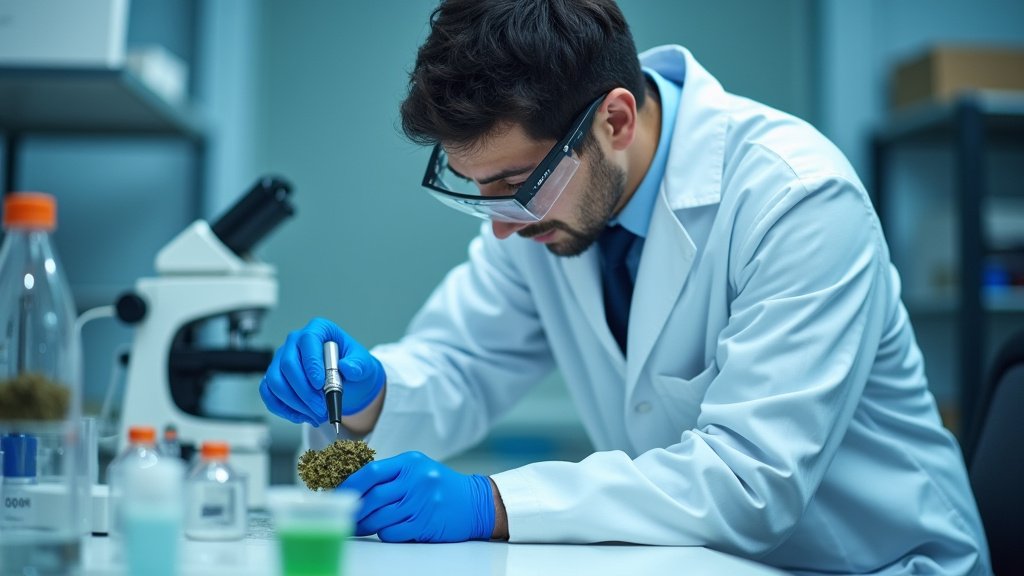
A groundbreaking discovery by analytical chemists at Stellenbosch University in South Africa has revealed the first evidence of flavoalkaloids, a highly rare class of phenolic compounds, within the leaves of the cannabis plant. This news is poised to reshape our understanding of cannabis’s therapeutic potential, extending far beyond its well-known cannabinoids like THC and CBD.
The research, published in the prestigious Journal of Chromatography A on May 5, 2025, details the identification of 79 phenolic compounds across three commercially grown South African cannabis strains. Remarkably, 25 of these compounds were previously unreported in cannabis, with 16 tentatively identified as flavoalkaloids. These elusive compounds were predominantly concentrated in the leaf extracts of one specific strain investigated.
The Significance of the Discovery
For years, the scientific community’s focus on cannabis has largely centered on its psychoactive cannabinoids and aromatic terpenoids. However, this recent investigation, led by Dr. Magriet Muller and Professor André de Villiers, shines a spotlight on the plant’s diverse non-cannabinoid phenolic profile. Phenolic compounds are widely recognized in the pharmaceutical industry for their potent antioxidant, anti-inflammatory, and anti-carcinogenic properties.
Dr. Muller, an analytical chemist at Stellenbosch University’s Central Analytical Facility, emphasized the complexity of cannabis, which harbors over 750 metabolites. She noted the unexpected variation in phenolic profiles even among a limited number of strains and expressed particular excitement about the first-time detection of flavoalkaloids, compounds so scarce they are rarely observed in nature. Professor de Villiers, who heads the Analytical Chemistry Research group at SU, further highlighted the medicinal potential of cannabis plant material, which is often dismissed as waste.
Advanced Analytical Techniques Pave the Way
The breakthrough was made possible by the application of sophisticated analytical methods. Dr. Muller developed and utilized a powerful combination of comprehensive two-dimensional liquid chromatography (2D HILIC × RP-LC) and high-resolution mass spectrometry (HR-MS). This cutting-edge technique allowed researchers to meticulously separate and identify the flavoalkaloids from the more abundant flavonoids, which had previously obscured their detection. Prior to its application to cannabis, this advanced analytical toolkit was validated on other complex plant matrices like rooibos tea, grapes, and wine.
Implications for Medicine and Industry
The identification of flavoalkaloids opens up a trending new frontier for the pharmaceutical industry. These rare compounds, with their strong therapeutic properties, could lead to the development of novel drugs for a range of conditions, including inflammation, oxidative stress, and cancer. The discovery underscores that the plant’s medicinal value extends far beyond the well-researched cannabinoids and terpenoids, suggesting a rich and unique non-cannabinoid phenolic profile that warrants further biomedical investigation.
Furthermore, this research challenges the conventional view of cannabis plant material, particularly the leaves, which are often discarded during cultivation. The findings suggest that these overlooked parts could be valuable sources of bioactive compounds, potentially reducing waste and maximizing the plant’s overall utility.
Future Directions for Cannabis Research
While the tentative identification of these flavoalkaloids represents a significant scientific leap, further research is crucial. The Stellenbosch University team plans to confirm the exact chemical structures of these compounds and investigate their prevalence across a wider variety of cannabis strains and plant tissues. Future studies will also delve into the specific bioactivity of these newly discovered flavoalkaloids to fully assess their potential value in therapeutic and nutraceutical applications.
This pivotal discovery from South African researchers highlights the ongoing revelations in the field of cannabis science and the vast, untapped potential within this complex plant. It’s a reminder that even in well-studied organisms, nature continues to hold profound secrets waiting to be unearthed by dedicated investigative work, promising exciting future developments in medicine and agriculture.