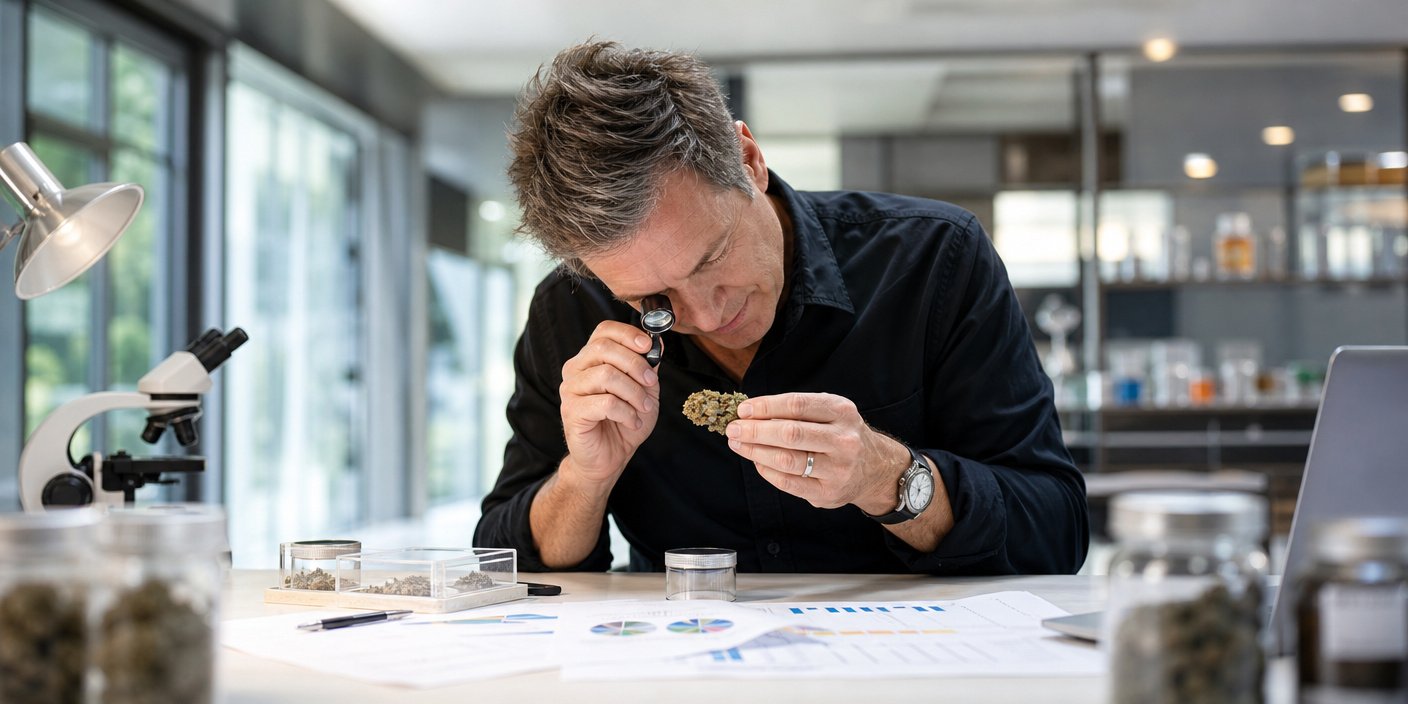
A significant state-funded research initiative is underway. The University of California Berkeley and Glass House Brands are collaborating. This partnership focuses on cannabis crop yields. The California Department of Cannabis Control awarded a grant. It totals approximately $1.8 million.
This research aims to deepen understanding. It will cover cannabis crop yields across different environments. This collaboration builds upon a prior hemp research partnership. That earlier work began in 2024.
The project is titled “Cannabis Crop Yields: Survey & Remote Sensing.” Researchers will gather extensive data. This includes grower surveys and field observations. Remote sensing technology will also be used. The goal is to model yield variability. This applies to indoor, outdoor, and mixed-light systems.
Advancing Industry Knowledge
The implications of this study are far-reaching. It is expected to enhance crop production estimates. Regulatory oversight will also see improvements. Market forecasting for California’s legal cannabis industry will be better.
Furthermore, the research supports data-driven best practices. It also promotes sustainability efforts. These benefits extend to policymakers and growers. Researchers and the broader market will also gain.
Dr. Thomas Azwell from UC Berkeley is faculty director. He noted the collaboration drives agricultural science. He specifically mentioned AI and computer vision. These tools can boost yields and farm profitability. Graham Farrar, Glass House president, agrees. He stated understanding yield differences is key. It is vital for efficiency, sustainability, and quality control.
State Funding for Cannabis Innovation
California is investing heavily in cannabis research. The Department of Cannabis Control (DCC) is a key player. It has awarded significant funding. Nearly $80 million has been distributed since 2020. This funding comes from cannabis tax revenues. Proposition 64 established these taxes in 2016.
The DCC prioritizes many research areas. These include crop yields and public health. They also cover state and local policies. Consumer preferences and environmental sustainability are included. All research findings are made public. This ensures broad access to scientific data.
This specific $1.8 million grant came from the DCC. UC Berkeley secured the funding. Glass House Brands supported the proposal. The university previously received other DCC grants. This includes $3.2 million for three projects.
Glass House Brands’ Strategic Growth
Glass House Brands is a leading company. It is vertically integrated. The company focuses on the California market. Its operations include cultivation, manufacturing, and retail. Brands like Glass House Farms are part of its portfolio.
The company is also accelerating its 2026 expansion plans. This research collaboration aligns with this strategy. Glass House has returned existing greenhouses to full production. They ended 2025 with the most planted acreage ever.
New greenhouses are also being built. Greenhouse 2 is expected to add significant capacity. It will yield roughly 300,000 pounds annually. Greenhouse 4 is being retrofitted for international CBD and hemp markets. This move prepares them for new business opportunities. It also addresses potential federal reform.
Research Methodology and Scope
The “Cannabis Crop Yields: Survey & Remote Sensing” project is detailed. Researchers will examine growth rates. They will measure output across various systems. This includes greenhouse, indoor, and outdoor settings. Supplemental lighting systems are also studied.
The methodology integrates multiple data sources. Grower surveys provide direct insights. Field-level observations offer ground truth. Remote sensing techniques analyze broader patterns. These methods generate empirically grounded yield models.
This research is crucial for the industry. It helps predict crop yields more accurately. It supports better regulatory decisions. It also improves market forecasting. Ultimately, this initiative promotes innovation. It also drives sustainability in cannabis cultivation. The partnership between UC Berkeley and Glass House Brands is a prime example. It shows how academia and industry can advance science. This benefits the entire regulated cannabis market.