Senate Committee Advances Comprehensive Cannabis Reform Legislation
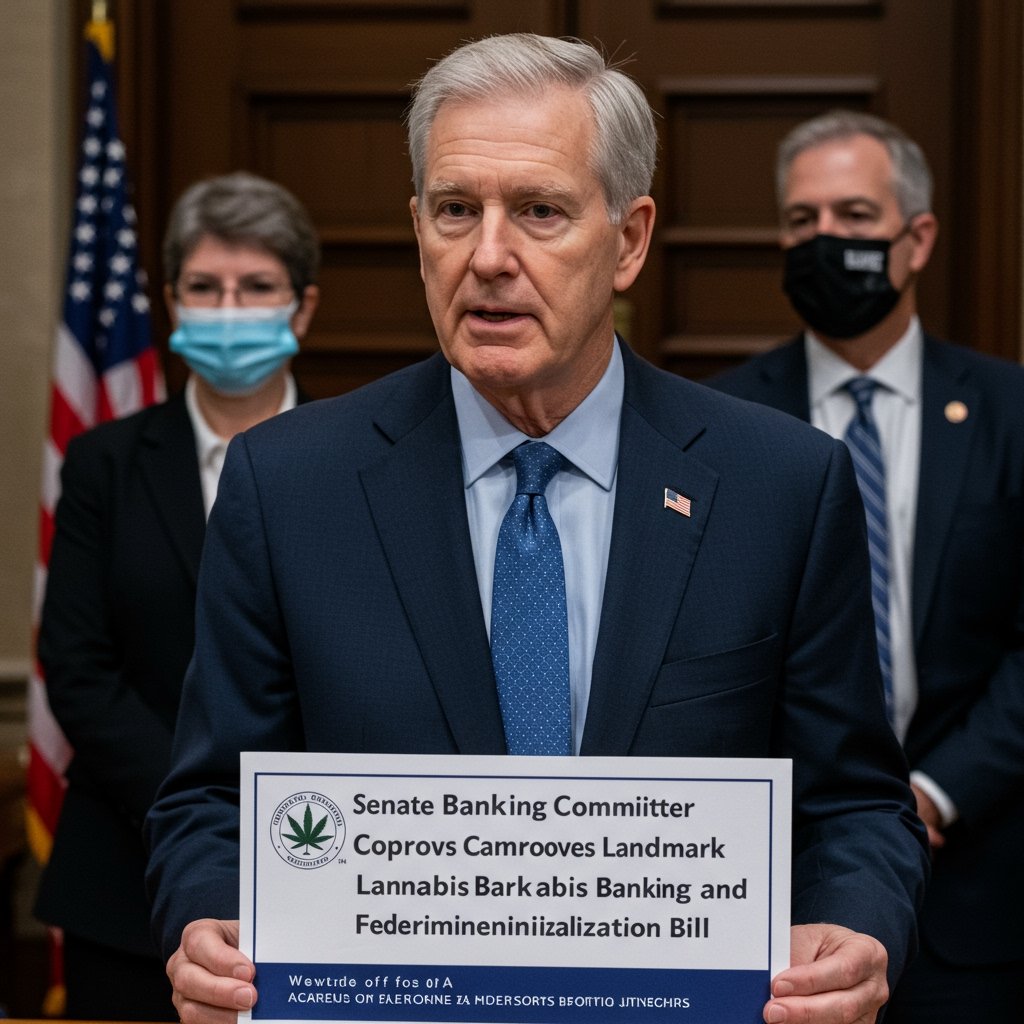
Washington, D.C. – The Senate Banking, Housing, and Urban Affairs Committee today took a significant step forward in the national conversation surrounding cannabis policy, approving the Cannabis Administration and Opportunity Act of 2025 (CAOA 2.0). This comprehensive piece of reform legislation now advances to the full Senate, marking a crucial moment in efforts to reconcile the discrepancy between state-level legalization and federal prohibition.
The bill, spearheaded by Senate Majority Leader Chuck Schumer (D-NY) and co-sponsored by Senators Ron Wyden (D-OR) and Cory Booker (D-NJ), represents a broad approach to addressing the multifaceted challenges posed by the current federal status of cannabis. Its passage through the committee underscores growing bipartisan recognition of the need for reform that encompasses not only economic aspects like banking but also social equity and public safety.
Committee Vote Reflects Bipartisan Momentum
The vote within the Senate Banking Committee was a decisive 15-9 in favor of advancing CAOA 2.0. This margin indicates notable bipartisan support for addressing the complex issues surrounding the cannabis industry and its interaction with the federal government. The committee’s approval demonstrates a willingness across the aisle to engage with legislation that seeks to provide a federal framework for a state-regulated market that already exists in numerous jurisdictions across the country.
The bipartisan nature of the vote highlights the increasing practical concerns related to the current policy, including public safety implications of cash-only businesses and the economic potential hindered by federal restrictions. The passage through this key committee provides momentum as the bill moves towards consideration by the entire Senate body, though its path remains subject to further debate and potential amendments.
Key Pillars of CAOA 2.0
CAOA 2.0 is structured around several core provisions designed to fundamentally alter the federal government’s approach to cannabis. Chief among these is the proposal to remove cannabis from the federal list of controlled substances. This descheduling would eliminate the federal prohibition on cannabis, treating it more akin to alcohol under federal law while allowing states to maintain their authority to regulate or prohibit its production and sale within their borders. This step is seen by proponents as essential to resolving the inherent conflict between state and federal law that currently creates significant challenges for businesses and individuals.
Another critical component of the bill addresses the persistent issues related to banking access for state-legal cannabis businesses. Under the current federal prohibition, financial institutions remain hesitant to provide services to cannabis-related businesses due to the risk of federal penalties. While the SAFE Banking Act has sought to provide a safe harbor for banks, it has not yet passed Congress. CAOA 2.0 aims to solve this issue more directly by removing cannabis from the controlled substances list, thereby clarifying that banks can serve the industry without violating federal law related to illicit substances. This provision is expected to normalize banking relationships, reduce reliance on cash, and enhance financial transparency and security within the industry.
The bill also proposes the establishment of federal excise taxes on cannabis products. The details of the tax structure are intended to generate federal revenue while not imposing an undue burden that would stifle the legal market or incentivize illicit activity. The revenue generated from these taxes is proposed to be directed towards various federal initiatives, including those related to social equity.
Addressing the Legacy of Prohibition
Recognizing the disproportionate impact of past cannabis prohibition policies, CAOA 2.0 includes significant social equity provisions. The bill proposes the expungement of certain past federal cannabis convictions, aiming to provide relief to individuals who have faced legal consequences for actions that would be legal under the proposed framework. This measure is intended to help remove barriers to employment, housing, and other opportunities for those affected by past drug laws.
Furthermore, the legislation proposes the creation of grant programs specifically for communities that have been negatively impacted by the enforcement of cannabis prohibition. These programs would aim to reinvest tax revenue into areas that have suffered from high rates of arrests and convictions, supporting initiatives like job training, re-entry services, and small business development. These equity provisions are central to the bill’s stated goal of ensuring that the benefits of a legal cannabis market are shared broadly and help repair past harms.
Path Forward
The passage of CAOA 2.0 through the Senate Banking Committee represents significant progress for cannabis reform advocates. However, the bill still faces substantial hurdles. It must be considered and passed by the full Senate, potentially requiring consolidation with provisions from other committees or integration into broader legislative packages. Following Senate passage, it would need to be approved by the House of Representatives and signed into law by the President.
The bipartisan vote in the Banking Committee, however, signals a growing consensus on the need to address the current state-federal conflict regarding cannabis. Proponents argue that passing CAOA 2.0 is essential not only for promoting industry growth and economic development but also for advancing social justice and creating a more rational and equitable regulatory framework for cannabis across the nation. The bill’s journey through the Senate will be closely watched by stakeholders across the cannabis industry, financial sector, and social justice organizations.