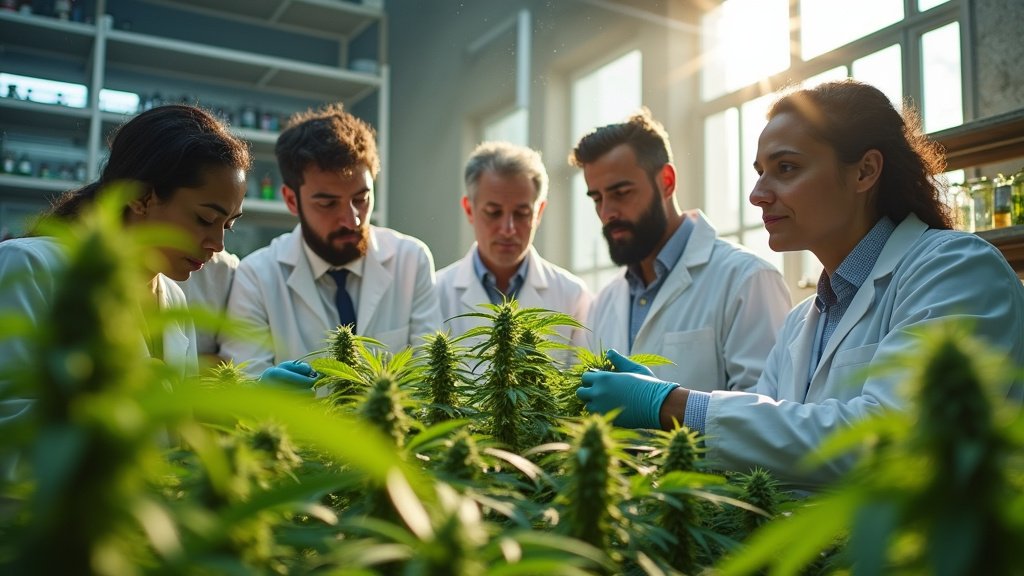
Brazil’s premier agricultural research agency, Embrapa, has received a landmark authorization from the National Health Surveillance Agency (Anvisa) to conduct extensive research on the cannabis plant. This decision marks a pivotal moment, propelling the South American farming powerhouse closer to authorizing its cultivation and potentially establishing Brazil as a significant global player in the cannabis market.
Embrapa’s Ambitious Research Mandate Unveiled
The historic authorization empowers Embrapa to establish its first-ever cannabis seed bank and initiate projects focused on the genetic improvement of the plant for a diverse range of applications. Embrapa scientists, celebrated for their expertise in adapting crops to Brazil’s unique tropical climate—akin to their transformative work with soybeans and cotton—will now apply this rigorous scientific methodology to cannabis. The research program is meticulously structured across three strategic fronts: the conservation and characterization of germplasm, the development of scientific and technological foundations for medicinal cannabis, and the pre-breeding of hemp specifically for fiber and seed production. This comprehensive approach aims to bolster Brazil’s technological autonomy and foster the generation of domestic knowledge, reducing reliance on external sources.
Significant Funding and a Long-Term Vision for Cannabis Innovation
To fuel this groundbreaking initiative, Embrapa has secured an initial public funding allocation of 13 million reais (approximately US$2.41 million). The research is projected to span a substantial 12-year period, with the inherent potential to extend indefinitely, mirroring Embrapa’s established, long-term research models that have been instrumental for crops like soybeans and corn. Furthermore, Embrapa has explicitly stated its openness to forging collaborations with the private sector, a prospect that has already attracted considerable interest from both domestic and international companies eager to explore potential partnerships in this rapidly trending field.
Navigating the Evolving Regulatory Landscape
This significant research authorization unfolds against the backdrop of Anvisa’s ongoing efforts to develop comprehensive regulations for cannabis cultivation aimed at medicinal and scientific purposes. A crucial development spurring this progress was a court ruling in November 2024, which mandated Anvisa to finalize and issue pending regulations for cannabis cultivation in Brazil by March 2026. However, Anvisa has clearly stipulated that this authorization is strictly limited to scientific research. The commercialization of any resulting products is prohibited, and all cultivation activities must adhere to rigorous safety and control protocols, including mandatory on-site inspections by the agency and detailed traceability measures for all plant material.
Diverse Applications and Emerging Global Implications
The research undertaken by Embrapa is poised to yield substantial benefits across multiple sectors within Brazil. In the realm of medicinal applications, the initiative seeks to build a robust scientific foundation, a move that could substantially decrease Brazil’s current dependence on imported cannabis-derived pharmaceutical products. Beyond medicine, the focused exploration of hemp for fiber production targets a burgeoning global market for sustainable materials, with potential applications in textiles, paper manufacturing, and the creation of advanced biomaterials. Embrapa’s deep-rooted expertise is strategically positioning Brazil to potentially become a significant hub for both the development and domestic sale of medicinal and industrial cannabis products, a prospect that has already garnered considerable attention from international entities. This advancement occurs within a broader national context where personal possession of cannabis has been decriminalized, and patient access to medicinal products is expanding, although the cultivation and sale of recreational marijuana remain prohibited. The detailed research into specific cannabis strain profiles and their optimal cultivation techniques will be integral to unlocking these multifaceted potentials.
Conclusion:
The authorization granted to Embrapa for cannabis research signifies a monumental step forward for Brazil’s agricultural and scientific sectors. By strategically leveraging its extensive research capabilities and securing dedicated financial backing, Brazil is adopting a measured yet forward-thinking approach to understanding and developing the comprehensive potential of the cannabis plant. This significant news heralds a new era of agricultural innovation for the nation, laying the groundwork for future breakthroughs and potentially elevating Brazil’s status as a leader in the global cannabis industry.