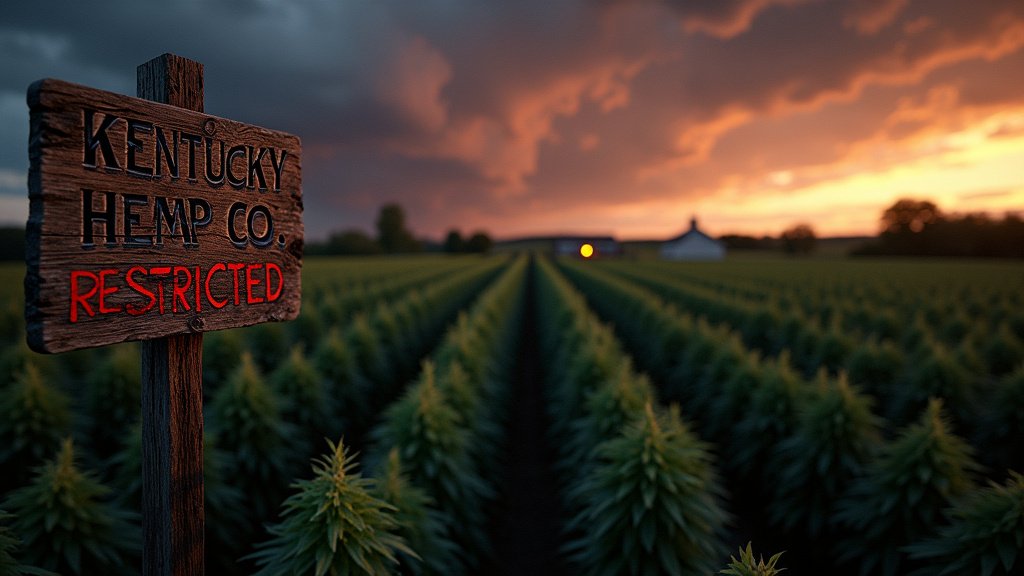
Kentucky’s hemp industry faces a major threat. New federal THC restrictions are causing widespread alarm. This news could devastate businesses statewide.
A Blooming Industry Faces a Storm
The hemp sector in Kentucky was once a booming success story. It grew rapidly after the 2018 Farm Bill. This law legalized hemp nationwide. Kentucky became a top producer. It ranked second only to California. Over one-fifth of the nation’s floral hemp came from the Bluegrass State. Farmers and businesses saw new opportunities. Many shifted from tobacco crops. The industry now supports thousands of jobs. It contributes hundreds of millions to the state economy.
New Federal Rules Tighten the Noose
However, recent federal legislative changes have cast a dark shadow. A provision inserted into a government funding bill introduces stricter THC limits. The old standard allowed hemp to have less than 0.3% delta-9 THC. This was on a dry weight basis. The new rule changes this significantly. It now focuses on total THC. This includes THCA and other related compounds. The new limit is also 0.3% total THC. This is still on a dry weight basis. More critically, there’s a new per-container limit. Products can now only contain 0.4 milligrams of total THC. This applies to the innermost packaging. These changes aim to close what some call a ‘loophole.’ This loophole allowed intoxicating hemp derivatives to flourish.
Economic Fears Grip Businesses
These new regulations are creating immense uncertainty. Farmers typically operate on one-year contracts. They need predictability to plan. The marketability of their hemp crops is now in question. Processors and retailers also face huge challenges. Industry groups warn that up to 95% of hemp-derived ingestible products could become illegal. Many businesses will need to reformulate their products. Others may face outright closure. This is particularly true for those producing popular items like delta-8 THC. These products were once legal under the previous framework.
Voices of Opposition Emerge
Industry leaders are speaking out against the new rules. Many call them unscientific and devastating. Kentucky farmers sent a letter to Senator Mitch McConnell. He championed the new provision. The farmers warned of “immediate and catastrophic consequences.” They highlighted the potential loss of income. They also noted the impact on rural communities. Senator Rand Paul opposes the restrictions. He is drafting legislation to give states more control. He believes Kentucky already has a framework. He argues the federal government should not override state regulations. Advocates worry these rules will push safe, legal products into the black market. They also fear consumers will lose access to products they use for wellness.
The ‘Container’ Quandary and Future Outlook
A key point of confusion is the definition of a “container.” The law is unclear on this. This ambiguity adds to the industry’s anxiety. The new rules take effect in November 2026. This gives businesses about a year to adapt. The hemp industry is actively lobbying for changes. They seek a more balanced regulatory approach. This approach would distinguish legitimate wellness products from harmful synthetics. The future of Kentucky’s once-thriving hemp sector now hangs in the balance. This significant development is critical news for the state’s agricultural economy. The trending cannabis-related market faces an uncertain path forward. These events highlight ongoing regulatory challenges.
Hope for Rational Regulation
Despite the bleak outlook, some hope remains. Industry advocates are working to find solutions. They want to preserve jobs and businesses. They aim for clear, science-based regulations. These rules should protect consumers. They should also support legal businesses. The coming months will be crucial. They will determine the fate of Kentucky’s hemp industry. The sector’s ability to navigate these new events will shape its future. It remains a key part of the state’s agricultural landscape.
Adapting to the New Landscape
Businesses are exploring various strategies. Some plan to shift focus to fiber or grain hemp. These varieties have minimal THC. Others are looking at reformulation. They aim to meet the strict total THC limits. Victory Hemp Foods, for instance, focuses on products with undetectable THC levels. They use hemp as food ingredients. This allows them to continue operations unaffected. However, most companies rely on cannabinoid products. These are now directly threatened. The outcome will likely depend on continued advocacy and potential legislative adjustments. The industry hopes for a future where it can thrive responsibly.