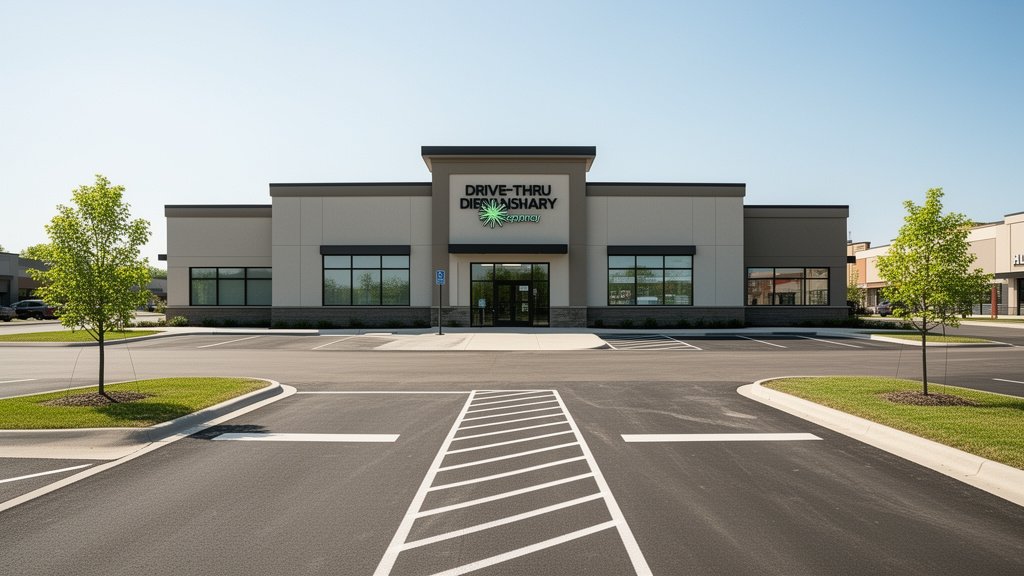
The City of Sycamore is currently at a legislative crossroads regarding the modernization of local retail cannabis infrastructure. Local officials are actively reviewing a proposal that would amend municipal codes to permit drive-thru and curbside pickup options for future cannabis dispensaries. This administrative shift, while localized to Sycamore, is a direct reflection of broader legislative updates occurring within the Illinois state framework, which continues to refine how the cannabis industry integrates into suburban business districts. As the municipality weighs these changes, the focus remains on balancing economic development with public safety and traffic logistics.
Key Highlights
- Legislative Alignment: The proposed amendment to Sycamore’s municipal code is designed to bring local ordinances in line with updated state-level guidelines under the Illinois Cannabis Regulation and Tax Act.
- Modern Retail Integration: The proposal seeks to authorize drive-thru and curbside pickup facilities, marking a shift toward ‘click-and-collect’ convenience models within the regulated cannabis sector.
- Zoning and Logistics: Discussions center on ensuring that high-traffic retail models like drive-thrus do not disrupt the existing flow of commercial traffic or public safety standards in the proposed zones.
- Economic Growth: City leaders are evaluating how these operational flexibilities could increase the attractiveness of Sycamore for cannabis operators, potentially broadening the local tax base.
Evolution of the Green Economy in Sycamore
The discussion surrounding drive-thru cannabis infrastructure in Sycamore represents more than just a minor change to zoning regulations; it highlights the normalization of cannabis as a standard retail commodity. Since the legalization of adult-use cannabis in Illinois, municipalities across the state have grappled with the ‘NIMBY’ (Not In My Backyard) versus ‘YIMBY’ (Yes In My Backyard) dynamics of industry growth. In Sycamore, the current proposal suggests that city planners are moving toward a pragmatic, regulatory-first approach, treating cannabis dispensaries with the same infrastructural flexibility as pharmacies or fast-casual restaurants.
The Shift to ‘Click and Collect’
For years, the dispensary model was defined by high-security, low-throughput environments—often akin to bank vaults. However, as the industry has matured, the demand for convenience has risen. Consumers now expect the same efficiency from a cannabis retailer as they do from a standard liquor store or coffee chain. By amending the municipal code to allow drive-thru infrastructure, Sycamore is acknowledging this shift in consumer behavior. This change is not merely about convenience; it is about efficiency and security. A well-designed drive-thru can reduce the number of patrons inside a retail space, potentially streamlining security checks and managing customer volume more effectively.
Secondary Angle: Navigating the Logistics of Traffic
One of the most contentious points of any drive-thru proposal, regardless of the industry, is traffic congestion. For the City of Sycamore, this is a central concern. The Zoning Board of Appeals and the City Council are tasked with analyzing whether specific locations—often designated as light commercial or retail zones—can handle the throughput of a drive-thru model. Planners must ensure that the ingress and egress points for these facilities do not impede main thoroughfares or create hazards for pedestrians. This involves rigorous site plan reviews, traffic impact studies, and potentially mandating specific lane configurations that allow for vehicle stacking without overflowing into public streets.
Secondary Angle: The Economic Ripple Effect
From an economic development perspective, the allowance of drive-thru sales is a competitive advantage for the city. Municipalities that provide flexible, modern zoning environments are more likely to attract high-tier dispensary operators. These operators bring significant tax revenue to the city, which is often earmarked for public services. By facilitating this infrastructure, Sycamore is essentially positioning itself as a business-friendly environment within the larger Illinois cannabis market, ensuring it retains the tax dollars that might otherwise flow to neighboring municipalities with more accommodating regulations.
Secondary Angle: Legislative Context and Security
It is vital to understand that this move is also a response to the Illinois Department of Financial and Professional Regulation (IDFPR) updates. As the state refines its oversight of the cannabis industry, local jurisdictions are being given more clarity on what is permissible. However, the onus remains on the local government to implement specific safety requirements. This includes sophisticated surveillance, mandated security lighting, and strict age-verification protocols that must be mirrored in the drive-thru process. The proposal under review in Sycamore aims to codify these security standards, ensuring that convenience does not come at the cost of public safety or regulatory compliance.
FAQ: People Also Ask
Q: Has the drive-thru cannabis proposal already been approved?
A: No, the proposal is currently in the review stage. The City of Sycamore is conducting an analysis of municipal codes to determine if and how such infrastructure can be safely and effectively implemented.
Q: What is the primary reason for this proposal?
A: The primary driver is the need to align local municipal codes with recent updates to Illinois state legislation regarding cannabis retail operations, while also adapting to consumer demand for modernized, efficient retail experiences.
Q: Will this increase traffic congestion in Sycamore?
A: Traffic impact is a key part of the city’s review process. Before any drive-thru permits are granted, the city will assess traffic flow, vehicle stacking capacity, and the suitability of specific zoning locations to prevent congestion.
Q: How does this affect public safety?
A: The proposed amendments include strict regulatory guidelines. Any approved drive-thru dispensary must adhere to state-mandated security protocols, which include high-resolution surveillance, secure access points, and verified age-restriction procedures for every transaction.