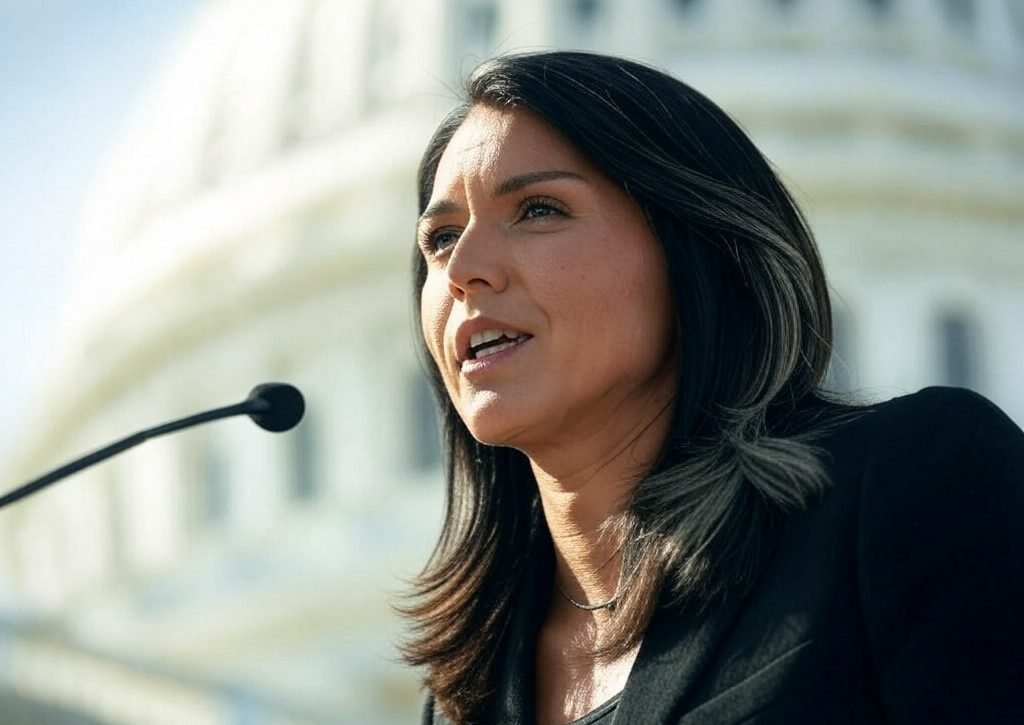
Evaluating Cannabis Use in Security Clearance: Tulsi Gabbard’s Perspective
In the evolving landscape of cannabis legislation and regulation, the intersection of marijuana use and national security has become a topic of significant debate. Recently, Tulsi Gabbard, former Representative from Hawaii and President Donald Trump’s nominee for Director of National Intelligence (DNI), provided insights on how cannabis use should be treated in the context of security clearances. Her statements during the Senate Intelligence Committee’s questions for the record (QFRs) reveal a nuanced approach to an issue that affects many potential applicants for security positions.
Background on Tulsi Gabbard’s Cannabis Advocacy
Throughout her political career, Gabbard has emerged as a vocal proponent of cannabis reform. She has consistently advocated for the legalization of marijuana and has made significant strides in promoting hemp-related policies. Notably, during her tenure in Congress, she introduced several pieces of legislation aimed at reforming cannabis laws, reflecting her commitment to updating outdated regulations.
In 2020, Gabbard stated, “The more information that I’ve learned, the more research that I have done, it shows how, number one, outdated our laws are as it relates to cannabis in particular and how much opportunity there is, again from a medical perspective as well as from an economic perspective, especially related to hemp.” This perspective aligns with broader societal shifts towards cannabis acceptance and legalization.
Key Insights on Security Clearance and Cannabis Use
During her confirmation process, Gabbard addressed two pivotal questions regarding marijuana use and security clearance eligibility. When asked about the current DNI policy which asserts that “past marijuana use should not be determinative in the adjudication of security clearances,” Gabbard affirmed her agreement, stating, “I agree with the current DNI policy that past marijuana use should not be determinative in the adjudication of security clearances, provided it does not indicate broader issues with judgment or reliability.”
However, the conversation took a more complex turn when Gabbard was questioned about the implications of “ongoing” marijuana use. She remarked, “However, ongoing marijuana use is more complex, as it remains illegal under federal law. It must be carefully evaluated within the context of the applicant’s overall behavior, consistency with legal obligations, and ability to safeguard classified information.” This statement reflects the challenge of reconciling state-level legalization movements with federal regulations.
Case-by-Case Evaluation: A Balanced Approach
Gabbard was also asked whether cannabis use should ever be a basis for denying access to classified information. She responded with caution, emphasizing that security clearance decisions should be made on an individual basis. “The security clearance decision must be made on a case-by-case basis, taking into account the individual’s overall judgment, reliability, and ability to safeguard classified information,” she stated. This approach indicates a desire for a more nuanced understanding of each applicant’s circumstances rather than a blanket policy.
The Evolving Landscape of Cannabis Law
As cannabis laws continue to evolve at the state level, Gabbard pointed out the need for the intelligence community to balance adherence to federal law with an understanding of societal changes. “As cannabis laws evolve at the state level, the [intelligence community] must balance adherence to federal law with an understanding of societal changes,” she said, highlighting the complexities faced by policymakers and security agencies.
If confirmed, Gabbard expressed her intention to ensure that security clearance determinations are “fair, consistent, and aligned with national security needs while appropriately considering individual circumstances.” This commitment to fairness is crucial in an era where public perception of cannabis is changing rapidly.
Legislative Context and Support from Peers
Gabbard’s stance on cannabis and security clearance is not isolated. Senator Ron Wyden (D-OR), a member of the Senate Intelligence Committee, has long advocated against denying security clearances based solely on past marijuana use. In 2023, he pushed for amendments to intelligence oversight bills that would prohibit such denials, although these efforts did not result in enacted reforms.
Former DNI Avril Haines, appointed by President Joe Biden, also affirmed in 2023 that the federal government does not currently deny security clearances based on past marijuana use alone. This perspective aligns with a growing recognition of the need for recruitment efforts that reflect changing societal attitudes toward cannabis.
The Broader Implications of Cannabis Policy
The implications of Gabbard’s testimony extend beyond the immediate context of security clearances. Her responses illustrate the broader challenges faced by lawmakers and security agencies in reconciling evolving cannabis laws with national security concerns. As public opinion increasingly favors legalization, the need for updated policies that reflect these changes becomes more pressing.
Conclusion
Tulsi Gabbard’s nuanced approach to cannabis use in the context of national security is emblematic of the broader challenges facing policymakers today. As she navigates her confirmation process for the role of DNI, her insights underscore the importance of evaluating security clearance applicants on a case-by-case basis, taking into account both past and ongoing behaviors. With the landscape of cannabis legislation continuing to evolve, it is imperative that security agencies adapt their policies to reflect these changes while ensuring national security remains a priority.