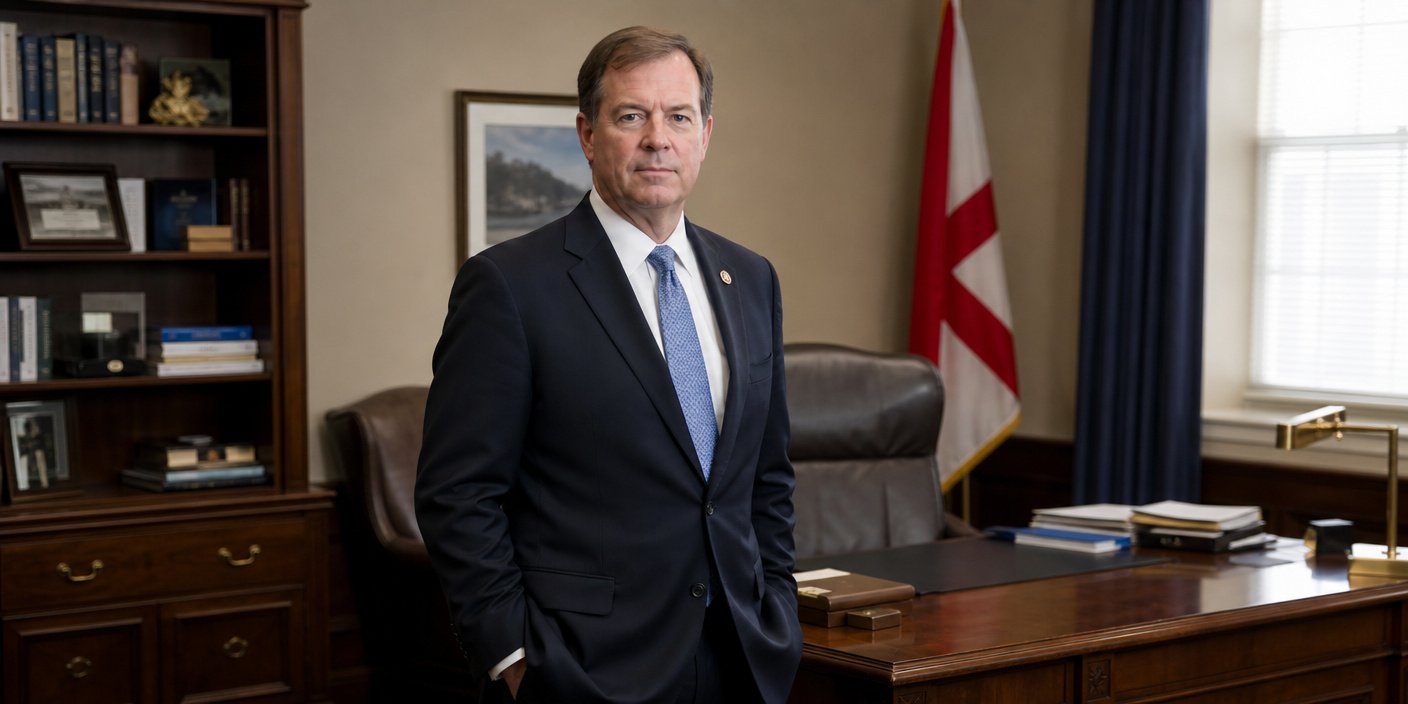
Alabama’s recent formal objection to the Trump administration’s federal medical marijuana rescheduling initiative has ignited a constitutional standoff that threatens to complicate the state’s nascent medical cannabis market. As federal authorities weigh the monumental shift of cannabis from a Schedule I to a Schedule III controlled substance, Alabama Attorney General Steve Marshall’s resistance has thrust the state into the epicenter of a brewing conflict over state sovereignty, tax policy, and the boundaries of federal enforcement.
The Constitutional Crossroads: Alabama’s Pushback
The fundamental tension lies in the intersection of federal authority and state legislative autonomy. Attorney General Steve Marshall, acting on behalf of the state’s interests, has formally signaled deep reservations regarding the federal push to reschedule marijuana. At the heart of this resistance is not merely a policy disagreement, but a constitutional argument concerning the balance of power. Alabama’s administration contends that the federal rescheduling process bypasses established Congressional protocols, effectively allowing executive agencies to unilaterally alter the regulatory landscape for a substance that remains, in their view, fraught with public health risks.
For Alabama, this is a matter of maintaining clear lines of authority. By objecting to the rescheduling, the state is signaling that it refuses to be a passive recipient of federal drug policy shifts. This stance is rooted in a conservative legal tradition that emphasizes the Controlled Substances Act (CSA) and the procedural rigor required to amend it. From the Attorney General’s perspective, any move to mitigate the severity of federal scheduling should originate from the legislative branch, not via the administrative processes of the Drug Enforcement Administration (DEA) or the Department of Justice (DOJ). The concern is that if the federal government can unilaterally reschedule cannabis, it creates a precedent that undermines state-level control over its own controlled substance classification lists.
The 280E Conundrum and Economic Impact
One of the most complex, and often misunderstood, aspects of this dispute is the impact on Internal Revenue Code (IRC) Section 280E. This tax code provision prohibits businesses from deducting ordinary and necessary business expenses if they are involved in the trafficking of controlled substances listed under Schedule I or II. Currently, state-licensed medical cannabis operators in Alabama are grappling with the immense financial burden caused by 280E, which effectively taxes them on gross income rather than net profit.
If the federal government succeeds in moving cannabis to Schedule III, the application of Section 280E would theoretically vanish, providing immediate and substantial tax relief to cannabis businesses nationwide, including those in Alabama. Paradoxically, the state’s formal objection complicates the narrative. By opposing the rescheduling, Alabama’s leadership is essentially aligning itself against a policy shift that would provide financial relief to the very entities the state has authorized to operate. This creates a unique legal limbo: if Alabama’s objection leads to a prolonged delay or a court-ordered halt to rescheduling, local operators remain shackled by the restrictive tax code, hampering their ability to scale operations, lower patient costs, and invest in robust supply chain infrastructure. The economic ramifications are significant, as the viability of the Alabama medical cannabis market is inextricably linked to the operational costs of its licensees.
Interstate Commerce and the Legal Gray Zone
The legal friction extends beyond taxation and into the volatile arena of interstate commerce. The commerce clause of the U.S. Constitution has long been a battleground for cannabis legalization. Currently, the medical cannabis industry in Alabama—overseen by the Alabama Medical Cannabis Commission (AMCC)—is strictly confined within state lines. Medical cannabis products cannot legally cross state borders under federal law, even if the surrounding states were to possess legal markets.
Should the federal government move forward with rescheduling, legal scholars anticipate a cascade of litigation regarding whether a Schedule III status would allow for a more fluid, interstate market. Alabama’s opposition is, in part, a strategic attempt to prevent the federal government from forcing an integration that the state has not approved. By challenging the rescheduling, the state is effectively reinforcing a ‘wall’ around its medical cannabis market, ensuring that even if the federal government softens its stance, Alabama retains the prerogative to regulate—and restrict—the flow of cannabis products into and out of its territory. This is a defensive posture against potential federal preemption, designed to protect the state’s regulatory autonomy.
Inside the Alabama Medical Cannabis Commission (AMCC) Rollout
This legal dispute occurs against the backdrop of the Alabama Medical Cannabis Commission’s ongoing efforts to establish a functional, reliable market. The AMCC has already navigated a turbulent history of lawsuits and administrative delays that postponed the initial rollout for years. The current legal challenge from the Attorney General’s office adds another layer of complexity to an already difficult implementation phase.
For patients across Alabama, the uncertainty is palpable. The commission’s licensing process, which includes rigorous standards for cultivation, processing, and dispensing, is now operating in an environment of high volatility. If the state’s challenge leads to federal litigation or protracted court battles, the resulting uncertainty could discourage investment, delay facility construction, and prevent full market saturation. Furthermore, it complicates the commission’s ability to provide long-term regulatory guidance to licensees, as the ground rules for federal compliance could shift at any moment. Stakeholders are now waiting to see if the state will successfully lobby for specific carve-outs or if the federal rescheduling will move forward in a way that overrides state-level objections, potentially forcing a confrontation that could take years to resolve in the appellate courts.
The Road Ahead: Federal Preemption vs. State Autonomy
As the situation evolves, the core conflict remains: the irreconcilable differences between state-level cannabis legalization and federal prohibition. Alabama is not an outlier in its skepticism, but its formal objection is a definitive marker of the state’s intent to maintain control. The coming months will likely see an increase in legal filings from both sides. If the rescheduling moves to final rule-making, expect Alabama to be a primary plaintiff in any litigation filed to halt the implementation.
Ultimately, this is a litmus test for the future of federalism in the context of controlled substances. Will the federal government’s desire for a uniform rescheduling policy bow to the demands of states that prefer strict prohibition or strict local control? The outcome will not only determine the financial future of Alabama’s medical cannabis operators but will also set a precedent for how the United States navigates the fractured landscape of drug policy in the 21st century. For now, the state’s market remains in a state of suspended anticipation, caught between the gears of a slow-moving, high-stakes legal machine.