Summary Lead
Village Farms International, a key participant in the Dutch government’s experimental legal cannabis supply chain, has officially responded to the newly published first-year evaluation findings of the Netherlands’ Wietexperiment (Controlled Cannabis Supply Chain Experiment). As one of only ten producers selected by the Dutch government to cultivate and distribute cannabis, the company’s reaction provides a critical window into the operational, regulatory, and logistical realities of scaling a legal, controlled cannabis market in Europe. This update signals Village Farms’ continued dedication to its international cultivation facilities and its compliance with the strict regulatory framework imposed by the Dutch Ministry of Health, Welfare and Sport.
Key Highlights
- Regulatory Commitment: Village Farms, operating through its subsidiary Leli Holland, reinforces its alignment with the Dutch government’s stringent oversight protocols following the release of the initial program review.
- Operational Transparency: The government’s first-year report identifies critical supply chain bottlenecks and logistical challenges, which Village Farms is actively integrating into its operational workflow.
- Strategic Market Positioning: Participation in the Dutch experiment positions Village Farms as a foundational player in the evolving European cannabis landscape, aiming to set standards for product consistency and security.
The Anatomy of the Wietexperiment and Corporate Strategy
The Netherlands has long occupied a unique position in global drug policy, characterized by its historical “gedoogbeleid” or tolerance policy regarding cannabis. However, the introduction of the Wietexperiment represents a radical departure from this tradition. By moving from a tolerated grey market to a state-controlled, regulated supply chain, the Dutch government is attempting to eliminate the criminal elements traditionally associated with the cannabis supply chain for coffee shops. Village Farms International, leveraging its extensive expertise in large-scale controlled-environment agriculture, was selected as one of the ten authorized producers. This involvement is not merely a commercial venture but a deep-tier regulatory partnership.
As the government releases its first-year findings, the focus has shifted toward the viability of this closed-loop system. For Village Farms, the findings are not viewed as a setback but as a necessary roadmap for optimization. The challenge lies in transitioning from small-scale, unregulated, or partially regulated cultivation to a massive, centralized, and strictly audited industrial process. The company is currently utilizing its Leli Holland infrastructure to meet the high-quality benchmarks set by Dutch regulators, which include precise chemical composition standards, security requirements, and rigorous supply chain monitoring.
Analyzing the Government’s First-Year Findings
The Dutch government’s evaluation report serves as a diagnostic tool for the entire industry. Among the primary takeaways for producers like Village Farms are the complexities surrounding the integration of local coffee shop distribution networks with authorized supply sources. The report highlights that while the demand for regulated product is high, the synchronization of production, laboratory testing, transport, and delivery is an immense technical undertaking.
Village Farms has acknowledged these findings with a perspective focused on refinement. In a sector where compliance is the single most significant barrier to entry, the feedback loop between the regulator and the cultivator is vital. The government identified areas where security protocols and digital inventory management required scaling. By welcoming these findings, Village Farms is signaling to shareholders and regulators alike that they are prepared to iterate on their processes—a move that effectively lowers the long-term risk profile of their Dutch operations. This collaborative stance is essential for any firm operating in a government-monitored trial where the license to operate is subject to rigorous periodic review.
The Operational Reality of Legal Scaling
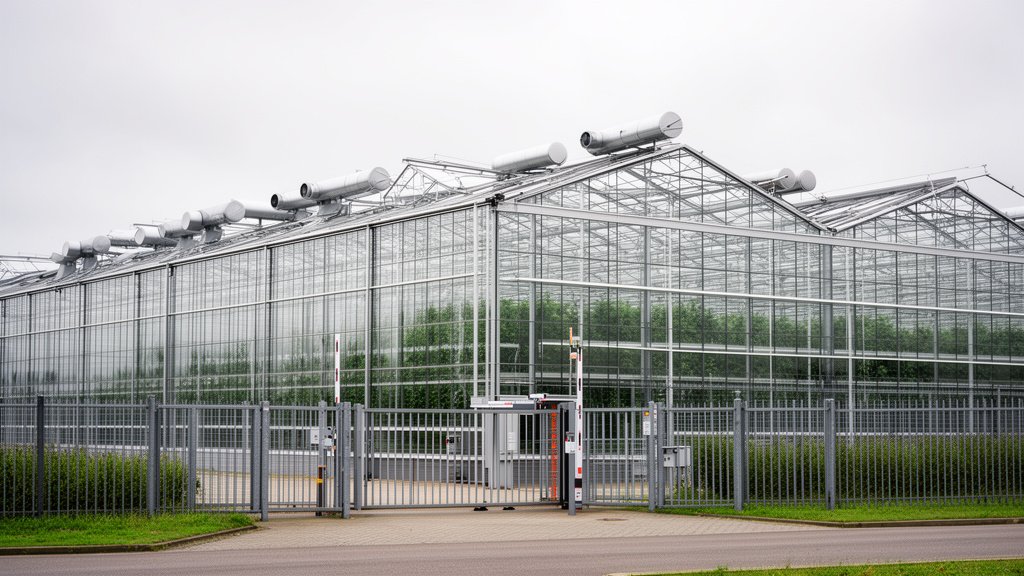
Operating within the Dutch cannabis experiment requires an industrial sophistication that far exceeds standard greenhouse horticulture. The facility requirements, which include state-of-the-art security, 24/7 surveillance, and multi-factor authentication for entry, are akin to pharmaceutical manufacturing standards. Village Farms has had to implement specialized logistical software to ensure that every gram of product is tracked from the moment of harvest to the final point of sale in participating municipalities.
This operational complexity is a key secondary angle of the story. Critics often underestimate the difficulty of standardizing a biological product like cannabis. Unlike manufactured pharmaceuticals, cannabis crops are susceptible to variations based on lighting, humidity, and nutrient profiles. Achieving the uniformity required by the Dutch state involves advanced AI-driven climate control and real-time analytical chemistry. The fact that Village Farms has navigated these early regulatory waters suggests a successful transfer of their North American expertise to the European theatre, providing a competitive advantage as the Dutch program inevitably expands.
Future Outlook and European Market Integration
The broader implication of Village Farms’ involvement in the Netherlands is the precedent it sets for the rest of the European Union. While Germany and other nations move toward legalization models, the Dutch Wietexperiment serves as a high-fidelity laboratory. If the Dutch model succeeds in displacing the illicit market while maintaining public safety, it is likely to be adopted as the gold standard for European cannabis legislation.
For Village Farms, remaining in the good graces of the Dutch government during this transitional phase is a strategic imperative. The company is not just selling a product; it is helping to write the rulebook for a legal, state-sanctioned industry. As the government transitions the experiment from the initial phases to a broader, more permanent rollout, Village Farms is positioned to capitalize on its first-mover advantage and the established operational infrastructure that it has built in partnership with the Dutch regulators. The coming fiscal quarters will likely see a continued focus on optimizing these yields and ensuring that the Leli Holland facility remains a cornerstone of the Dutch national supply chain.
FAQ: People Also Ask
1. What is the Wietexperiment?
The Wietexperiment (Controlled Cannabis Supply Chain Experiment) is a Dutch government initiative designed to test the feasibility of a state-regulated cannabis supply chain. It replaces the previous, unregulated “backdoor” supply system for coffee shops with authorized, legal, and quality-controlled cultivation and distribution.
2. Why is the government’s evaluation important to Village Farms?
As one of the ten licensed producers, Village Farms must comply with the government’s findings to maintain its license. The evaluations determine operational adjustments, security protocols, and long-term regulatory approval, making them crucial for the company’s continued participation and success in the Netherlands.
3. What role does Leli Holland play in this?
Leli Holland is the subsidiary of Village Farms International that serves as the legal entity and operational hub for the company’s activities within the Dutch regulated cannabis experiment. It manages the physical cultivation, security, and distribution logistics required by the state.
4. Will this news impact Village Farms’ stock price?
While direct stock market advice is outside the scope of this news report, investor analysts generally view a company’s successful navigation of complex government regulatory trials as a positive indicator of operational capability and future revenue stability in emerging markets.