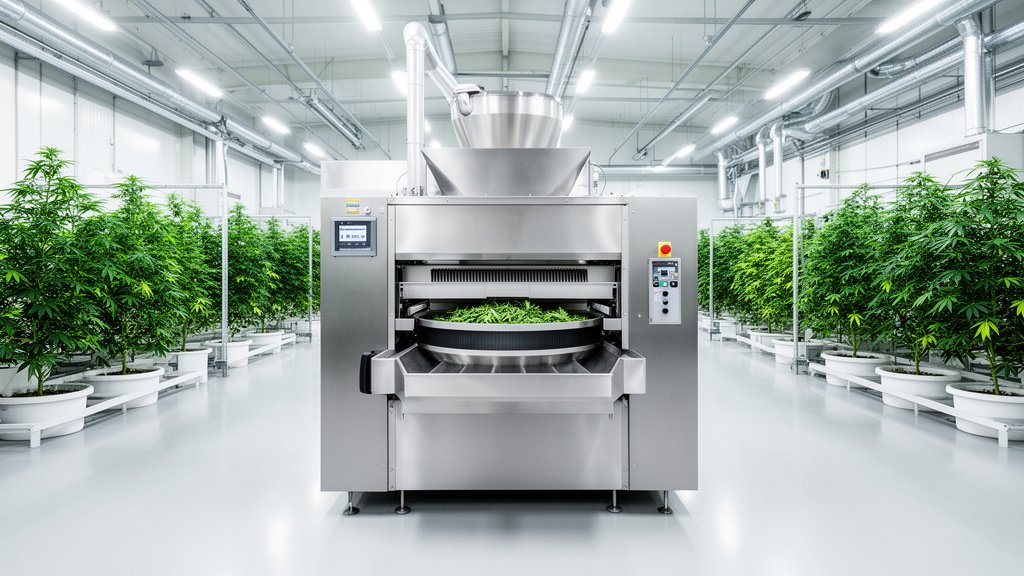
The cannabis industry is currently bracing for its most significant structural pivot since the dawn of legalization: the shift from the ‘Wild West’ era of intuition-based cultivation to a regime of rigorous, data-verified industrial manufacturing. With the U.S. federal government initiating the process to reschedule cannabis from Schedule I to Schedule III under the Controlled Substances Act, the regulatory landscape is shifting beneath the feet of every grower, processor, and retailer in the country. For legacy operators and modern startups alike, the message from the market is clear: embrace high-tech, repeatable production systems, or face obsolescence in an increasingly competitive environment.
The Industrial Pivot: Standardization as the New Survival Metric
For nearly a decade, the cannabis industry operated in a vacuum where demand often outpaced supply, allowing even inefficient, ‘gut-feeling’ operations to remain profitable. That era is definitively ending. The pending federal rescheduling, widely monitored through data sets from industry analysts like MJBizDaily, signals an inevitable move toward Good Manufacturing Practices (GMP) and eventual FDA-like scrutiny. This transition requires operators to move away from disparate, localized tracking methods toward enterprise-level, integrated technology stacks.
The Regulatory Catalyst: Why GMP Compliance Matters
Rescheduling to Schedule III does not legalize cannabis, but it changes the nature of the beast. It brings the industry closer to the regulatory frameworks that govern the pharmaceutical sector. For an operator, this means that ‘intuition’—the art of knowing when to water a plant or when to harvest based on a quick visual glance—no longer suffices for compliance. Regulatory bodies will increasingly demand audit trails that prove consistency. If a company cannot provide a digital, time-stamped, and tamper-proof record of their production process, they will struggle to secure investment, insurance, or licensing in a post-rescheduling world. The integration of Seed-to-Sale software (such as Metrc or BioTrack) is just the baseline; the next step involves comprehensive ERP (Enterprise Resource Planning) systems that track every variable, from nutrient ppm to environmental humidity, against final yield quality.
Data-Driven Cultivation: The Death of Guesswork
Leading commercial facilities are now implementing AI-driven environmental control systems that function closer to pharmaceutical labs than traditional farms. These systems utilize IoT (Internet of Things) sensors to monitor VPD (Vapor Pressure Deficit), CO2 levels, and light intensity in real-time. By feeding this data into machine learning algorithms, operators can replicate their ‘best-in-class’ harvests with clinical precision.
This shift addresses one of the industry’s biggest pain points: variability. When a product is inconsistent, it creates supply chain instability. Retailers and consumers demand the same terpene profile and cannabinoid content month over month. Operators who cannot guarantee this consistency via technology will find themselves relegated to the bulk commodity market, where margins are razor-thin, while those who can master the data-driven process will capture the premium, high-margin market share.
Financial Pressures and the ‘Green Rush’ Hangover
The economic reality facing operators is a compression of margins. As capital becomes more expensive and federal tax burdens (potentially shifting with the potential repeal of IRS Code 280E) become more transparent, the cost of inefficiency is ballooning.
Historically, cannabis companies could survive gross margin erosion because the market was growing exponentially. That growth has slowed. Efficiency is now the primary lever for profitability. Technologies that automate trimming, drying, and, most importantly, the logistics of extraction and packaging are no longer luxuries—they are necessities. Facilities that adopt robotic assistance for high-repetition tasks are seeing labor costs drop by an estimated 20-30%, a buffer that is critical when wholesale prices fluctuate aggressively.
The Future: AI and Robotics in Post-Harvest
The next frontier of this technological adoption is the post-harvest phase. This is the stage where the highest percentage of product degradation occurs. Integrating automated, climate-controlled curing and extraction hardware allows for a ‘locked-in’ quality that manual processing cannot match. As artificial intelligence continues to mature, we will see the rise of predictive maintenance for growing facilities—where AI detects a mechanical failure or an early-stage pathogen outbreak days before a human operator could notice it. This proactive rather than reactive stance is the hallmark of the modern cannabis organization.
FAQ: People Also Ask
How does federal rescheduling specifically impact manufacturing requirements?
Rescheduling to Schedule III suggests a pivot toward Good Manufacturing Practices (GMP). This mandates that every step of the production process, from seed to extract, must be documented, validated, and reproducible. Operators will need to implement robust quality management systems that would be recognizable to pharmaceutical regulators.
What technologies are essential for survival in this market?
At a minimum, operators must have integrated Seed-to-Sale tracking, environmental control systems with IoT connectivity, and an ERP system that unites their cultivation data with their financial and supply chain data. Automation in post-harvest processing is also becoming a key differentiator.
Is the ‘artisan’ grower doomed to fail?
Not necessarily, but the scale at which they operate will change. While the craft/artisanal market will continue to exist as a boutique niche, the mid-to-large-scale operators attempting to compete in the broader market must adopt industrial standards. Failure to digitize and standardize processes is a risk to business viability in the face of price compression.
How does this affect 280E tax compliance?
While rescheduling itself is a regulatory shift, it provides the legal framework to potentially challenge the 280E tax code, which prevents cannabis businesses from deducting standard business expenses. Moving to a documented, standardized manufacturing process makes it significantly easier for legal teams to present a case for ‘normal business’ operations to tax authorities, potentially securing massive tax relief.