The rapid legalization of cannabis across North America, Europe, and emerging global markets has transformed the once-clandestine practice of concentrate production into a high-stakes, multi-billion-dollar industrial sector. Central to this evolution is the Cannabis Extraction Machines Market Analysis By Application, which reveals a seismic shift in how producers approach the isolation of cannabinoids and terpenes. As of 2026, the industry is witnessing a pivot away from rudimentary small-batch processing toward enterprise-grade, GMP-compliant systems designed to serve both the recreational consumer and the rapidly expanding pharmaceutical sector. With the global market value projected to sustain a double-digit CAGR over the next decade, the engineering behind extraction is now the primary bottleneck—and opportunity—for the entire cannabis supply chain.
Key Highlights
- Market Explosion: The global cannabis extraction equipment market is forecast to reach multi-billion-dollar valuations by 2033, driven by a robust CAGR of approximately 15%.
- Technology Dominance: Supercritical CO2 extraction remains the industry standard for purity and safety, though ethanol and hydrocarbon systems continue to hold specific niches for volume and viscosity control.
- Pharmaceutical Pivot: A major trend is the integration of GMP (Good Manufacturing Practice) standards, essential for companies aiming to produce medical-grade cannabis extracts for chronic disease treatment.
- Automation Evolution: AI-driven process monitoring and robotics are reducing labor costs and human error, increasing yield consistency and terpene preservation.
- Sustainable Extraction: Future-focused manufacturing is prioritizing energy efficiency and solvent recovery technologies to lower operational overhead in a highly competitive market.
Precision Revolution: Scaling the Cannabis Extraction Frontier
The Technological Arms Race
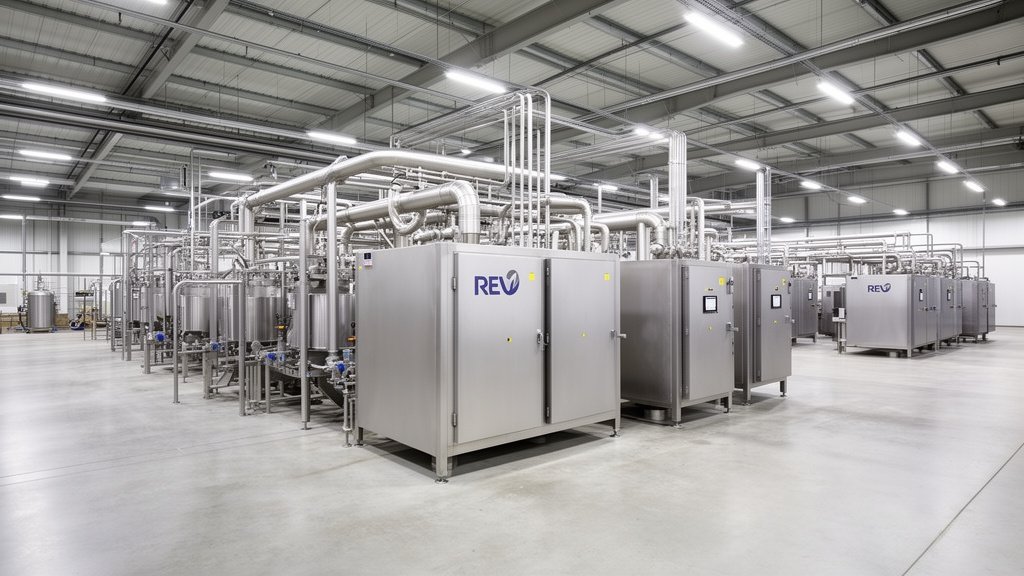
The technological landscape of cannabis extraction is far from monolithic. Manufacturers are engaged in a constant race to improve solvent recovery, yield purity, and throughput. Supercritical Fluid Extraction (SFE) using CO2 has emerged as the gold standard for high-end operations. Its ability to act as both a liquid and gas allows for incredible selectivity, enabling processors to isolate specific cannabinoids like CBD, CBG, or THC while preserving volatile terpene profiles that define product quality.
Conversely, ethanol and hydrocarbon extraction methods remain vital for large-scale, high-volume processing. Ethanol extraction is increasingly preferred in industrial settings due to its efficiency in processing large amounts of biomass, making it a staple for distillate production. However, the regulatory environment is forcing a tightening of safety protocols around these flammable solvents, pushing manufacturers to invest in closed-loop systems that prioritize safety and solvent recapture, essentially turning potential waste into operational savings.
Market Segmentation: From Recreational Vapes to Medical Pharmaceuticals
The market analysis by application highlights a distinct split in operational goals. On the recreational side, the focus remains heavily on the vape, edible, and concentrate markets. Consumers are increasingly sophisticated, demanding products that offer consistent potency and flavor profiles, which necessitates high-precision extraction hardware that can replicate results across batches. This “premiumization” of the market has pushed extraction equipment manufacturers to integrate more sophisticated control dashboards, allowing operators to fine-tune temperature, pressure, and extraction time with digital precision.
In contrast, the medical and pharmaceutical segments operate under a vastly different set of constraints. Here, the end-user requires clinical-grade purity and stability. Consequently, we are seeing a massive surge in demand for modular, clean-room compatible extraction units. These machines must satisfy rigorous regulatory hurdles, often mirroring the standards required for traditional pharmaceutical drug development. For equipment vendors, the ability to provide “compliance-ready” hardware is no longer a luxury—it is a baseline requirement for entering the lucrative medical segment.
Regulatory Compliance and the GMP Mandate
Regulatory compliance is the silent engine driving this market’s innovation. As governments in Germany, Australia, and parts of the United States refine their cannabis framework, they are mandating stricter standards for extraction processes. This regulatory pressure is acting as a catalyst for professionalization. Companies that cannot prove their hardware meets international Good Manufacturing Practice (GMP) standards are quickly finding themselves marginalized.
This trend has created a secondary market for consulting and certification services, where extraction equipment manufacturers often partner with compliance firms to bundle their hardware with the necessary validation documentation. The result is a more integrated, trustworthy supply chain, but it also creates a high barrier to entry that is consolidating the market around a handful of established, well-capitalized tech providers.
Secondary Angles: Sustainability and AI
Beyond basic mechanics, three secondary angles are defining the current market trajectory:
1. Sustainability as a Competitive Edge: As energy prices fluctuate and environmental scrutiny increases, extraction facilities are under pressure to reduce their carbon footprint. Next-generation machines are incorporating heat recovery systems and more efficient solvent evaporation units, turning sustainability into a measurable ROI.
2. AI-Driven Predictive Maintenance: The move toward Industry 4.0 is evident in the extraction sector. New machines are equipped with IoT sensors that track pressure variances and pump health, notifying technicians of potential failure points before they occur. This predictive capability is vital for facilities running 24/7 operations where downtime equals lost revenue.
3. Global Regulatory Fragmentation: While some markets are liberalizing, others remain hyper-restrictive. This fragmentation means that extraction manufacturers must be agile, offering multi-voltage, multi-standard hardware that can be deployed from a legal facility in California to a nascent medical research lab in South America without requiring extensive re-engineering.
FAQ: People Also Ask
Q: What is the primary difference between CO2 and hydrocarbon extraction equipment?
A: CO2 extraction is generally considered cleaner, more tunable, and safer, making it ideal for high-purity medical products. Hydrocarbon extraction (using butane or propane) is often faster and cheaper for large-volume industrial production, though it requires much more rigorous fire-suppression and safety infrastructure.
Q: Why is GMP compliance so important for extraction machines?
A: GMP (Good Manufacturing Practice) compliance ensures that the extraction process is documented, validated, and reproducible. This is mandatory for medical-grade cannabis products and essential for companies looking to export or sell their extracts to pharmaceutical-grade clients.
Q: How does automation impact the cannabis extraction market?
A: Automation reduces labor costs and human error, which is crucial for consistency. It also allows for data logging, which is essential for regulatory audits. AI integration specifically helps in predictive maintenance, preventing costly equipment downtime.
Q: What is driving the growth in the cannabis extraction market?
A: The primary drivers are the expansion of legal cannabis markets globally, the increasing demand for high-purity medical extracts, and the need for more efficient, high-volume processing capabilities to serve growing consumer bases for edibles, vapes, and tinctures.