A landmark shift in American consumption habits has been officially confirmed as daily cannabis use has surpassed both daily alcohol and cigarette consumption, according to recent analysis of data provided by the Substance Abuse and Mental Health Services Administration (SAMHSA). This historic reversal indicates that for the first time in modern history, marijuana has become the primary substance for daily recreational use in the United States, outpacing traditional vices that have dominated the cultural landscape for decades.
Key Highlights
- Statistical Crossover: Daily or near-daily cannabis users now outnumber daily drinkers in the United States, representing a profound shift in demographic behavior.
- NSDUH Findings: The data is derived from the National Survey on Drug Use and Health (NSDUH), considered the gold standard for tracking substance use trends.
- Normalization of Potency: The surge in usage correlates with higher-potency THC products and the increasing ubiquity of legalized, dispensary-based retail models.
- Shift in Perception: Public health experts note that the perceived risk of cannabis has declined significantly among younger cohorts, contributing to the uptick in frequency.
The Cannabis Paradigm Shift: Unpacking the New Consumption Reality
The landscape of American substance use has fundamentally changed. For generations, alcohol and tobacco served as the default recreational substances for adult Americans. However, according to an exhaustive analysis of SAMHSA’s National Survey on Drug Use and Health (NSDUH) data conducted by researcher Jonathan Caulkins of Carnegie Mellon University, that era has come to an end. The study reveals that approximately 17.7 million Americans now report using cannabis on a daily or near-daily basis, compared to 14.7 million who report daily alcohol consumption. This crossover is not merely a statistical anomaly; it represents a cultural pivot toward cannabis as a routine, daily habit rather than an occasional indulgence.
The Mechanics of the Crossover
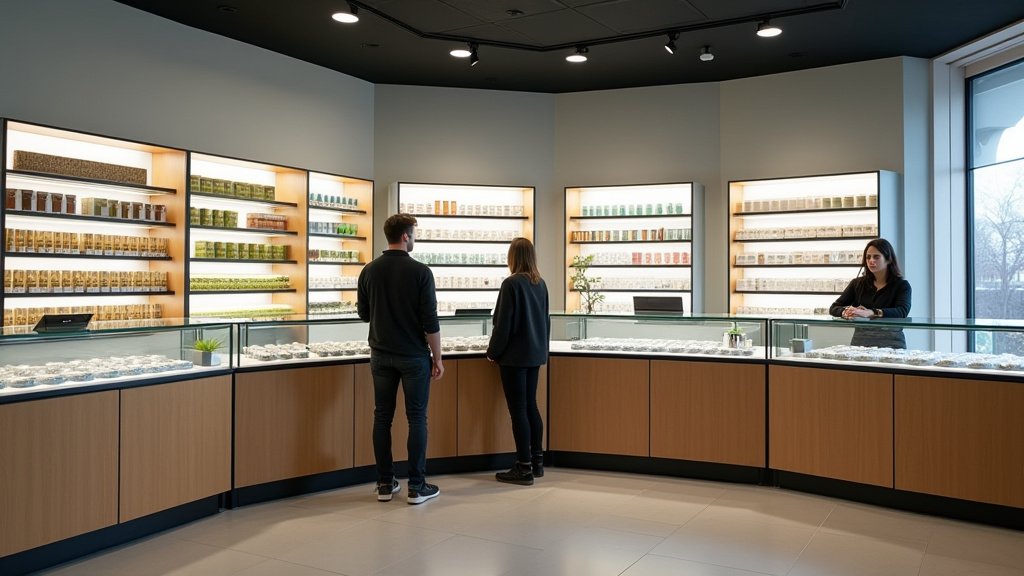
To understand how this shift occurred, one must look at the accessibility and the form factor of modern cannabis. In the 1990s, cannabis consumption was largely sporadic, with a significant majority of users identifying as occasional or weekend consumers. Today, the prevalence of vapes, edibles, and concentrated oils has made it easier than ever to integrate cannabis into a daily lifestyle. Unlike smoking a cigarette—which is often an outdoor, distinct activity—or drinking alcohol, which is often tied to social settings, modern cannabis products allow for discreet, continuous usage. This accessibility has lowered the friction required for daily participation, effectively pulling the substance out of the shadows and into the daily routines of millions.
The Secondary Angle: The Public Health Challenge
This dramatic rise in daily consumption raises urgent questions regarding public health. As the frequency of use increases, so does the threshold for tolerance and potential for dependency. Public health officials are now grappling with the fact that the ‘cannabis’ of the 21st century is markedly different from the cannabis of the 1970s or 1980s. With THC potency levels frequently exceeding 20% in dried flower and significantly higher in concentrates, the biological impact of this ‘daily’ usage is uncharted territory. Researchers are currently prioritizing studies to determine the long-term cognitive and physiological impacts of such sustained, high-potency exposure.
The Secondary Angle: Economic Transformation
The economic implications of this shift are equally profound. The legal cannabis industry has rapidly scaled to meet this demand, creating a robust, multi-billion-dollar infrastructure of dispensaries, grow operations, and logistics networks. As daily use becomes the norm, the economic stability of the cannabis sector is becoming less dependent on tourism or curiosity-based sales and more reliant on the ‘subscription-like’ behavior of daily users. This mirrors the revenue stability models traditionally enjoyed by the tobacco and alcohol industries, forcing financial analysts to reclassify cannabis as a ‘consumer staple’ rather than a ‘discretionary luxury.’
The Secondary Angle: The Regulatory Lag
Finally, the regulatory environment is struggling to catch up. Federal law remains rigid, classifying cannabis as a Schedule I controlled substance, which stands in direct, awkward contrast to the reality of its mass-market daily adoption. This misalignment creates a unique tension: while individual states have moved to regulate and tax the substance, the federal government’s inability to reconcile its policy with current usage habits creates a grey market, banking challenges, and a lack of standardized safety regulations. As daily usage rates continue to climb, the pressure on federal legislators to pursue comprehensive rescheduling or legalization efforts is likely to reach a breaking point, potentially redefining the political calculus on this issue in the coming election cycles.
FAQ: People Also Ask
Q: How was this data collected and verified?
A: The figures are based on the National Survey on Drug Use and Health (NSDUH), an annual survey conducted by SAMHSA. Researchers like Jonathan Caulkins then analyze this raw data to categorize users based on their reported frequency of use, allowing for the comparison of ‘daily or near-daily’ users across different substance categories.
Q: Does this mean cannabis is now more addictive than alcohol?
A: Not necessarily. The data tracks frequency of use, not addiction rates. Alcohol remains a substance with high physiological dependency potential. The study highlights that the behavior of daily use is more common with cannabis, which reflects changes in lifestyle and cultural acceptance rather than exclusively measuring addiction.
Q: What impact does this have on federal cannabis legalization efforts?
A: This data serves as a powerful argument for proponents of legalization. If millions of Americans are already consuming cannabis daily, advocates argue that federal prohibition is not only ineffective but ignores the current reality of the American public, creating a misalignment between the law and societal behavior.