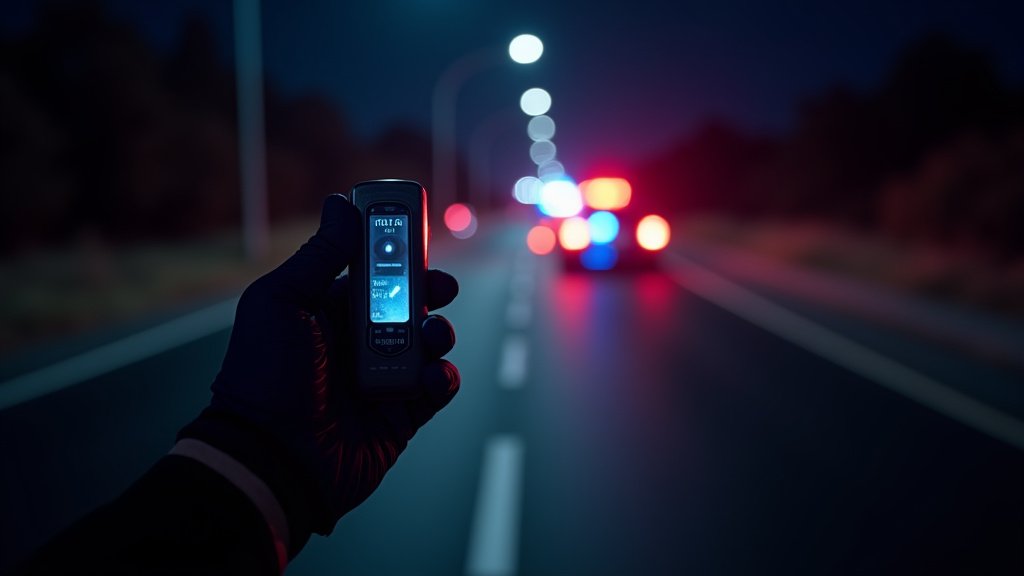
The landscape of traffic safety and law enforcement is bracing for a potential paradigm shift following a newly publicized federally funded study that introduces a viable pathway for a portable marijuana breathalyzer. Developed with the support of the U.S. Department of Justice (DOJ), researchers at Virginia Commonwealth University (VCU) have unveiled a proof-of-concept device that utilizes 3D-printed components to detect delta-9 THC without the need for time-consuming laboratory analysis. This development addresses a critical technological void in current roadside testing, as law enforcement has long struggled to find a standardized, reliable equivalent to the breathalyzer tools used to detect alcohol impairment.
Key Highlights
- Breakthrough Technology: A study led by VCU researchers, funded by the DOJ, demonstrates a portable, 3D-printed inhaler-like device that detects THC via a colorimetric reaction.
- The Mechanism: The prototype uses specialized cartridges embedded with a “Fast Blue” dye and gelatin system to isolate and identify delta-9 THC concentrations.
- Addressing the Gap: Unlike alcohol, which has established roadside testing protocols, cannabis detection has historically required blood or urine analysis, which are slow and do not correlate precisely with recent use.
- Scientific Caveats: While the technology represents a significant “proof-of-concept,” researchers emphasize that further development is required to distinguish detectable THC from actual cognitive or motor impairment.
The Technological Evolution of Roadside THC Detection
The pursuit of a reliable marijuana breathalyzer has been the “holy grail” of forensic science for the past decade. As more states normalize recreational cannabis use, the pressure on police departments to objectively measure driver impairment has intensified. The new DOJ-funded study, released by researchers at Virginia Commonwealth University (VCU) and shared via the National Criminal Justice Reference Service, offers a tangible solution to a problem that has plagued both the legal system and the scientific community.
The Anatomy of the Device
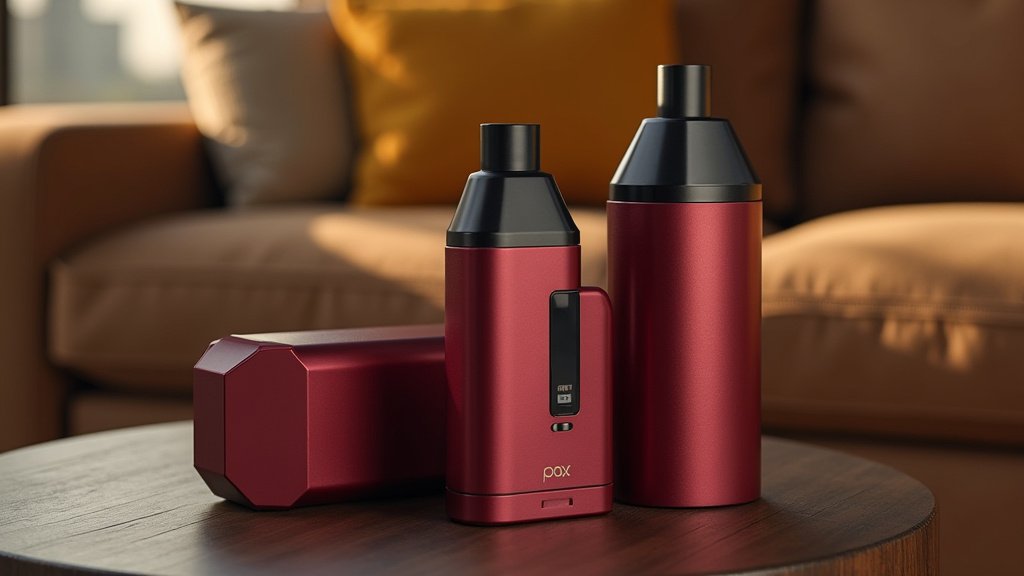
At the core of this new research is a device that appears deceptively simple: a portable tool designed to function similarly to an asthma inhaler. However, the sophistication lies in the internal 3D-printed cartridges. By utilizing a colorimetric approach—relying on a chemical reaction between the breath sample and a specific dye mixture—the device can theoretically trigger a visual indicator when delta-9 THC is present.
The study highlights the use of “Fast Blue” dye combined with a gelatin substrate. When air containing aerosolized cannabinoids is passed through these cartridges, the resulting chemical reaction creates a color shift that can be interpreted using color-space modeling. During laboratory experiments, the device successfully detected THC concentrations in the range of 10-100 nanograms. This represents a foundational step in forensic science, moving away from centralized lab testing and toward a field-operable system.
Challenges in Forensic Correlation
While the technology itself is an engineering success, it is imperative to acknowledge the primary challenge facing any THC-detection device: the science of impairment. Unlike alcohol, which enters the bloodstream and manifests in breath at predictable, impairment-correlated intervals, THC behaves differently.
THC is lipophilic, meaning it stores in body fat and can linger in a user’s system long after the “high” or the impairment has faded. A significant critique of early breathalyzer attempts is that they may detect the presence of THC while failing to prove the driver is currently impaired. This is a crucial distinction for legal due process. If a device detects THC but cannot correlate the breath concentration with cognitive ability, its utility in court is limited. The VCU team acknowledges this hurdle, noting that while their tool is excellent at detecting the analyte, the bridge between “detection” and “impairment” remains a subject for future study and regulatory debate.
The Regulatory and Economic Landscape
The funding for this project, provided by the Department of Justice through the National Institute of Justice (NIJ), signals a strategic shift in federal priorities. By investing in this technology, the DOJ is signaling that it acknowledges the necessity of modernizing traffic safety tools. This is not just a scientific endeavor; it is an economic and legislative necessity. States that have legalized cannabis are currently reliant on subjective field sobriety tests, which are increasingly vulnerable to legal challenges and accusations of bias.
A standardized, electronic, and scientifically validated breathalyzer would drastically reduce the time and cost burden on both law enforcement and the court system. However, the economic impact extends to the private sector. The development of low-cost, 3D-printed components could democratize access to testing, potentially lowering the barrier for law enforcement agencies to adopt the technology. Instead of relying on expensive, proprietary devices that require constant calibration from a single manufacturer, the 3D-printed model suggests an “open-source” or modular future for forensic hardware.
Future Outlook: From Prototype to Protocol
As we look toward the remainder of 2026, the trajectory for this technology will likely move toward field-oriented development and validation. The researchers note that while the “proof-of-concept” is sound, the leap to a roadside tool requires rigorous testing in various environments—cold temperatures, high humidity, and the chaotic conditions of a traffic stop.
Furthermore, the legal community will be watching closely. Any device introduced into the field will face immediate scrutiny under the Daubert standard, which determines the admissibility of scientific expert testimony in federal court. For this breathalyzer to become a standard tool for police, it must withstand intense cross-examination. It will likely require multiple validation studies, likely paired with behavioral sobriety tests, to ensure that the results are not only accurate but also legally defensible in cases of suspected driving under the influence.
FAQ: People Also Ask
1. Does this new breathalyzer prove a driver is impaired by marijuana?
No. The device is designed to detect the presence of delta-9 THC in a person’s breath. It does not currently correlate that presence with specific levels of cognitive or motor impairment, which is a complex physiological question that requires further research.
2. How is this different from existing marijuana testing?
Existing roadside tests for cannabis usually rely on subjective field sobriety tests or blood and urine analysis. Blood tests take time to process and don’t necessarily indicate recent use due to how THC lingers in the body. This breathalyzer aims to detect recent usage in a rapid, non-invasive manner.
3. Is this device already being used by police departments?
No. This study is a “proof-of-concept.” It has established foundational data, but it is not yet a commercial product available for police use. It requires further field-oriented development and legal validation before it could ever be deployed on the road.
4. What is the role of 3D printing in this research?
3D printing allows researchers to quickly and cheaply iterate on the design of the device’s cartridges. By using 3D-printed hardware, they can create precise structures for the gelatin-based testing medium at a low cost, making the device theoretically much cheaper to mass-produce than traditional electronic sensors.