The global cannabis vertical farming market is poised for substantial growth, projected to reach $1.8 billion by 2032, a significant leap from its $472.9 million valuation in 2025. This expansion is driven by technological advancements, increasing legalization, and a growing demand for high-quality, domestically produced cannabis.
Key Highlights:
- Market expected to grow from $472.9 million in 2025 to $1.8 billion by 2032.
- Compound Annual Growth Rate (CAGR) of approximately 18-20% is anticipated.
- Technological innovation, including AI and automation, is a key growth driver.
- Increasing regulatory clarity and legalization in various regions are fueling market expansion.
- Demand for premium, controlled-environment cannabis is on the rise.
The Rise of Controlled Cultivation
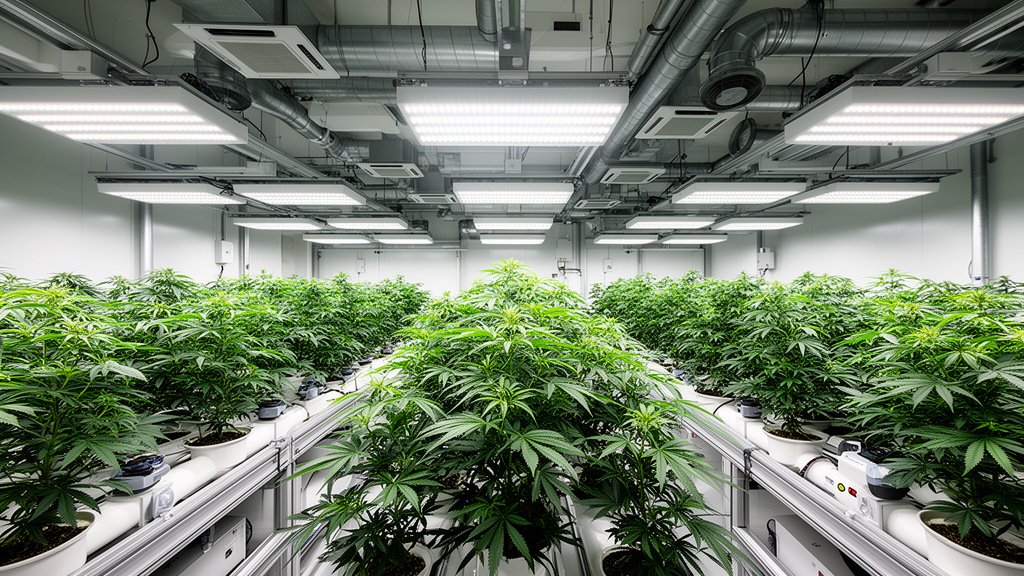
The cannabis industry is undergoing a significant transformation, with vertical farming emerging as a pivotal technology. This method of cultivation involves growing cannabis in vertically stacked layers, often indoors, allowing for precise control over environmental factors such as light, temperature, humidity, and CO2 levels. This meticulous control is crucial for optimizing plant growth, enhancing cannabinoid and terpene profiles, and ensuring consistent product quality, free from the variables and contaminants often associated with traditional outdoor cultivation.
Driving Forces Behind Market Expansion
The projected market surge is attributed to several converging factors. Foremost among these is the progressive legalization of cannabis for both medical and recreational use across numerous jurisdictions worldwide. As regulatory frameworks mature, legitimate businesses are investing heavily in sophisticated cultivation operations. Furthermore, advancements in LED lighting technology, hydroponic and aeroponic systems, and climate control software are making vertical farming more efficient and cost-effective. Automation and AI are also playing an increasingly vital role, optimizing resource allocation, monitoring plant health, and reducing labor costs. The growing consumer preference for high-potency, contaminant-free cannabis products further bolsters the demand for vertically farmed yields.
Economic and Investment Landscape
The burgeoning cannabis vertical farming sector is attracting significant investment. Venture capital firms and established agricultural technology companies are pouring capital into startups and expanding existing operations. The report highlights the substantial economic impact, not only in terms of market value but also in job creation within the technology, cultivation, and ancillary support sectors. Companies are focusing on developing scalable solutions that can be deployed in urban environments, reducing transportation costs and supply chain complexities. The potential for year-round cultivation, irrespective of external climate conditions, ensures a stable and predictable supply, which is a significant advantage for producers and consumers alike.
Challenges and Future Outlook
Despite the optimistic outlook, the industry faces challenges. High initial setup costs for vertical farms, coupled with significant energy consumption, remain key concerns. However, ongoing innovation in energy-efficient lighting and renewable energy integration is beginning to mitigate these issues. Regulatory hurdles and inconsistencies across different markets also present complexities for businesses operating on a larger scale. Looking ahead, the market is expected to see further consolidation, with larger players acquiring smaller operations and technological advancements continuing to drive down production costs. The focus will likely shift towards sustainable practices and the development of specialized strains catering to specific market demands.
FAQ: People Also Ask
What is vertical farming in the context of cannabis?
Vertical farming for cannabis involves cultivating the plant in vertically stacked layers within a controlled indoor environment. This method allows for precise management of light, temperature, humidity, and nutrients to optimize growth and product quality.
What are the main advantages of cannabis vertical farming?
Key advantages include consistent year-round production, higher yields per square foot, reduced water usage, minimized pest and disease issues, and the ability to produce high-quality, contaminant-free cannabis due to precise environmental control.
What are the biggest challenges facing cannabis vertical farms?
The primary challenges include high initial capital investment, significant energy consumption for lighting and climate control, and navigating complex and evolving regulatory landscapes.
How is technology impacting cannabis vertical farming?
Technology is transforming the sector through advancements in LED lighting, hydroponic/aeroponic systems, automation, AI for monitoring and optimization, and sophisticated climate control software, all contributing to increased efficiency and reduced operational costs.
What is the projected growth rate for the cannabis vertical farming market?
Analysts project a compound annual growth rate (CAGR) of approximately 18-20% over the next several years, with the market expected to surpass $1.8 billion by 2032.