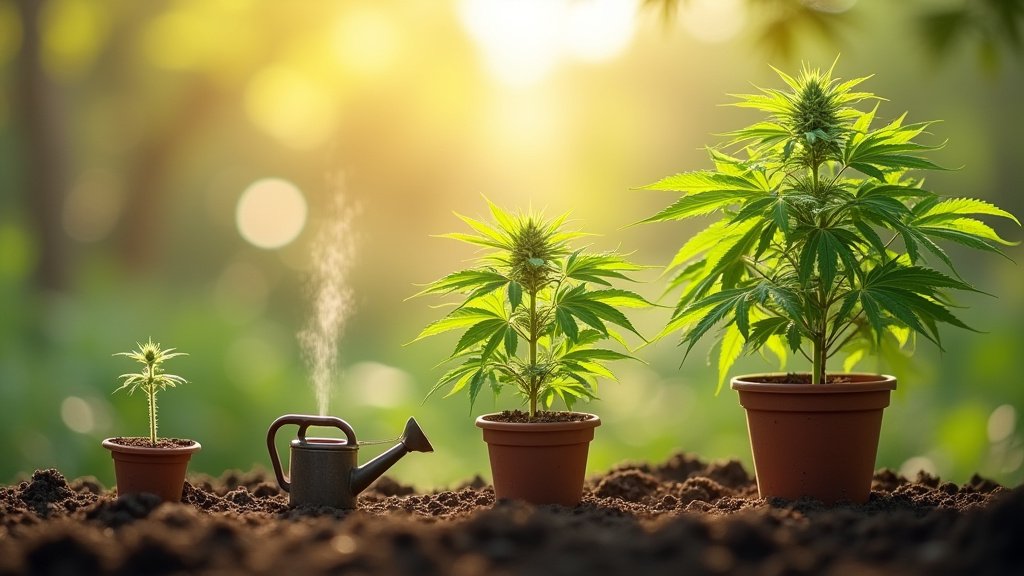
Optimizing your outdoor marijuana grow requires a strategic feeding schedule tailored to each stage of plant development. From seedling to harvest, understanding nutrient needs is crucial for robust growth, potent yields, and superior quality.
Key Highlights:
- Seedlings need gentle, low-concentration nutrients.
- Vegetative stage demands nitrogen-rich food for leafy growth.
- Flowering stage requires phosphorus and potassium for bud development.
- Flush plants before harvest to improve taste and smoothness.
- Water pH is critical for nutrient absorption.
The Essential Outdoor Marijuana Feeding Schedule: A Stage-by-Stage Grow Guide
Cultivating marijuana outdoors offers the potential for massive plants and impressive yields, but it also presents unique challenges. Unlike indoor grows where environmental factors are precisely controlled, outdoor gardens are subject to the whims of nature. A critical component of successful outdoor cultivation is a well-defined feeding schedule that aligns with the plant’s life cycle. This guide breaks down the nutrient requirements from the delicate seedling phase through the crucial flowering period, ensuring your plants receive exactly what they need, when they need it.
Seedling Stage (Weeks 1-3)
The seedling stage is about establishing a strong root system and initial foliage. Young cannabis plants are delicate and can easily be overwhelmed by too many nutrients. It’s best to start with either plain, pH-adjusted water or a very mild nutrient solution at half or quarter strength.
- Nutrient Focus: Low levels of Nitrogen (N), Phosphorus (P), and Potassium (K). Micronutrients are also important, but in very small quantities.
- pH Range: Aim for a pH of 5.8-6.3 for soil or 5.5-6.0 for hydroponic/soilless mediums. This range ensures optimal uptake of essential nutrients.
- Feeding Frequency: Light watering, allowing the top inch of soil to dry out between waterings. Nutrient solution might be used only once or twice a week, depending on plant response and the strength of the solution.
- Soil Considerations: If planting directly into rich soil, additional nutrients may not be necessary for the first few weeks. Compost and organic matter in the soil provide a natural food source.
Vegetative Stage (Weeks 4-8+)
Once seedlings have developed a few sets of true leaves and a healthy root structure, they enter the vegetative stage. This is where the plant focuses on growing larger, developing strong stems, and producing dense foliage. The nutrient demands increase significantly, particularly for nitrogen, which is essential for chlorophyll production and leaf growth.
- Nutrient Focus: Higher Nitrogen (N) content. Moderate levels of Phosphorus (P) and Potassium (K). Increased demand for secondary nutrients like Calcium (Ca) and Magnesium (Mg).
- N-P-K Ratios: Look for fertilizers with a higher first number (e.g., 3-1-2, 4-2-3). As the plant grows larger, you can gradually increase the strength of the nutrient solution.
- Feeding Frequency: Plants in this stage require more water and nutrients. Feedings can become more frequent, potentially every other day, depending on environmental conditions (heat, humidity, wind) and the size of the pot.
- Root Development: Consider using root stimulants during this phase to further enhance the plant’s ability to absorb water and nutrients.
- Topping and Training: This stage is also ideal for implementing techniques like topping and LST (Low-Stress Training) to encourage bushier growth and prepare for the flowering stage.
Transition to Flowering (Late Veg / Early Flower)
The transition from vegetative to flowering is a critical juncture. Growers often switch to a “bloom” or “flower” specific nutrient line. This usually involves reducing nitrogen and increasing phosphorus and potassium, which are vital for bud formation.
- Nutrient Focus: Gradually decrease Nitrogen (N). Significantly increase Phosphorus (P) and Potassium (K).
- Supplementation: Bloom boosters, which are high in P and K, can be introduced carefully.
- pH Adjustment: Maintain the optimal pH range. Nutrient lockout can occur if the pH is too high or too low, preventing the plant from absorbing what it needs.
Flowering Stage (Weeks 9-16+)
As buds begin to form and swell, the plant’s nutrient requirements shift dramatically. Nitrogen needs decrease significantly, while phosphorus and potassium become paramount for dense, resinous bud production. Other elements like Boron and Calcium play crucial roles in flower development and sugar transport.
- Nutrient Focus: High Phosphorus (P) and Potassium (K). Moderate levels of Nitrogen (N), but much lower than in the vegetative stage. Essential micronutrients for resin production and terpene development.
- N-P-K Ratios: Fertilizers with a higher middle and last number (e.g., 1-5-4, 0-10-10) are typical for the peak flowering phase.
- Feeding Frequency: Continue regular watering and feeding, adjusting based on plant size and environmental conditions. Ensure adequate drainage to prevent root rot.
- Bud Swelling: This phase is characterized by rapid bud growth. Providing the right nutrients at this stage directly impacts the final yield and quality.
Flushing (Last 1-2 Weeks Before Harvest)
The final weeks before harvest are dedicated to flushing. This involves watering the plants with plain, pH-adjusted water only. The purpose is to remove excess nutrient salts that have accumulated in the plant tissues and growing medium. This process is vital for improving the taste, smoothness, and overall quality of the final product, reducing the harshness often associated with poorly flushed cannabis.
- Water Only: Strictly use plain water. Do not add any nutrients or additives.
- Monitor Runoff: While flushing, some growers monitor the Electrical Conductivity (EC) or Total Dissolved Solids (TDS) of the runoff water. The goal is to see these levels drop significantly.
- Duration: Typically lasts 7-14 days, but can vary based on the type of nutrients used (organic vs. synthetic) and the plant’s stage.
FAQ: People Also Ask
How often should I feed outdoor marijuana plants?
The frequency of feeding depends heavily on the plant’s growth stage, the type of soil or medium used, pot size, and environmental conditions like temperature and sunlight. Seedlings require less frequent feeding than mature plants in the vegetative or flowering stages. Generally, check the soil moisture; if the top inch or two is dry, it’s time to water. Nutrient solutions might be applied with every other watering or less frequently, especially in rich soil or larger pots.
What are the most important nutrients for marijuana plants?
Cannabis plants require macronutrients (Nitrogen, Phosphorus, Potassium – NPK), secondary nutrients (Calcium, Magnesium, Sulfur), and micronutrients (Iron, Manganese, Zinc, Copper, Boron, Molybdenum). Nitrogen is crucial for vegetative growth, while Phosphorus and Potassium are vital for flowering and bud development. Ensuring a balanced supply across all stages is key to healthy growth and high yields.
How do I know if my outdoor marijuana plants are getting too many nutrients?
Signs of overfeeding, often called nutrient burn, include yellowing or browning of the leaf tips, which then curl downwards. The leaves may also develop dark green or bronze patches. If you observe these symptoms, stop feeding nutrients and flush the medium with plain, pH-adjusted water. It’s advisable to start with weaker nutrient solutions and gradually increase the strength based on your plants’ response.
Should I use organic or synthetic nutrients for outdoor grows?
Both organic and synthetic nutrients can be effective for outdoor marijuana grows. Organic nutrients, derived from natural sources, tend to release nutrients more slowly and can improve soil health over time. They often require a living soil ecosystem to break them down. Synthetic nutrients are chemically manufactured and offer more precise control over nutrient delivery, leading to faster results. The choice often depends on grower preference, desired growing style (e.g., living soil vs. hydro), and environmental goals. For outdoor grows, organic methods can be particularly beneficial for soil health and sustainability.
What is the best pH for outdoor marijuana plants?
The ideal pH range for cannabis grown in soil is generally between 5.8 and 6.3. For hydroponic or soilless mediums (like coco coir or perlite), the range is typically slightly lower, between 5.5 and 6.0. Maintaining the correct pH is crucial because it directly affects the plant’s ability to absorb essential nutrients from the growing medium. If the pH is outside the optimal range, nutrient lockout can occur, even if the nutrients are present.