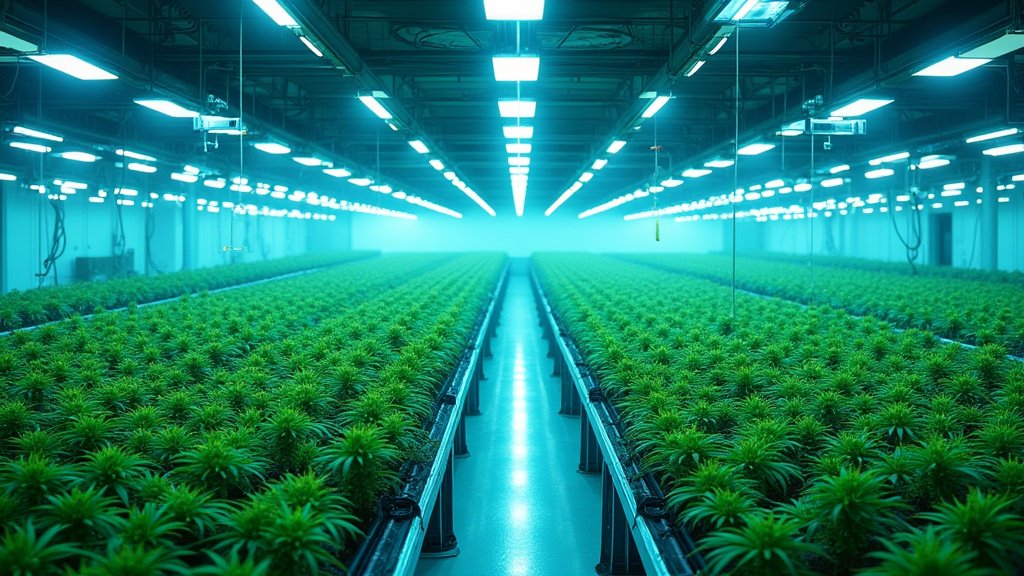
The cannabis cultivation industry is on the cusp of a technological revolution, with advancements in automation, AI, and sustainable practices set to redefine how the plant is grown. These innovations promise increased efficiency, higher yields, and reduced environmental impact, positioning the sector for significant growth and broader market integration.
Key Highlights:
- AI-driven analytics are optimizing grow environments for peak cannabinoid production.
- Automation is streamlining labor-intensive tasks, from planting to harvesting.
- Vertical farming and controlled environment agriculture (CEA) are expanding cultivation possibilities.
- Sustainable technologies are addressing water usage and energy consumption.
- Data integration is providing unprecedented control and predictability in cultivation.
The Algorithmic Garden: AI and Automation in Cannabis Cultivation
The future of cannabis cultivation is increasingly rooted in sophisticated technological integration, spearheaded by artificial intelligence (AI) and advanced automation. These twin forces are not merely improving existing processes but are fundamentally transforming the industry’s capacity for efficiency, quality, and scalability. As regulations evolve and market demand grows, growers are turning to these cutting-edge solutions to gain a competitive edge and meet the complex needs of a global market.
AI-Powered Precision Agriculture
Artificial intelligence is emerging as a critical tool in optimizing every facet of cannabis cultivation. AI algorithms can analyze vast datasets related to environmental conditions—such as temperature, humidity, light spectrum, and CO2 levels—in real-time. By correlating this data with plant growth, cannabinoid profiles, and terpene expressions, AI systems can provide growers with actionable insights to fine-tune their operations. This precision allows for the creation of bespoke growing environments tailored to specific strains, maximizing yield and potency while minimizing resource waste. Predictive analytics, powered by AI, can also forecast potential issues like pest infestations or disease outbreaks, enabling proactive interventions before they impact the crop.
The Rise of Automated Cultivation
Complementing AI’s analytical power is the increasing deployment of automation. From robotic seeding and transplanting systems to automated nutrient delivery and harvesting equipment, automation is addressing the labor-intensive nature of cannabis farming. Automated systems ensure consistency and reduce the margin for human error, leading to more uniform crops. Advanced robotics are also being developed for tasks like pruning and even trimming, significantly cutting down on manual labor costs and increasing throughput. This shift towards automation is crucial for large-scale commercial operations seeking to achieve economies of scale and maintain consistent product quality across massive cultivation facilities.
Data as the New Fertile Ground
The integration of sensors, AI, and automated systems generates an unprecedented volume of data. This data is becoming the most valuable asset for modern cannabis cultivators. Sophisticated platforms are emerging that can aggregate, analyze, and visualize this information, providing growers with a comprehensive dashboard of their operations. This data-driven approach allows for continuous improvement, enabling growers to identify bottlenecks, optimize resource allocation, and understand the complex interplay of factors influencing plant health and productivity. The ability to track and trace every aspect of the cultivation process also enhances compliance and transparency, critical elements in regulated markets.
Expanding Horizons: CEA and Sustainable Practices
Beyond AI and automation, the cannabis industry is embracing innovative architectural and operational strategies, particularly Controlled Environment Agriculture (CEA) and a strong focus on sustainability. These approaches are not only expanding the geographical possibilities for cultivation but also addressing the industry’s environmental footprint.
Vertical Farming: Maximizing Space and Yield
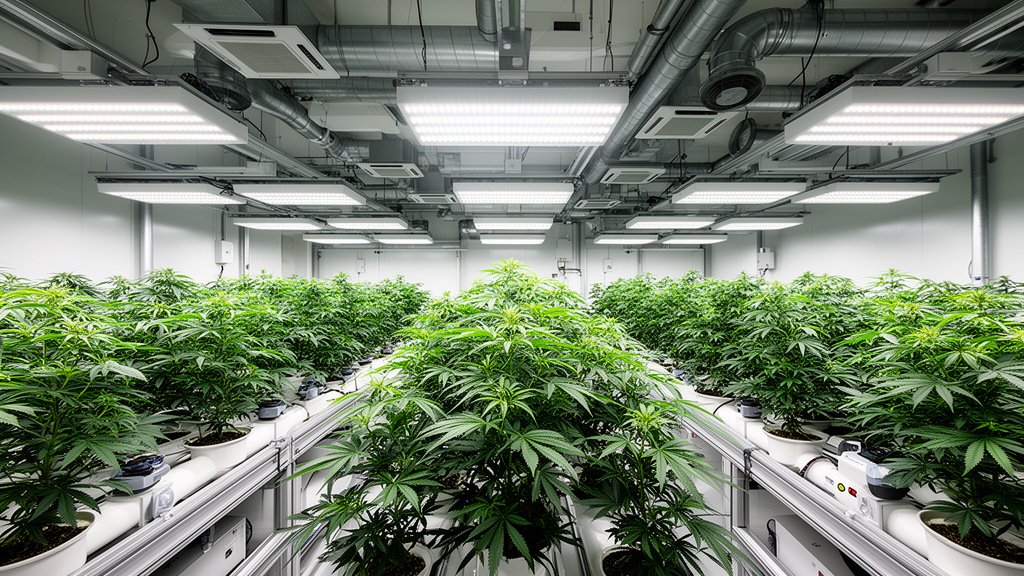
Vertical farming, a cornerstone of CEA, represents a paradigm shift in how cannabis can be grown. By stacking growing layers in a controlled indoor environment, cultivators can maximize yield per square foot, making it ideal for urban areas or regions with limited arable land. These systems utilize advanced lighting technologies, such as LEDs, which can be precisely tuned to the specific light spectrum required by cannabis plants at different growth stages. This not only optimizes plant development but also offers significant energy savings compared to traditional lighting. Vertical farms also offer complete environmental control, protecting crops from external pests and weather fluctuations, thereby reducing the need for pesticides and ensuring year-round production.
Water and Energy Efficiency
Sustainability is no longer an optional add-on but a core consideration for forward-thinking cannabis cultivators. Technologies are being developed and implemented to drastically reduce water consumption, a critical resource in agriculture. Closed-loop hydroponic and aeroponic systems, for instance, can recycle water and nutrients, minimizing waste. Advanced irrigation techniques, such as drip irrigation with precise monitoring, ensure that plants receive only the water they need. In parallel, energy efficiency is being prioritized, with the adoption of energy-efficient LED lighting, optimized HVAC systems, and even the exploration of renewable energy sources like solar power to offset the significant energy demands of indoor cultivation. Waste heat recovery from lighting and equipment is also being integrated into facility designs.
Integrated Pest Management (IPM) and Biocontrols
The move away from chemical pesticides is a significant trend in sustainable cannabis cultivation. Integrated Pest Management (IPM) strategies, combined with the use of biocontrols, are becoming standard practice. IPM involves a holistic approach that includes regular monitoring, preventative measures, and the introduction of beneficial insects or natural predators to manage pests. Biocontrols leverage natural biological processes to protect plants, reducing or eliminating the need for synthetic chemicals. This not only results in a cleaner, safer product for consumers but also minimizes environmental contamination and supports a healthier ecosystem within the grow facility.
Navigating the Future: Challenges and Opportunities
While the technological advancements offer immense promise, the cannabis cultivation industry faces ongoing challenges and exciting opportunities as it integrates these innovations.
Regulatory Landscape and Scalability
Navigating the complex and often fragmented regulatory landscape remains a significant hurdle. Different regions have varying rules regarding cultivation practices, product testing, and market access, which can impact the adoption of new technologies. However, as regulators gain a better understanding of these advanced cultivation methods, policies are likely to adapt, potentially creating more standardized and favorable environments for technological investment. The scalability of these technologies is also key; while AI and automation offer clear advantages for large operations, ensuring accessibility and cost-effectiveness for smaller cultivators will be crucial for broad industry adoption.
Economic Impact and Market Growth
The integration of these technologies is expected to have a profound economic impact. Increased efficiency and yield through AI, automation, and CEA will likely lead to lower production costs, potentially making cannabis products more accessible and competitive. This can fuel market growth and encourage further innovation. Furthermore, the development and deployment of these advanced agri-tech solutions are creating new job opportunities in fields such as data science, robotics engineering, and environmental control management within the cannabis sector.
The Path to Global Harmonization
As the global cannabis market matures, there will be an increasing need for harmonization of cultivation standards and technological best practices. Sharing knowledge and data across borders, facilitated by international collaboration and industry associations, will be vital. This collaborative spirit, combined with continued technological R&D, will pave the way for a more sustainable, efficient, and globally recognized cannabis industry.
FAQ: People Also Ask
What is the primary benefit of AI in cannabis cultivation?
AI’s primary benefit lies in its ability to analyze complex environmental data and provide precise, real-time recommendations to optimize growing conditions for increased yield, potency, and terpene profiles, while also predicting potential issues.
How does automation improve cannabis farming?
Automation streamlines labor-intensive tasks like planting, nutrient delivery, and harvesting, leading to increased consistency, reduced human error, higher throughput, and lower operational costs.
What are the main components of Controlled Environment Agriculture (CEA) for cannabis?
CEA for cannabis typically involves advanced indoor growing systems, precise climate control (temperature, humidity, CO2), optimized lighting (often LEDs), hydroponic or aeroponic nutrient delivery, and integrated data monitoring.
Why is sustainability becoming so important in cannabis cultivation?
Sustainability is crucial due to the high resource demands (water, energy) of indoor cultivation, increasing consumer and regulatory pressure for environmentally responsible practices, and the long-term economic benefits of resource efficiency.
What are the biggest challenges facing technological adoption in the cannabis industry?
The biggest challenges include navigating complex and varied regulations across different markets, the high initial investment costs for advanced technologies, and ensuring that these innovations are accessible and scalable for all sizes of cultivators.