Mastering the architecture of a cannabis plant is no longer just a hobbyist’s endeavor; it has become a fundamental pillar of modern professional horticulture. As we enter 2026, the shift toward yield optimization has moved beyond simple light control to the deliberate manipulation of plant morphology. By mastering specific training techniques—ranging from low-stress training (LST) to intensive high-stress methods (HST) like topping, FIMing, and mainlining—cultivators can systematically break apical dominance and force the plant to redirect energy toward lateral growth. This strategic manipulation ensures that light distribution across the canopy remains uniform, effectively increasing Grams-Per-Watt (GPW) efficiency and ensuring structural integrity for heavy colas.
Key Highlights
- Apical Dominance Disruption: Training techniques are designed to bypass the plant’s natural tendency to grow into a ‘Christmas tree’ shape, forcing lateral bud site development.
- Light Penetration Strategy: By flattening the canopy using ScrOG (Screen of Green) or LST, growers ensure lower bud sites receive the same PPFD (Photosynthetic Photon Flux Density) as the main cola.
- HST vs. LST: High-Stress Training (HST) provides rapid, dramatic growth changes but requires a longer recovery time, while Low-Stress Training (LST) offers a gentle, non-invasive method suitable for all growth stages.
- Energy Redistribution: Proper training ensures that the plant’s resources—specifically auxins, the hormones responsible for growth—are distributed to secondary stems, maximizing harvest weight.
The Anatomy of Yield: Scientific Precision in 2026
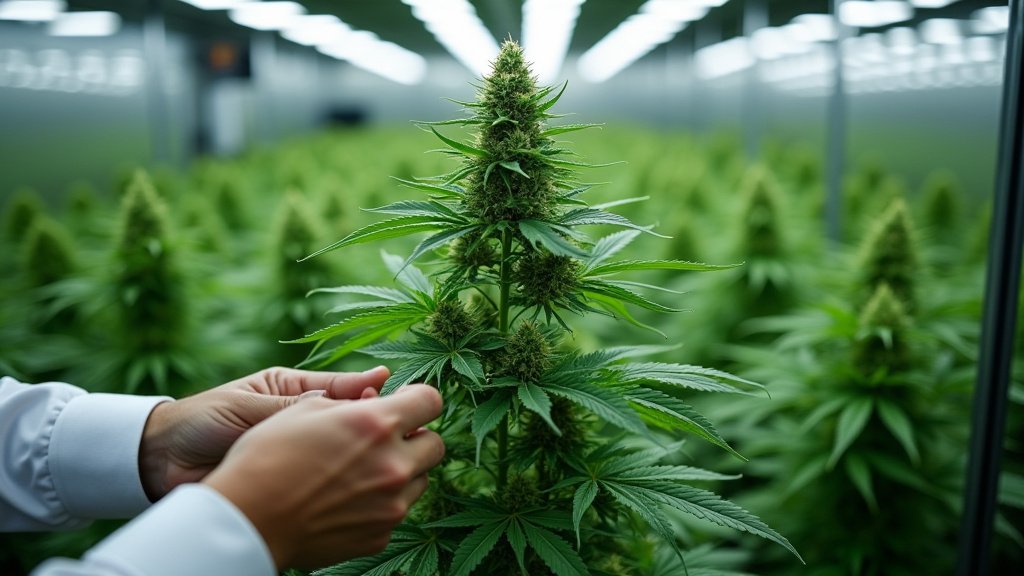
In the current landscape of professional cannabis cultivation, the focus has shifted heavily toward ‘precision canopy management.’ The goal is not merely to grow a tall plant, but to create a uniform ‘flat top’ that maximizes the usable square footage of the grow space. This is achieved through an understanding of photomorphogenesis and the hormonal regulation of plant growth.
The Biological Basis: Auxins and Apical Dominance
At the core of all training techniques is the biological concept of apical dominance. In nature, the cannabis plant prioritizes the growth of the terminal bud—the primary stem at the top. This occurs because the terminal bud produces high concentrations of auxins, which travel down the stem and inhibit the growth of side branches.
By physically bending the main stem (LST) or removing the top (Topping/FIMing), a grower temporarily interrupts this auxin flow. When the apical dominance is broken, the plant undergoes a hormonal shift, allowing secondary branches to receive increased auxin levels, effectively triggering rapid lateral growth. In 2026, professional cultivators are utilizing this biological response to engineer perfectly symmetrical plants that function more like machines than traditional plants.
Low-Stress Training (LST): The Sustainable Approach
LST remains the gold standard for high-quality, boutique cultivation where minimizing plant stress is paramount. Techniques such as ‘bending and tying’ require no tissue damage. By gently pulling the main stem downward and securing it, you force the plant to grow horizontally.
This method is particularly effective for cultivars that are genetically prone to ‘stretching.’ In a 2026 study of indoor commercial grows, facilities utilizing consistent LST reported a 15-22% increase in usable biomass compared to non-trained crops. The primary advantage of LST is its versatility; it can be implemented during the vegetative stage without causing the temporary growth stagnation associated with HST.
High-Stress Training (HST): Topping, FIMing, and Mainlining
When time is of the essence or when the goal is to create a rigid, multi-cola structure, HST is the preferred route.
- Topping: The clean removal of the apical meristem. This effectively doubles the main cola count. When performed consistently, topping allows for a balanced canopy structure.
- FIMing (‘F*ck, I Missed’): A variation of topping where only about 75-80% of the growth tip is removed. This often leads to four or more new growth shoots instead of two, though it is less structurally predictable than standard topping.
- Mainlining: The most intensive technique, involving a combination of topping and tying down branches to create a symmetric, ‘manifold’ structure. This creates a Y-shaped or octopus-like root-to-shoot system. While mainlining adds 1-2 weeks to the vegetative cycle, it provides unparalleled structural support for heavy flowers, reducing the need for late-stage trellising.
The ScrOG Revolution: Light Optimization
In 2026, the Screen of Green (ScrOG) is ubiquitous in commercial settings. By placing a mesh trellis screen above the plant, growers weave branches through the holes, creating a fixed, level canopy. This prevents the ‘shadow effect’ common in wild growth. This method is the ultimate expression of maximizing light penetration, as every bud site is placed at the exact same distance from the light source, ensuring an even distribution of PPFD across the entire flowering footprint.
Secondary Angles: Future Implications for Cultivation
1. Resource Conservation: By maximizing the efficiency of every square inch of the canopy, training techniques drastically reduce the total electrical load required to produce a pound of cannabis. This represents a significant ESG (Environmental, Social, and Governance) victory for large-scale operations.
2. Genotypic Adaptation: The 2026 grower recognizes that Indica-dominant phenotypes respond better to topping, while Sativa-dominant strains benefit more from rigorous LST and ScrOG to control their natural vertical ‘stretch’ during the first three weeks of flowering.
3. Automated Training: Emerging robotic systems are currently being tested to automate LST, using vision-processing sensors to identify the ideal tension points on a plant stem to optimize growth vectors automatically.
FAQ: People Also Ask
Q: Should I use HST or LST for autoflowers?
A: Stick to LST. Autoflowers have a limited lifespan (often 70-90 days), and HST usually causes enough stress to stall growth for several days, leading to a significant reduction in total yield.
Q: How soon can I start training my plants?
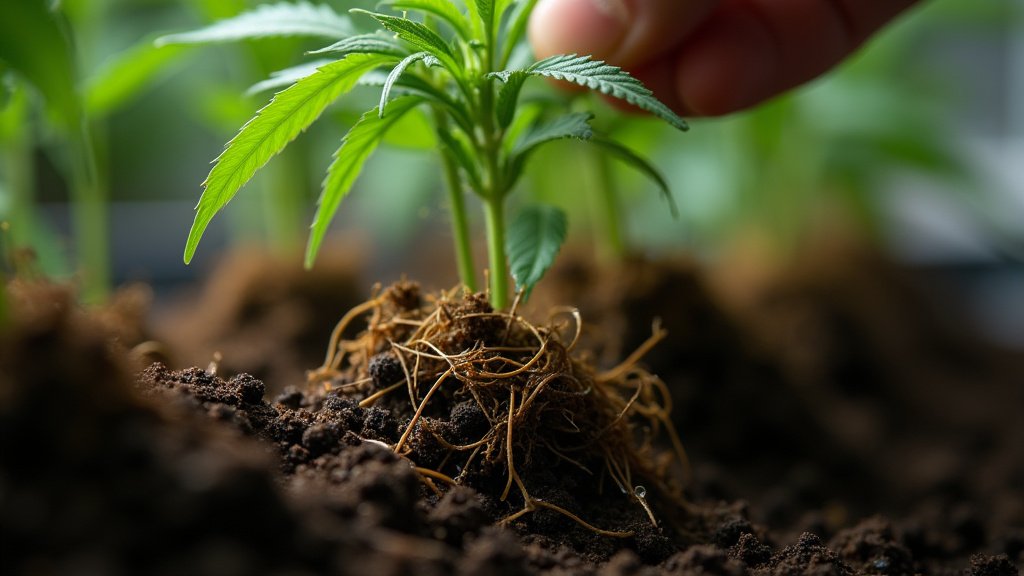
A: You can begin LST as soon as the plant has developed 3-4 nodes, typically around week 2 or 3 of the vegetative stage. HST should wait until the plant is robust, usually once it has established a strong root system.
Q: What is the most important factor in ScrOG?
A: Consistency. The goal of ScrOG is to maintain a flat, uniform canopy. You must tuck or tie down any branch that attempts to grow higher than the rest of the canopy to maintain a level field of buds.