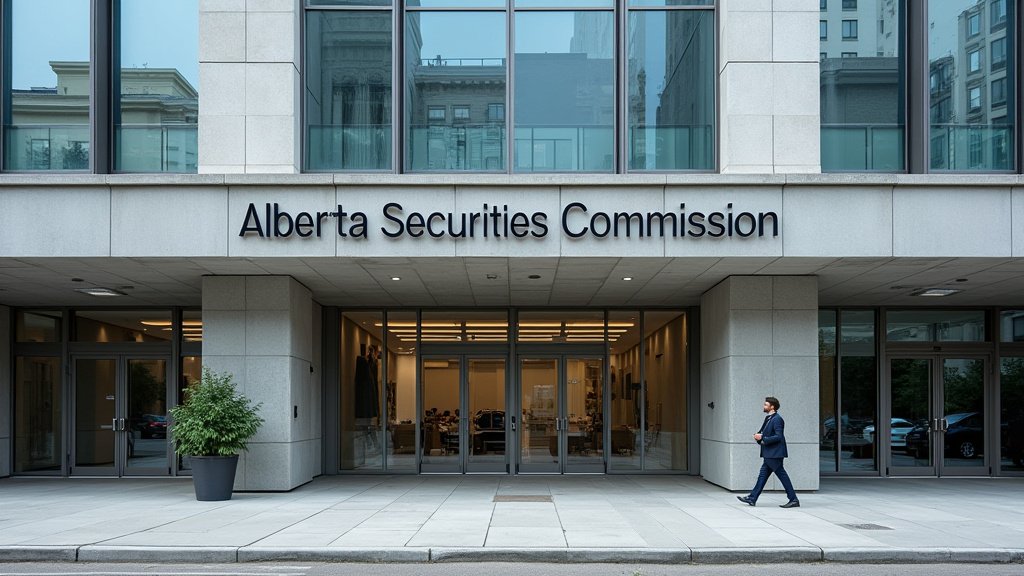
The Alberta Securities Commission (ASC) has delivered a decisive ruling in favor of Aurora Cannabis, dismissing a high-stakes application filed by Curaleaf Holdings, Inc. that sought to block the Edmonton-based cannabis producer’s at-the-market (ATM) share sales program. This ruling provides crucial regulatory clarity for Aurora Cannabis (ACB), reaffirming its right to utilize standard capital-raising mechanisms while navigating the volatile North American cannabis market. The decision effectively concludes a tense legal confrontation that had cast uncertainty over Aurora’s financial strategy and its ongoing efforts to strengthen its balance sheet.
Key Highlights
- The Alberta Securities Commission (ASC) has dismissed Curaleaf’s application to cease-trade Aurora Cannabis’s short-form base shelf prospectus.
- The ruling validates the legality of Aurora’s at-the-market (ATM) equity program, allowing the company to proceed with its capital-raising strategy uninterrupted.
- The dispute centered on Curaleaf’s attempts to use regulatory levers to restrict Aurora’s financing activities, a move the ASC determined lacked sufficient grounds.
- This victory provides Aurora Cannabis with the operational freedom to continue issuing shares to bolster its cash position, a critical lever in the competitive cannabis sector.
Regulatory Validation and Strategic Autonomy
The dismissal of the application by the Alberta Securities Commission represents more than just a procedural victory; it underscores the ASC’s stance on the use of standard securities filings. For Aurora Cannabis, the ability to utilize an at-the-market (ATM) program is a vital tool for liquidity management. ATM programs allow companies to issue shares into the secondary market gradually, rather than through large, dilutive block trades that can spook investors. By dismissing Curaleaf’s attempt to intervene, the ASC has affirmed that Aurora’s actions were compliant with Canadian securities law, thereby shielding the company from what many analysts viewed as an aggressive, exclusionary tactic.
This legal battle occurred against the backdrop of a broader, complex consolidation environment within the cannabis industry. Curaleaf, a dominant US-based multi-state operator (MSO), had sought to restrict Aurora’s financing capacity, likely as a defensive maneuver or a tactical play to influence Aurora’s capital structure. The ASC’s refusal to interfere suggests that regulators are hesitant to insert themselves into corporate strategy or takeover defense dynamics when no explicit breach of securities regulation has occurred. This distinction is vital for investors who are increasingly focused on the “capital runway” of Canadian Licensed Producers (LPs).
The Mechanics of the ATM Program
To understand the gravity of this decision, one must appreciate the function of the ATM program in the current cannabis climate. An at-the-market offering provides a company with the flexibility to sell common shares at the prevailing market price. Unlike traditional “bought deals,” which occur at a fixed price and can often be dilutive due to underwriter discounts, the ATM program allows management to be opportunistic. If the stock performs well, the company can raise capital with minimal market impact.
Aurora Cannabis has utilized this mechanism to fund its operational turnaround, which includes focusing on high-margin medical cannabis, global export markets, and cost-reduction initiatives. By securing this legal green light, Aurora maintains its ability to navigate its financial obligations without being forced into unfavorable terms by external competitive pressures. The market’s reaction to this news was swift, reflecting investor relief that the company’s financing roadmap remains intact and free from external judicial interference.
Implications for North American Cannabis Markets
This ruling creates an interesting precedent for other cannabis companies operating within Canadian jurisdictions. It signals that regulators are likely to prioritize standard corporate governance and the integrity of shelf prospectuses over inter-company litigation aimed at restricting capital access. For institutional investors, this reduces the “regulatory risk” associated with investing in companies like Aurora, as it provides a clear indication that legitimate financial maneuvers will not be easily derailed by competitors’ legal challenges.
Furthermore, the outcome highlights the intense competition for capital in the cannabis sector. As liquidity tightens globally, the ability to access public markets efficiently is a primary competitive advantage. By successfully defending its ATM program, Aurora Cannabis has essentially protected its “war chest,” ensuring it has the resources to fund research, development, and international expansion despite the ongoing pressures of price compression in the retail cannabis market.
FAQ: People Also Ask
Q: What is an At-the-Market (ATM) program?
A: An at-the-market (ATM) program is a type of equity offering that allows a public company to sell shares gradually into the secondary market at the current market price, rather than selling a large block of shares at once. This provides the issuer with flexibility to raise capital as needed.
Q: Why did Curaleaf attempt to block Aurora Cannabis’s program?
A: Curaleaf filed the application to the Alberta Securities Commission in an attempt to restrict Aurora’s ability to issue new shares under its shelf prospectus. Such actions are often seen as strategic maneuvers to limit a competitor’s access to liquidity or to complicate their capital management during sensitive periods.
Q: What was the result of the Alberta Securities Commission (ASC) ruling?
A: The ASC dismissed Curaleaf’s application, finding no grounds to halt Aurora Cannabis’s financing activities. The ruling effectively cleared the path for Aurora to continue using its ATM program as originally planned.
Q: How does this ruling impact Aurora Cannabis investors?
A: For investors, the ruling removes the uncertainty surrounding Aurora’s financing strategy. It confirms that the company maintains access to its capital-raising tools, which is viewed as a positive development for operational stability and long-term liquidity.