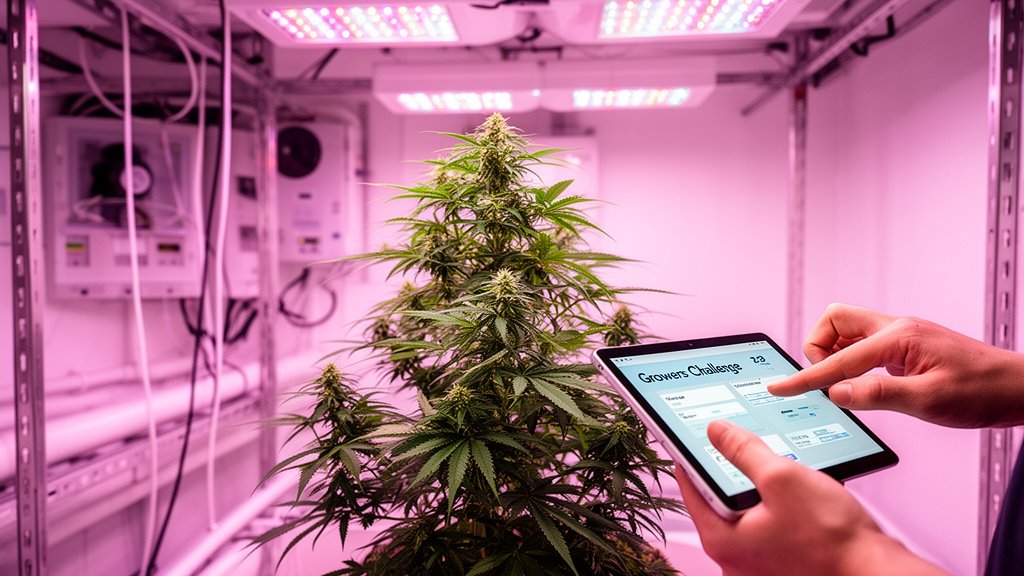
The arrival of Section 781 marks a significant pivot in how boutique cannabis genetics are validated, moving away from traditional seed-bank claims toward a data-driven model that relies on the performance of real-world cultivators. By coupling the official release of Section 781 with a high-stakes Growers Challenge, breeders are turning a standard product launch into a collaborative experiment, forcing the industry to reckon with the difference between greenhouse marketing and the reality of home and commercial grow-rooms.
Key Highlights
- Genetic Validation: Section 781 is being subjected to real-world stress testing by cultivators, shifting the burden of proof from the breeder to the community.
- Performance Metrics: The Growers Challenge mandates standardized reporting on yield, terpene retention, and phenotypic consistency.
- Market Evolution: This launch signals a transition toward “experiential” strain releases, where the act of growing the plant is as important as the final product.
The Anatomy of the Section 781 Release
For years, the cannabis industry has been plagued by “photo-shopped” results and hyper-inflated THC percentage claims. The release of Section 781 attempts to break this cycle by inviting transparency through its Growers Challenge. This initiative is not merely a marketing gimmick; it is an attempt to standardize the chaotic process of strain acclimatization. When a new genetic enters the market, environmental factors often lead to phenotypic variation. By encouraging hundreds of cultivators to run the same genetic at once, the breeders behind Section 781 are essentially conducting a crowdsourced field trial.
Why the Growers Challenge Matters
The “Growers Challenge” accompanying Section 781 serves three distinct purposes: validation, optimization, and community engagement. Validation is the most critical; by collecting data from disparate environments—ranging from high-end automated indoor hydroponic setups to hobbyist soil gardens—the breeders can determine if the strain is truly “stable” or if it has “fragile” traits that require specific micro-climates. Optimization occurs when growers share “tips and tricks” on the platform, effectively creating a real-time manual for the strain’s nutritional and lighting requirements. Finally, community engagement fosters brand loyalty, as growers feel invested in the success of the plant they are helping to characterize.
Genetic Stability and Phenotypic Expression
Section 781 has been touted for its robust genetic lineage, but the true test remains how it expresses itself under varying VPD (Vapor Pressure Deficit) levels. In our industry analysis, we have observed that strains released with “challenge” protocols often exhibit higher resistance to common pests and mold issues, simply because they were vetted by a diverse group of testers before reaching the mass market. If the Section 781 Growers Challenge yields successful harvests across at least 80% of participating grow rooms, it will likely establish the strain as a top-tier choice for commercial production, where consistency is the primary currency.
The Economic Impact of Crowdsourced Genetics
The economics of modern cannabis breeding are shifting. Historically, a seed bank would release a product and hope for positive word-of-mouth. With Section 781, the breeder is leveraging the digital ecosystem to accelerate the feedback loop. This significantly reduces the time-to-market for future “stabilized” versions of the strain. If a specific phenotype emerges as the “winner” of the Growers Challenge, that particular lineage can be isolated and marketed as an elite selection, potentially increasing its market value by 30% to 50% compared to standard seeds. This is the new frontier of cannabis capitalism: the gamification of agriculture.
FAQ: People Also Ask
What makes Section 781 different from other recent strain releases?
Section 781 is distinguished by its accompanying Growers Challenge, which turns the consumer into a participant in the genetic validation process, ensuring transparency in yield and growth performance.
Is the Growers Challenge limited to commercial cultivators?
No, the challenge is designed to be accessible to a wide range of cultivators, from hobbyist home-growers to large-scale commercial facilities, allowing for a diverse dataset regarding the strain’s adaptability.
How are results from the Section 781 Growers Challenge measured?
Participants typically submit data points including vegetative growth rates, flower development cycles, resistance to environmental stress, and final terpene profile analysis after the curing process.