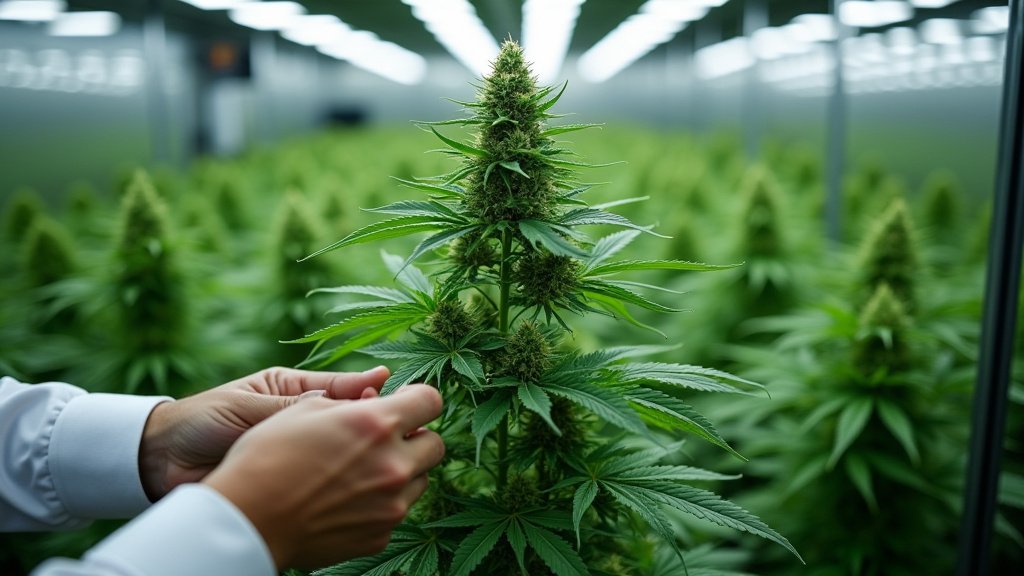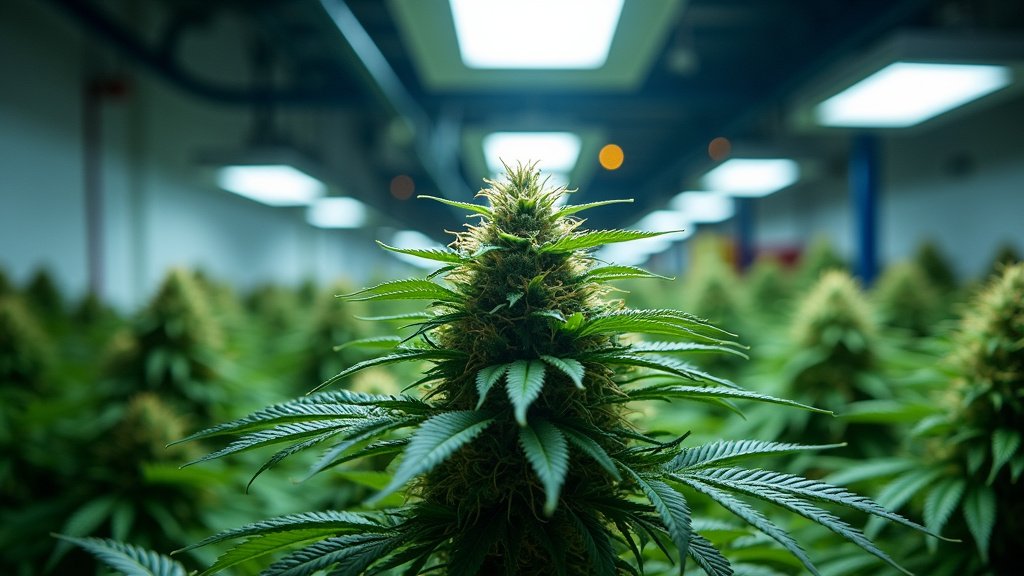
Achieving substantial yields of five pounds of cannabis per light is a goal that attracts cultivators seeking to maximize their output. Reaching this benchmark, however, is not a matter of chance but a direct result of meticulous attention to environmental control, precise nutrient management, and strategic cultivation techniques. This comprehensive guide offers essential advice for growers aiming for exceptional results.
Precision Environmental Control: The Foundation of Success
At the heart of high-yield cannabis cultivation lies the mastery of environmental parameters. Temperature, humidity, and CO2 levels must be finely tuned to optimize plant growth and bud development. For High-Pressure Sodium (HPS) lighting systems, maintaining a temperature of 77°F during the vegetative stage is ideal, with a gradual ramp-up to 81-82°F during the flowering period to encourage robust bud formation. LED systems require a slightly different approach, with an optimal starting temperature of 82°F, and it’s crucial to monitor leaf surface temperature, aiming for a consistent 84°F. Humidity also plays a critical role; clone rooms should ideally be kept between 58-59% to promote rooting, while as the plants mature into late flower, humidity should be progressively lowered to 45-47% to prevent mold and mildew while enhancing resin production.
The Power of Carbon Dioxide Supplementation
To truly push plants towards maximum yield, aggressive carbon dioxide (CO2) supplementation is indispensable. This vital gas fuels photosynthesis, leading to accelerated growth and denser buds. For cultivators utilizing HPS lighting, CO2 levels can be safely and effectively pushed to a peak of 2,700-2,800 parts per million (PPM). Growers employing LED systems can also benefit significantly, though slightly lower levels are recommended, with a peak range of 1,800-1,900 PPM proving highly effective. Consistent monitoring and control are key to maximizing the benefits of CO2 enrichment.
Optimizing Light Intensity and Root Health
Light is the primary energy source for cannabis plants, and for those aiming for five-pound harvests, pushing light intensity to its limits is paramount. HPS systems should target an intensity of 1,300-1,700 PPFD (Photosynthetic Photon Flux Density) during the flowering stage to ensure maximum energy is delivered to the bud sites. Equally important is maintaining robust root health. Timely transplants are critical to prevent the roots from becoming “air-pruned,” a condition where roots are exposed to air and cease to grow, significantly hindering nutrient and water uptake. Ensuring the root zone remains healthy and unhindered is fundamental to supporting the plant’s explosive growth.
Strategic Feeding and Nutrient Management
Feeding strategies must evolve as the plant progresses through its life cycle. Gradual increases in Electrical Conductivity (EC) are essential, starting with a conservative range of 1.3-1.5 EC for young clones. As the plants enter their vigorous growth phases, EC can be steadily increased, peaking at 2.2-2.6 EC during the peak of the flowering stage. Towards the end of the cycle, a strategic reduction in nitrogen is recommended. This shift in nutrient balance can encourage the plant to channel its energy into cannabinoid and terpene production rather than continued vegetative growth, ultimately contributing to a higher quality harvest.
The Art of the Slow Dry: Preserving Quality
The post-harvest process is as crucial as the cultivation itself. A slow, controlled drying period is recommended to preserve the delicate cannabinoids and terpenes that define the final product. Aim for an initial drying environment of 63°F with 60% humidity for 14-17 days. As the drying process progresses, by the seventh day, the conditions should be further refined, gradually dropping the temperature to 60°F while reducing humidity to 50%. This meticulous approach to drying ensures that the harvested cannabis retains its potency, aroma, and flavor, providing a truly premium end product and solidifying the success of your high-yield cultivation efforts.