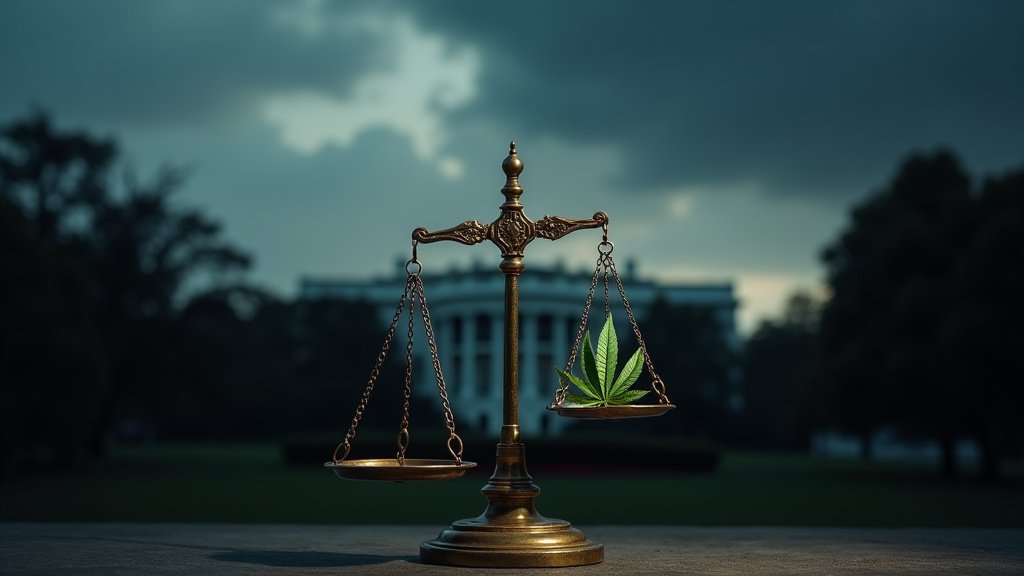
The White House has escalated pressure on federal agencies to expedite the rescheduling of cannabis, a move driven by growing concerns over the drug’s increasing potency and potential public health risks. This intensified focus signals a potential shift in federal drug policy, moving away from a long-standing prohibitionist stance towards a more nuanced approach that acknowledges the evolving landscape of cannabis products and their effects.
Key Highlights:
- White House is actively pushing for faster cannabis rescheduling.
- Concerns over cannabis potency are a primary driver for the policy shift.
- This could lead to significant changes in federal cannabis regulation.
- The move signifies a potential break from historical prohibitionist policies.
Shifting Sands of Federal Cannabis Policy
The Biden administration is reportedly intensifying its efforts to reclassify marijuana under the Controlled Substances Act (CSA). This push is significantly influenced by mounting evidence and concerns regarding the escalating potency of cannabis products available on the market. The Drug Enforcement Administration (DEA) has been tasked with reviewing marijuana’s scheduling, a process that has historically been slow and subject to political influence. The current focus on potency suggests a move beyond simple decriminalization discussions to a more complex evaluation of the drug’s inherent risks and the need for regulatory oversight that reflects its current form.
The Potency Predicament
One of the most significant factors driving this policy re-evaluation is the dramatic increase in tetrahydrocannabinol (THC) levels in cannabis over the past few decades. Modern cannabis strains, particularly those bred for recreational markets, often contain THC concentrations far exceeding those found in the past. This heightened potency raises concerns among public health officials about potential adverse effects, including increased risk of psychosis, addiction, and impaired cognitive development, especially in younger individuals. The White House’s alarm over potency suggests a recognition that the drug’s classification under the CSA, which has remained unchanged for decades, no longer accurately reflects its current pharmacological reality and associated risks.
Navigating the Rescheduling Maze
The process for rescheduling a substance under the CSA involves a rigorous scientific and legal review. The DEA, in consultation with the Food and Drug Administration (FDA), must assess the drug’s potential for abuse, its accepted medical use, and its international treaty obligations. Historically, cannabis has been classified as a Schedule I substance, meaning it is deemed to have a high potential for abuse and no currently accepted medical use. However, a growing body of research and state-level medical cannabis programs have challenged this classification. The administration’s pressure suggests a desire to accelerate this review, potentially by emphasizing the scientific findings related to potency and emerging medical research.
Broader Implications for Public Health and Industry
A rescheduling of cannabis, particularly to a lower schedule, could have profound implications. It could facilitate more extensive research into its potential therapeutic benefits and harms, streamline the development of cannabis-based medicines, and potentially lead to a more coherent regulatory framework for state-legal cannabis industries. Conversely, it could also lead to increased federal oversight and regulation, impacting businesses currently operating under state-specific laws. The White House’s involvement indicates a high level of federal interest in finding a balance between public health concerns and the evolving legal and economic landscape of cannabis.
Historical Context and Future Outlook
The current debate over cannabis rescheduling is rooted in a long history of drug prohibition in the United States. The classification of cannabis as a Schedule I drug in 1970 under the Controlled Substances Act was largely based on prevailing scientific understanding and public health perceptions at the time. However, societal attitudes, scientific research, and the legal status of cannabis have evolved significantly since then, with a majority of states now having legalized medical or recreational cannabis. The White House’s proactive stance suggests a recognition of this evolving landscape and a potential move towards aligning federal policy with current realities and scientific understanding, albeit with a strong emphasis on mitigating potential public health risks associated with increased potency.
FAQ: People Also Ask
What does it mean to reschedule cannabis?
Rescheduling cannabis under the Controlled Substances Act (CSA) would involve moving it from its current classification (Schedule I) to a different schedule (e.g., Schedule II, III, IV, or V), or even removing it entirely. Each schedule has different regulatory implications regarding research, prescribing, manufacturing, and distribution. Schedule I indicates a high potential for abuse and no accepted medical use, while lower schedules allow for more accepted medical use and potentially less federal oversight.
Why is the White House interested in cannabis potency?
The White House’s interest in cannabis potency stems from public health concerns. Modern cannabis products often have significantly higher THC levels than in the past, which can increase the risk of adverse effects, such as anxiety, paranoia, and potentially contribute to the development of cannabis use disorder or exacerbate existing mental health conditions. This increased potency necessitates a re-evaluation of how cannabis is regulated to ensure public safety.
What is the difference between rescheduling and descheduling cannabis?
Rescheduling involves moving cannabis to a different schedule within the Controlled Substances Act, acknowledging some level of accepted medical use or lower abuse potential. Descheduling, on the other hand, would remove cannabis entirely from the CSA, meaning it would no longer be a federally controlled substance, and the federal government would not regulate it under drug laws. The current focus is on rescheduling, not complete descheduling.
What are the potential benefits of rescheduling cannabis to Schedule II?
Moving cannabis to Schedule II could allow for more robust scientific research into its potential medical benefits and risks, as it would permit research under conditions less restrictive than Schedule I. It could also facilitate the development and FDA approval of cannabis-derived medications. Furthermore, it might provide a clearer framework for states with medical cannabis programs to operate within, potentially leading to more standardized product safety and quality controls.
How long does the rescheduling process typically take?
The process for rescheduling a substance under the CSA is typically lengthy and involves multiple scientific and legal reviews by agencies like the DEA and FDA. Historically, these reviews have taken many years, if not decades. However, the White House’s direct involvement and stated urgency suggest an intent to expedite the process, though the exact timeline remains uncertain and dependent on the thoroughness of the required scientific evaluations.