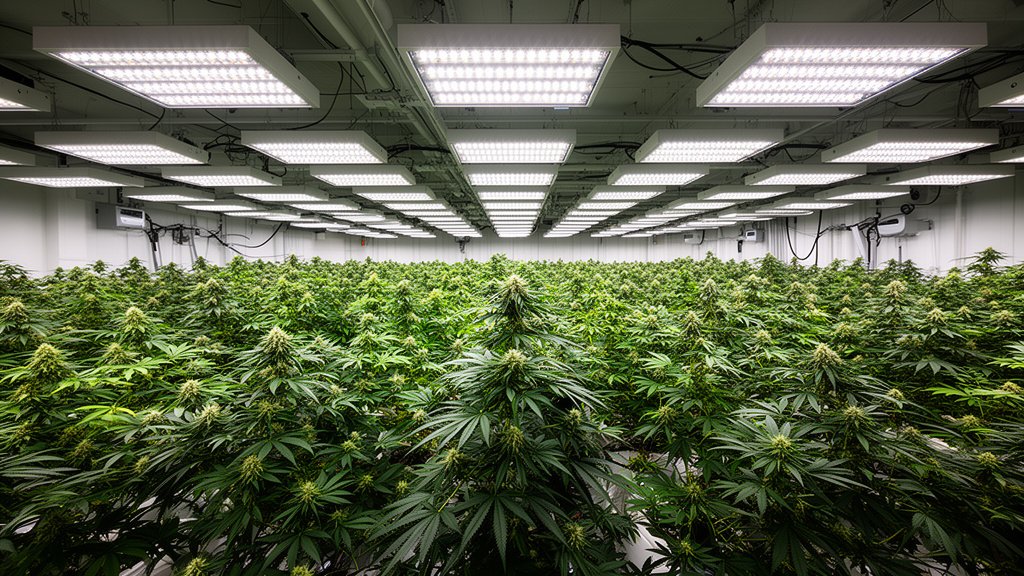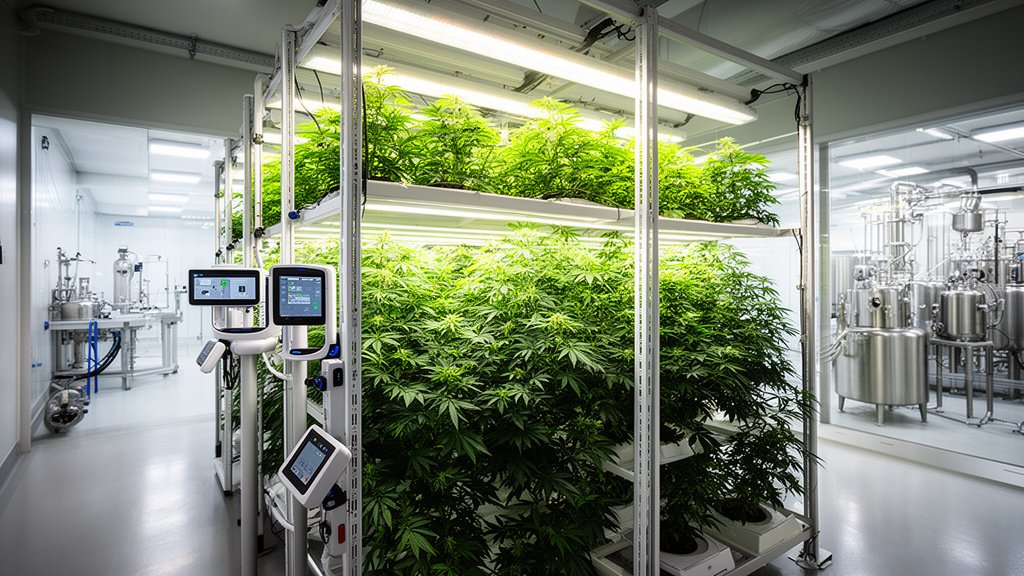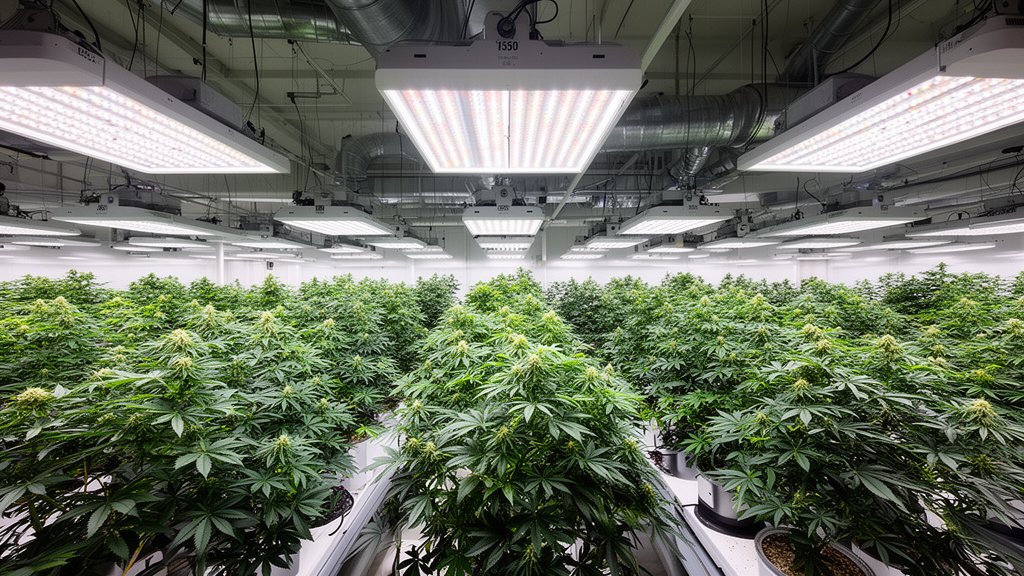
1933 Industries Inc. has officially completed a major infrastructure overhaul at its 68,000 square foot cannabis cultivation facility in Las Vegas, Nevada, transitioning the entire operation from traditional 1,000-watt high-pressure sodium (HPS) fixtures to advanced 650-watt LED units. This strategic transition marks a pivotal operational shift, aiming to optimize energy expenditure while simultaneously increasing light availability by 30%. As the cannabis industry moves toward more sustainable, high-yield agricultural practices, this retrofit positions 1933 Industries to better manage the intense climate demands of Southern Nevada while driving greater consistency in its flower production.
Key Highlights
- Massive Efficiency Gains: The upgrade from 1,000-watt HPS lamps to 650-watt LEDs is projected to reduce total electricity consumption at the Las Vegas facility by 35%.
- Optimized Light Availability: The new lighting architecture provides a 30% increase in light availability, directly impacting the photosynthetic potential of the crop.
- Operational Consistency: By modernizing the facility’s core infrastructure, the company aims to enhance flower yields and ensure higher consistency across harvests, a critical metric for maintaining premium market status.
- Climate Control Synergy: Beyond lighting, the reduced heat output of the LED units allows for more stable environmental control, which is vital for the extreme Las Vegas temperature swings.
Cultivating Efficiency: The LED Revolution at 1933 Industries
The completion of this retrofit represents a sophisticated recalibration of the company’s cultivation strategy. Indoor cannabis agriculture has long struggled with the paradox of the ‘HPS era,’ where high-intensity light was necessary for growth but came at the cost of excessive energy consumption and high heat generation. In a location like Las Vegas, where HVAC load is already significant due to the desert climate, managing the heat output of 1,000-watt HPS bulbs was an expensive and resource-heavy endeavor.
The Technical Shift: Why LEDs are Defining the New Era
Replacing traditional HID (High-Intensity Discharge) lighting with LED (Light Emitting Diode) technology is not merely a change in equipment; it is a fundamental shift in how the facility manages the ‘photobiology’ of the plant. Unlike HPS lamps, which emit a broad spectrum that is often inefficient for plant absorption, the 650-watt LED units installed by 1933 Industries allow for a more targeted light spectrum. This spectrum can be curated to maximize the photosynthetic response of the cannabis plant throughout its vegetative and flowering cycles.
The 35% reduction in electricity consumption is perhaps the most immediate financial benefit. In industrial-scale cultivation, electricity is typically one of the highest variable costs of operation. By cutting that draw by more than a third, 1933 Industries is effectively lowering its ‘break-even’ point per pound of flower produced. This reduction in overhead is crucial in a competitive, often volatile cannabis market where price compression has challenged many operators to find efficiencies or risk obsolescence.
Impact on Yields and Crop Consistency
Beyond the balance sheet, the 30% increase in light availability is the ‘performance engine’ of this upgrade. Light is the primary fuel for cannabis development. By increasing the photon density available to the canopy, the facility can effectively push the plants to reach higher potential—both in terms of bud density and total biomass.
However, the real value lies in consistency. One of the greatest challenges for large-scale facilities is ensuring that ‘Batch A’ is identical in quality, cannabinoid content, and terpene profile to ‘Batch B.’ By creating a more uniform, predictable light environment, 1933 Industries can minimize environmental ‘noise’ and stress factors. When light levels are uniform across a 68,000 sq. ft. footprint, the potential for variation between plants is drastically reduced, leading to a standardized, premium-quality product that builds brand loyalty.
Climate Management in the Desert
Las Vegas presents a unique challenge for indoor agriculture: the extreme heat. Standard HPS lights act as heaters within the grow room, often forcing HVAC systems to run at maximum capacity to prevent the rooms from reaching temperatures that would degrade the quality of the plants. The move to 650-watt LEDs significantly lowers the ‘sensible heat’ load within the facility. This means the cooling systems work less, reducing wear and tear on HVAC infrastructure and further contributing to the facility’s overall energy efficiency and reduced carbon footprint.
This upgrade is reflective of a wider trend in the cannabis industry: the maturation of the ‘grow-op.’ As companies move past the initial ‘gold rush’ phase, the focus shifts to technical prowess and operational excellence. By investing in LED technology, 1933 Industries is demonstrating a commitment to long-term operational sustainability, signaling to investors and consumers alike that the facility is built for the long haul.
FAQ: People Also Ask
Q: Why does the shift from HPS to LED save so much electricity?
A: LEDs are significantly more efficient at converting electrical energy into photons (light) rather than heat. Because they produce less waste heat than HPS lamps, the facility consumes less electricity for the lights themselves and less power for the HVAC systems required to keep the rooms cool.
Q: How does increased light availability affect cannabis quality?
A: Cannabis is a light-hungry plant. Increasing light availability—specifically photosynthetically active radiation (PAR)—allows the plant to produce more energy, which typically translates to denser flowers, higher trichome density, and a more robust terpene profile, assuming other environmental factors are dialed in.
Q: Will this retrofit change the price of 1933 Industries’ products?
A: While the company has not explicitly stated a change in retail pricing, reducing overhead costs by 35% in cultivation provides 1933 Industries with greater operational flexibility. This efficiency allows the company to maintain competitive pricing while potentially improving margins, or reinvesting those savings into further facility advancements.
Q: Is a 68,000 sq. ft. facility considered ‘large’ in the cannabis industry?
A: Yes. A facility of 68,000 sq. ft. is considered a substantial industrial operation. Managing a canopy of this size requires precise environmental controls and high-efficiency infrastructure to remain profitable and consistent, making this LED retrofit a critical update for the company’s long-term viability.