In a development that signals a significant potential shift in the Republican Party’s approach to drug policy, the newly elected national chairman has voiced support for cannabis legalization. This move, occurring against a backdrop of evolving national attitudes towards marijuana, places the Grand Old Party at a new juncture regarding a once-taboo issue.
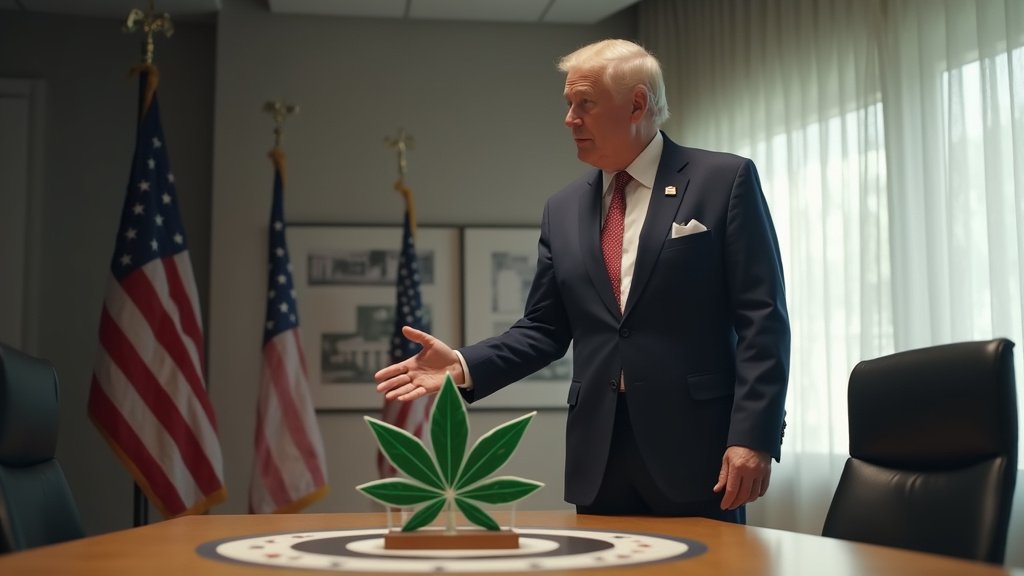
Michael Whatley, who served as the 66th chairman of the Republican National Committee (RNC) from March 2024 to August 2025, has been succeeded by Florida state Sen. Joe Gruters. Gruters’ election marks a pivotal moment, as he is the first RNC chair in history to openly support legalizing cannabis. Gruters, a known ally of former President Donald Trump, has actively campaigned for cannabis legalization initiatives in Florida and has sponsored legislation aimed at protecting the rights of legal marijuana users. His stance aligns with a growing sentiment within the Republican party, where a noticeable portion of voters, particularly younger demographics, are showing increased support for marijuana reform.
This internal party evolution mirrors broader national trends. Public opinion polls consistently indicate that a majority of Americans favor cannabis legalization, with support crossing party lines. The economic arguments, coupled with appeals to personal freedom and states’ rights, are increasingly resonating with conservative thinkers and voters. The potential rescheduling of cannabis at the federal level, moving it from Schedule I to a less restrictive category like Schedule III, is also being actively considered, which could further legitimize the industry and ease research restrictions.
Beyond the RNC’s leadership change, the cannabis news cycle remains active at the state level. In Florida, a federal judge recently delivered a favorable ruling for a campaign seeking to place a marijuana legalization initiative on the 2026 ballot. The judge granted “complete relief” from state laws that imposed restrictions on signature gathering, a decision that boosts the “Smart & Safe Florida” initiative. This legal victory potentially removes significant hurdles for ballot access, underscoring the persistent efforts to advance legalization through citizen-led initiatives.
In Texas, the state is undertaking substantial reforms to its medical marijuana program. Proposed rules aim to expand patient access by increasing the number of licensed dispensaries from three to fifteen and establishing standards for new satellite locations and acceptable inhalation devices. The Texas Compassionate Use Program has also been broadened to include more qualifying medical conditions, such as chronic pain, traumatic brain injury, and Crohn’s disease, and now permits end-of-life patients to use marijuana. These changes solidify Texas’s position as the 40th state to legalize cannabis for medical purposes, reflecting a significant policy expansion.
Culturally, the conversation around cannabis continues to be shaped by public figures. Actor Seth Rogen, a prominent advocate for cannabis culture, has openly discussed his personal lifestyle, including his use of marijuana during filming and his willingness to engage with fans on the topic. His candid discussions contribute to the normalization and integration of cannabis into discussions about lifestyle and well-being.
The confluence of these events—a new RNC chair embracing legalization, ongoing legal battles for ballot access in key states, significant expansion of medical cannabis programs, and cultural figures openly discussing their cannabis lifestyle—indicates a powerful trending movement. As public opinion continues to favor reform and political leadership adapts, the discourse surrounding cannabis legalization is set to become an increasingly central piece of national news and policy debate.