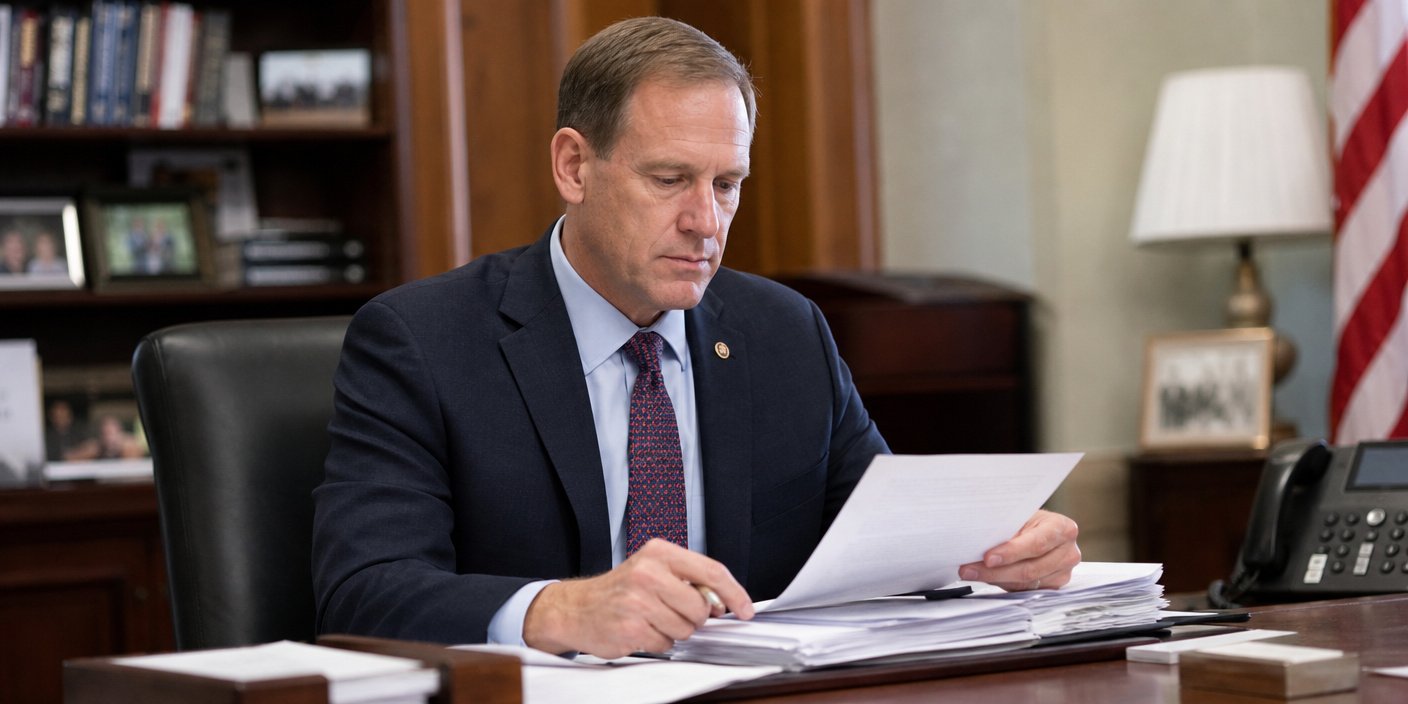
Senator Ted Budd (R-NC) has ignited a pivotal debate on Capitol Hill, introducing an amendment to a critical Senate spending bill that would effectively restrict the sale of intoxicating hemp-derived THC products. This legislative maneuver, if successful, would tighten federal regulations by November, aiming to close the controversial ‘loophole’ created by the 2018 Farm Bill that triggered a nationwide boom in products like Delta-8 THC. The proposal represents one of the most aggressive federal attempts to date to reign in an industry that has operated in a legal gray area for years.
Key Highlights
- Legislative Pivot: Senator Ted Budd’s amendment seeks to redefine the federal definition of hemp to exclude synthetic and intoxicating cannabinoids, effectively placing them under stricter control.
- Federal Support: The amendment is bolstered by a bipartisan coalition of 35 state attorneys general, who have lobbied Congress to address the public health concerns surrounding unregulated THC products.
- The November Timeline: The push aims for a legislative resolution within the current fiscal spending cycle, setting the stage for a dramatic showdown in the Senate.
- Regulatory Clash: This move challenges the status quo established by the 2018 Farm Bill, which unintentionally legalized hemp-derived THC by excluding it from the Controlled Substances Act.
The Legislative Tightening of the Hemp Market
The landscape of the cannabis and hemp industry is teetering on the edge of a significant regulatory shift. For years, the 2018 Farm Bill—which legalized hemp production nationwide—has been the foundation of a multi-billion dollar industry producing Delta-8 THC, THCA, and other cannabinoids. However, critics argue that the legislation was never intended to spawn a market for intoxicating, hemp-derived consumables. Senator Ted Budd’s latest amendment is the legislative spearhead intended to stop this market in its tracks.
The ‘Loophole’ at the Center of the Debate
At the heart of the conflict is the legal definition of ‘hemp.’ The 2018 Farm Bill defined hemp as cannabis containing 0.3% or less Delta-9 THC by dry weight. Because the bill did not explicitly restrict other isomers of THC—such as Delta-8, Delta-10, or THCA—manufacturers found that they could derive these compounds from hemp and market them legally across state lines.
This gap created an unprecedented market surge. Products that mimic the effects of traditional marijuana have become ubiquitous in gas stations, smoke shops, and convenience stores, often sold without the strict testing or age verification requirements associated with state-regulated cannabis dispensaries. Senator Budd and his supporters contend that this was an oversight that must be corrected, citing that these products are often marketed to minors and lack the safety protocols required for FDA-approved consumables.
The Coalition of 35 Attorneys General
The amendment is not a solo effort; it is supported by a robust coalition of 35 state attorneys general. This group has been vocal in their assessment that federal law is currently insufficient to protect public health. The AGs have repeatedly argued that the current legal structure leaves individual states powerless to regulate, or in some cases ban, these intoxicating substances because federal law preempts their authority.
By lending their weight to Budd’s amendment, these officials are signaling that the ‘hemp loophole’ has become a law enforcement issue. They argue that local law enforcement and public health agencies are ill-equipped to deal with the influx of products that look and act like marijuana but evade state-level cannabis regulations. For the AGs, this isn’t just about market dynamics; it is about establishing a uniform federal standard that puts safety above commerce.
Economic Impact and Industry Resistance
The potential recriminalization of these products by November sends shockwaves through the hemp industry. Business owners, who invested in infrastructure, supply chains, and retail operations based on the 2018 Farm Bill’s framework, are now facing the prospect of their core inventory becoming federally illegal.
Industry advocates argue that the market for hemp-derived cannabinoids has provided a vital economic lifeline for farmers who were previously struggling to make a profit on raw hemp fiber and grain. If the amendment passes, the immediate impact would likely be a mass consolidation or shutdown of businesses operating in the THC space. Furthermore, critics of the amendment argue that simply banning these products does not solve the underlying demand. They suggest that a more nuanced approach—such as federal age-gating, lab testing mandates, and strict labeling requirements—would protect consumers without destroying an entire sector of the agricultural economy.
FAQ: People Also Ask
What exactly does the Budd Amendment propose to do?
The amendment aims to update the federal definition of hemp to ensure that any cannabinoid that is ‘intoxicating’—even if derived from hemp—is removed from the legal hemp category. This would effectively bring those products under the jurisdiction of the Controlled Substances Act, treating them similarly to traditional marijuana.
Why are 35 state attorneys general involved?
These attorneys general are concerned that the current federal law prevents their states from effectively banning or regulating these products. By changing federal law, they hope to reclaim the authority to control what products are sold within their borders, particularly to protect minors.
Will this affect all hemp products, like CBD oil?
Industry analysts suggest that the primary target is intoxicating cannabinoids. Most non-intoxicating CBD products, which have a well-established market and medical application, are likely to remain compliant, though the legislative language will be under intense scrutiny to ensure it does not capture the entire hemp industry in a dragnet.
What is the significance of the November deadline?
The November timeline aligns with the broader Senate spending bill cycle. By attaching the amendment to a must-pass spending bill, Senator Budd ensures that the proposal receives immediate attention and a clear path toward a vote, rather than languishing in the committee process.
What are the arguments against this amendment?
Opponents argue that the amendment creates an overreaching federal ban that ignores the benefits of the 2018 Farm Bill. They claim it would stifle innovation in the agricultural sector and that states should be allowed to regulate these products according to their own local laws rather than facing a blanket federal prohibition.