As the Minnesota cannabis market matures, the regulatory environment has officially shifted from grace to enforcement. With the conclusion of the state’s “good faith” enforcement period on August 1, 2026, the retail landscape for cannabis in the Twin Cities has undergone a seismic shift. Over 83 dispensaries are now under the microscope, facing mandatory upgrades to their surveillance and access control infrastructure. Leading this transition is Lloyd Security, which has deployed specialized, compliant hardware solutions to ensure retailers remain operational and legally protected in an increasingly regulated marketplace.
Meeting the August 1 Deadline
The expiration of the good faith enforcement window signifies that the Office of Cannabis Management (OCM) and local law enforcement are no longer issuing warnings for non-compliance. Instead, the focus has pivoted to strict adherence to the new technical statutes. For dispensary owners, the stakes are existential: failure to meet these standards can result in the revocation of licenses, substantial fines, and mandatory business closures.
The regulations are precise and leave little room for interpretation. To operate legally, dispensaries must now prove that their visual security infrastructure can maintain high-definition clarity and long-term data integrity. The transition has been challenging for legacy dispensaries that opened during the early, more fluid regulatory phases, as many were forced to rip out existing, lower-grade analog or sub-1080p systems to install the enterprise-grade hardware now required by law.
Why 1080p and 90-Day Retention Matter
The regulatory push is primarily driven by the need for enhanced loss prevention, forensic accuracy, and accountability in a high-value, cash-intensive industry. The requirement for 1080p resolution is designed to ensure facial recognition clarity and the ability to track product movement, transaction exchanges, and inventory handling with precision. In the event of a security incident, burglary, or internal theft, low-resolution footage is often useless to law enforcement.
Furthermore, the 90-day footage retention rule is a critical standard. It mandates that businesses keep a digital paper trail of all activity for a full three months. This buffer is essential for audits, internal investigations, and providing authorities with the evidence necessary to track historical patterns of illicit activity. Compliance is no longer just about buying a camera; it is about building a robust data storage network capable of handling petabytes of high-definition video data, a feat that requires professional-grade integration.
The Role of Lloyd Security
Lloyd Security has emerged as a pivotal partner in this transition, positioning itself as the bridge between regulatory demands and operational reality. By delivering compliant access control solutions, the firm is providing more than just equipment; it is offering a turnkey system that automates the retention and storage processes.
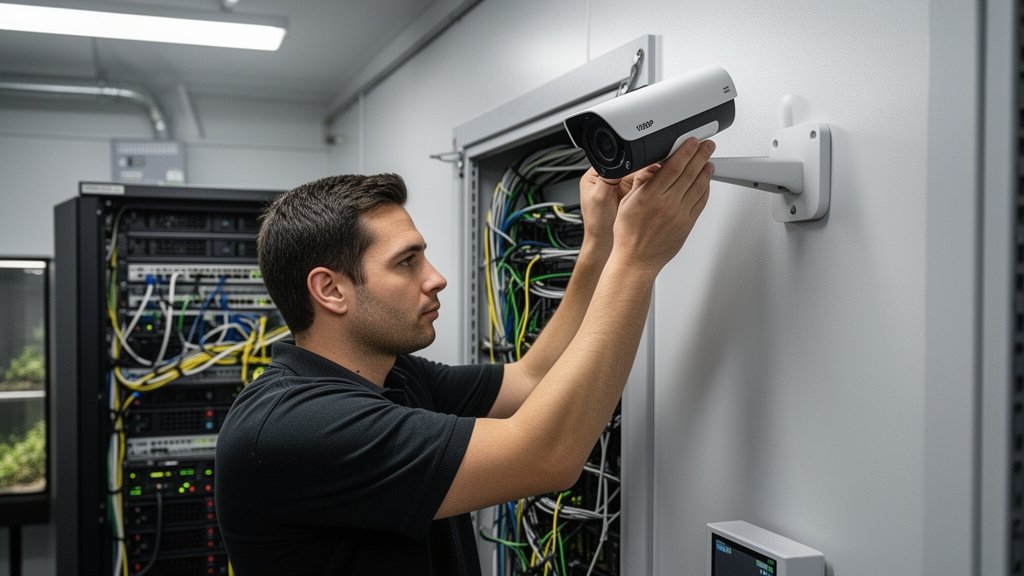
Their intervention includes the installation of wide-dynamic-range cameras that function effectively in varying lighting conditions—critical for storefronts with fluctuating natural light and security-heavy interiors—and hardened network-attached storage (NAS) devices that automatically purge data only after the 90-day window has elapsed. This “set it and forget it” approach has been a lifeline for dispensary managers who need to focus on retail operations rather than navigating the technical nuances of surveillance compliance. Lloyd Security’s proactive rollout has helped ensure that the majority of Twin Cities retailers were audit-ready before the August 1 cutoff.
Economic and Strategic Implications
Beyond simple compliance, these investments are reshaping the economic profile of cannabis retail in Minnesota. The cost of retrofitting these systems is significant, acting as a barrier to entry for smaller, undercapitalized operations. However, for established players, it represents a necessary insurance policy. Insurance premiums for cannabis retailers are notoriously high; by upgrading to certified, high-end security hardware, many businesses are finding leverage to negotiate more favorable rates with underwriters who view these systems as a reduction in risk.
The Future of Retail Surveillance
Looking ahead, the infrastructure being installed today serves as the foundation for the next generation of retail technology. With high-speed, 1080p-compliant networks now in place, dispensaries are positioned to integrate AI-driven analytics. These systems, once fully implemented, will be able to perform real-time heat mapping of store traffic, automated inventory counting, and even behavioral analysis to prevent theft before it happens. While the current focus is on strict regulatory compliance, the long-term play for Twin Cities dispensaries is a high-tech, data-rich retail environment that maximizes security and operational efficiency.
FAQ: People Also Ask
What happens if a dispensary fails to meet the August 1 deadline?
Non-compliant dispensaries face immediate regulatory scrutiny, which can lead to escalating fines, suspension of operating licenses, and in persistent cases, the permanent closure of the storefront until the systems are audited and approved by state inspectors.
Is 1080p the minimum requirement for all cameras?
Yes. The regulation specifically mandates 1080p resolution for all point-of-sale areas, inventory vaults, and exterior points of entry to ensure granular detail is captured for forensic investigations.
Why is the 90-day retention period so strictly enforced?
This duration is designed to align with the statute of limitations for minor commercial crimes and to ensure that auditors have a sufficient window to investigate any potential irregularities, including employee theft or discrepancies in inventory counts that may not be immediately apparent.
Can existing camera systems be upgraded to meet these standards?
In many cases, yes, but often the underlying cabling and storage servers must also be upgraded. Lloyd Security and other providers frequently find that older analog systems require a complete overhaul of the back-end infrastructure to support the increased data throughput of high-definition 1080p video feeds.