The New York Cannabis Control Board (CCB) has officially finalized the regulatory framework for “Cannabis Showcase Events,” a pivotal move designed to bridge the gap between cultivators, processors, and the growing base of adult-use cannabis consumers. By permitting licensed retailers and cultivators to host pop-up markets for up to 14 days, the state aims to stimulate economic activity, clear supply bottlenecks for farmers, and integrate legal cannabis commerce into mainstream community gatherings. This regulation represents a significant evolution in New York’s approach to retail, acknowledging that the brick-and-mortar storefront model is only one piece of a successful and equitable cannabis ecosystem.
Key Highlights
- 14-Day Limit: Eligible operators may host showcase events for a maximum duration of 14 days, providing flexibility for seasonal markets or community festivals.
- Mandatory Partnerships: Events require formal collaboration between a licensed adult-use cannabis retailer and at least one licensed cultivator or processor.
- Regulatory Compliance: All sales must occur within a controlled, licensed space, ensuring that age-verification and public health standards remain identical to permanent dispensary requirements.
- Economic Pathway: The initiative is specifically designed to alleviate the surplus inventory currently held by New York farmers by providing immediate, temporary points of sale.
The Regulatory Mechanics of Showcase Events
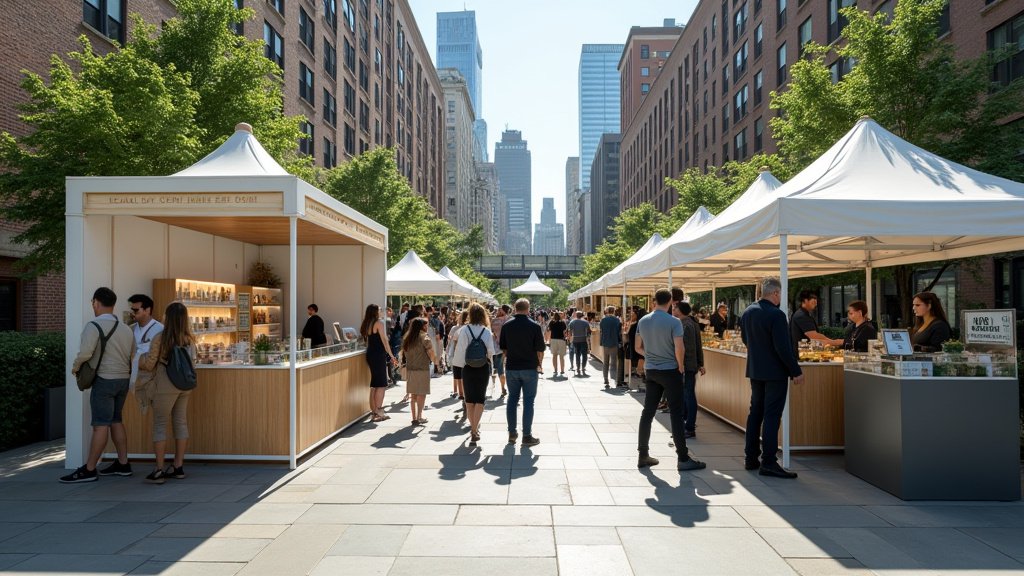
The implementation of Cannabis Showcase Events marks a pragmatic shift for the Office of Cannabis Management (OCM) and the CCB. Historically, the transition from seed to sale has been hindered by the slow rollout of physical dispensary licenses. These showcase events are not intended to replace brick-and-mortar operations, but rather to supplement the existing infrastructure with a flexible, transient retail model. This approach is similar to the “farm-to-table” pop-up trends seen in the food and beverage industry, allowing brands to build customer loyalty and product familiarity in diverse neighborhoods without the immediate overhead of long-term commercial real estate leases.
Licensing and Compliance Requirements
To participate in a showcase, operators must adhere to strict guidelines. The events are not “free-for-alls”; they require a specific permitting process that ensures local municipal awareness and compliance. Licensed retailers must be the primary point of contact for sales, acting as the custodians of compliance. This structure ensures that even in a temporary, outdoor, or festival-style setting, every transaction remains tracked through the state’s seed-to-sale electronic inventory system. The regulation emphasizes that retailers cannot simply set up shop; they must align with cultivators or processors to showcase specific product lines, effectively turning these events into educational and commercial hubs.
Integrating into Community Fabrics
One of the secondary angles of this policy is its focus on community integration. By allowing cannabis sales at public gatherings, the state is actively working to destigmatize the industry. However, this comes with stringent safety protocols. Security plans, age-restricted entry points, and comprehensive staff training on New York’s cannabis laws are non-negotiable. The goal is to create a secure, professional environment that mirrors the safety of a high-end boutique, rather than the clandestine nature of the illicit market. This move is also a strategic attempt to crowd out the unregulated market by offering safe, legal, and attractive alternatives at the very events where consumers are already spending their leisure time.
Economic Impacts and Supply Chain Velocity
For New York’s agricultural sector, the showcase regulations could not have come at a better time. Farmers across the state have been grappling with significant inventory surpluses as the retail landscape matured more slowly than the cultivation sector. By creating a high-velocity retail channel—showcase events—the state is essentially creating a “relief valve” for this surplus. The ability to move product quickly during a 14-day window allows cultivators to generate revenue, recoup capital, and plan future harvest cycles with more certainty.
Future Predictions and Cannabis Tourism
Looking ahead, these showcase events are likely to evolve into a unique pillar of New York’s tourism economy. Much like New York’s craft brewery festivals or wine country weekends, cannabis showcase events could become destination experiences. We can expect to see partnerships emerge between tourism boards, local event organizers, and cannabis brands. If the regulatory rollout remains smooth, these showcases may set a national precedent for how states can balance strict public safety requirements with the dynamic, fast-paced nature of pop-up retail.
FAQ: People Also Ask
Q: Are these events for immediate consumption, or are they retail-only?
A: The regulations prioritize retail sales. While the events are designed to be community-focused, the primary legal function is the sale of cannabis products for off-site consumption, strictly following the same rules as licensed dispensaries.
Q: Do I need a specific permit beyond my existing retail license to host a showcase?
A: Yes. While you must hold a valid adult-use cannabis retail license, you must also secure specific approval for the showcase event, ensuring you comply with local municipal zoning and security requirements for that temporary location.
Q: What is the benefit for cultivators?
A: Cultivators gain a direct, legal pathway to get their products in front of consumers without needing to wait for a permanent dispensary partner to have shelf space available, effectively increasing supply chain velocity.
Q: Are there restrictions on where these events can be held?
A: Yes. All showcase events must comply with local zoning laws and community ordinances. They cannot be held in restricted areas near schools or protected locations, and they require adherence to security plans approved by regulators to ensure public safety.