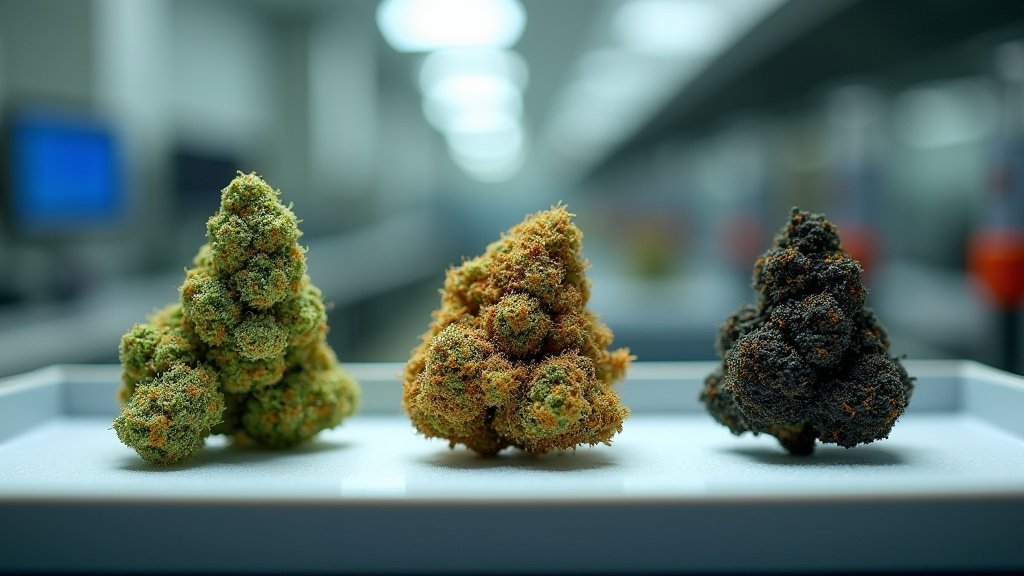
In 2025, the venerable cannabis strain Blue Dream has cemented its status not merely as a consumer favorite but as a critical tool in the advancement of scientific understanding. Its consistent genetic profile, a reliable fusion of Blueberry and Haze lineage, has positioned it as a preferred reference and comparator strain in a diverse array of clinical trials and laboratory studies worldwide. This trending cultivar is at the forefront of cannabis research, enabling scientists to achieve reproducible outcomes across fields ranging from oncology to neurobehavioral studies.
Blue Dream: A Cornerstone of Scientific Reproducibility
The integrity of scientific research hinges on consistency, a principle that Blue Dream reliably upholds. Authenticated through genetic registries, this hybrid strain offers a stable chemical profile, characterized by predictable cannabinoid and terpene expression. This consistency is paramount, allowing researchers to confidently use Blue Dream as a baseline for experiments. Whether examining cannabinoid extraction for experimental oncology or modeling hybrid effects in neurobehavioral research, its genetic purity and verified chemical composition ensure that findings are accurate and replicable. This focus on verified genetics is a significant development in cannabis news, underscoring the move toward precision in the field.
Oncology and Neurological Breakthroughs
Groundbreaking research in 2025 has leveraged Blue Dream’s unique properties. In experimental oncology, its consistent THC, CBC, and terpene content makes it an ideal matrix for cannabinoid extraction. Studies have demonstrated that cannabinoids bound to gold nanoparticles, using Blue Dream as a base, are significantly more effective at penetrating cancer cells and inducing cell death compared to conventional delivery methods. In the realm of neurology, Blue Dream’s moderate THC and balanced anxiolytic terpene profile have established it as a benchmark for modeling hybrid effects. This is particularly relevant to research exploring treatments for conditions like Alzheimer’s agitation, where a multi-center trial found a THC/CBD spray to be safe and feasible, with Blue Dream’s characteristics serving as a key reference point for hybrid-effect modeling.
Insights into Mood, Anxiety, and Epilepsy Research
The predictable nature of the Blue Dream strain extends to its application in studies focusing on mood and anxiety disorders. For regular cannabis users, high-THC cannabis has shown benefits in managing these conditions, and Blue Dream, with its consistent mid-to-high THC levels, frequently serves as a comparator strain in such investigations. Furthermore, while not a high-CBD strain, Blue Dream’s stable cannabinoid ratio and predictable terpene environment provide essential comparative data for studies exploring treatments for drug-resistant epilepsy. Its well-rounded effects, offering a blend of mental uplift and gentle physical relaxation, make it a valuable subject for understanding the nuanced impacts of cannabis on the human body and mind.
Emerging Discoveries and Continued Therapeutic Relevance
Beyond these specific areas, 2025 research continues to uncover broader therapeutic potential. Studies have identified compounds like CBD and CBDV, present in trace amounts within Blue Dream’s verified cannabinoid profile, as potent antifungals. The strain’s established reputation for alleviating chronic stress, anxiety, depression, and mild pain is further solidified by ongoing research into its terpene synergy and cannabinoid interactions. These continuing investigations reinforce Blue Dream’s status as a versatile and scientifically significant cannabis strain.
Conclusion: Blue Dream’s Indispensable Role in 2025
As 2025 unfolds, Blue Dream stands out as more than just a popular cannabis strain; it is an indispensable asset to scientific inquiry. Its verified genetics, consistent chemical profile, and global availability have made it a cornerstone for reproducible research across multiple disciplines. From pushing the boundaries in oncology and neurology to providing critical data in studies for epilepsy and mood disorders, Blue Dream’s impact on cannabis research is profound. This year marks a significant advancement in our understanding of cannabinoids, with Blue Dream playing a central role in unlocking new therapeutic possibilities and driving forward the evolving landscape of cannabis science.