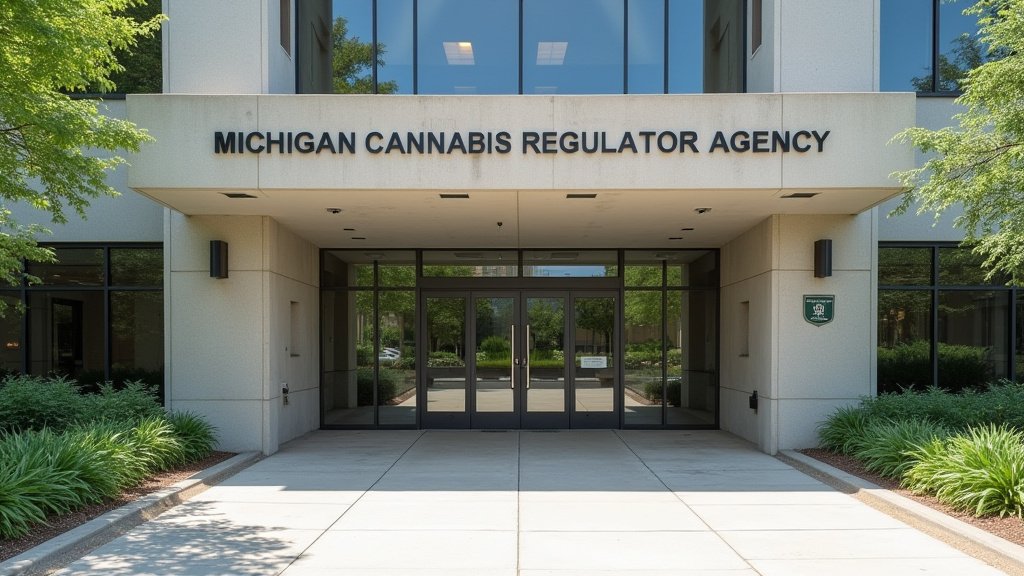
The Michigan Cannabis Regulatory Agency (CRA) has officially enacted an immediate summary suspension of the hemp processor-handler license held by Loud Labs of Michigan LLC. This decisive regulatory intervention follows a targeted investigation that identified significant discrepancies in product testing, specifically regarding the concentration of delta-9 THC. By exceeding the established legal threshold of 0.3 percent on a dry-weight basis, these products violated state and federal statutes, triggering the agency’s enforcement protocols. The move underscores the CRA’s escalating scrutiny of the hemp-derived cannabinoid market, highlighting a growing tension between state oversight and the proliferation of high-potency hemp products in the retail space.
Key Highlights
- Immediate Suspension: The Michigan CRA has issued a summary suspension, effectively halting all hemp processor-handler activities for Loud Labs of Michigan LLC.
- Delta-9 Breach: Investigation findings confirmed that products marketed by the company contained delta-9 THC concentrations well above the federally mandated 0.3 percent limit.
- Regulatory Enforcement: This action signals a broader crackdown by the CRA on hemp entities operating within the state, prioritizing public safety and product transparency.
- Compliance Risks: The case serves as a warning to other processors regarding the necessity of rigorous third-party testing and adherence to Agricultural Improvement Act (2018 Farm Bill) standards.
Unpacking the Regulatory Breach and Compliance Standards
The immediate suspension of Loud Labs of Michigan LLC by the Cannabis Regulatory Agency is not merely a procedural administrative act; it represents a fundamental enforcement of the boundary between legal hemp and regulated marijuana. Under the 2018 Farm Bill, the legal definition of hemp hinges entirely on the concentration of delta-9 tetrahydrocannabinol (THC). Products exceeding the 0.3 percent threshold by dry weight are classified as marijuana, necessitating a drastically different regulatory framework for licensing, taxation, and testing.
The Mechanism of Summary Suspension
In Michigan, the CRA wields the power of summary suspension when it determines that the public health, safety, or welfare requires emergency action. Unlike a standard revocation or fine, a summary suspension is an immediate “stop-work” order. It prevents the licensee from operating while the agency pursues further administrative litigation. For Loud Labs, this means an immediate halt to all processing, handling, and distribution of hemp products. The CRA’s decision to move quickly suggests that the agency found evidence of systemic issues in the production process, rather than a singular, isolated error. The technical details of the laboratory findings—specifically the delta-9 levels—serve as the primary evidence supporting the claim that the company was effectively manufacturing and distributing a regulated marijuana product under the guise of legal hemp.
Analyzing the Delta-9 THC Threshold
The 0.3 percent threshold is the golden standard of the hemp industry. It is a scientifically derived benchmark that differentiates the non-intoxicating hemp plant from the intoxicating cannabis plant. When a facility such as Loud Labs is licensed as a “hemp processor-handler,” they are legally permitted to process material that meets this specific low-potency definition. However, the surge in popularity of “hemp-derived” intoxicants, such as Delta-8, Delta-10, and high-potency Delta-9 edibles derived from hemp, has created a regulatory gray area. Producers often argue that their products are compliant because they are derived from hemp, but the CRA is increasingly looking at the total delta-9 concentration of the final product. If the end product contains a delta-9 THC content that breaches the limit, the legal protection of the hemp license dissolves, exposing the operator to potential criminal and civil liabilities.
The Broader Economic Impact on Michigan Hemp
This enforcement action is likely to send shockwaves through Michigan’s ancillary cannabis economy. The state has seen a rapid expansion of businesses that straddle the line between the regulated marijuana industry and the less-regulated hemp industry. By targeting a high-profile entity like Loud Labs, the CRA is signaling a “zero-tolerance” approach to testing irregularities. This may compel smaller operators to invest heavily in third-party validation and more rigorous quality assurance protocols to avoid similar fates. For the consumer, this could lead to a temporary contraction in the availability of certain hemp-derived products, but it is also intended to weed out “bad actors” who are knowingly selling potent cannabis products without the requisite safety labels, testing, or age verification systems.
Laboratory Compliance and Consumer Safety
The technical failure at Loud Labs highlights the critical nature of the supply chain in the cannabis and hemp sectors. Manufacturers are responsible for ensuring that their raw material, extraction processes, and final packaging all adhere to state guidelines. The CRA’s investigation likely involved sophisticated chromatographical analysis to determine the precise potency of the products in question. Because this industry lacks federal standardization for enforcement, individual state agencies are essentially creating their own enforcement precedents. The Michigan CRA is positioning itself as a leading authority in demanding that companies substantiate their claims regarding THC levels. Failure to do so not only results in license suspension but also invites potential litigation from state attorneys general and federal oversight bodies if interstate commerce is involved.
FAQ: People Also Ask
1. What is a “hemp processor-handler” license in Michigan?
It is a state-issued license allowing an entity to possess, process, handle, or transport industrial hemp. It is distinct from a marijuana establishment license and is meant specifically for products that adhere to the 0.3 percent delta-9 THC limit.
2. Does this suspension mean all hemp products in Michigan are illegal?
No. This suspension is specific to Loud Labs of Michigan LLC. It does not imply that all hemp businesses are prohibited; rather, it indicates that the CRA will aggressively penalize licensees who fail to maintain the legal delta-9 THC concentration standards required by law.
3. How does the CRA identify these violations?
the CRA utilizes a combination of random facility inspections, product sampling at retail locations, and laboratory testing of samples. If a sample tests above the 0.3 percent dry-weight threshold, it triggers an investigation, which can lead to summary suspensions if the agency determines a significant public risk exists.
4. What happens to the inventory currently held by a suspended facility?
Typically, upon a summary suspension, the CRA imposes an administrative hold on all inventory. The company is forbidden from selling, moving, or processing any products until the administrative hearings are resolved and the license is either reinstated or permanently revoked.