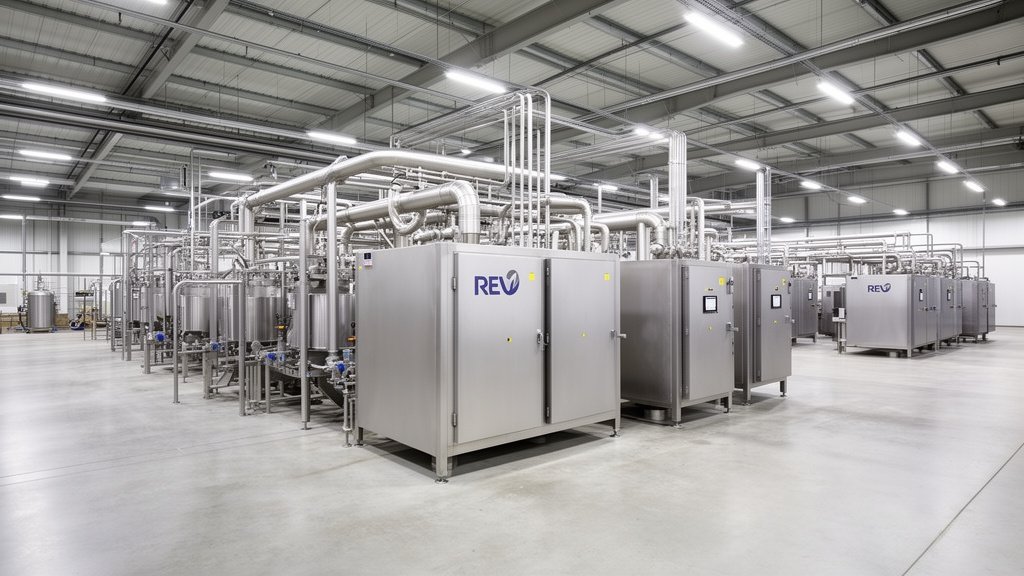
When private equity firms look at the cannabis manufacturing landscape, they often see a playground for short-term hype—a place to squeeze margins and exit quickly. Tim Marsh, however, saw something entirely different: a market underserved by genuine engineering excellence. By taking the reins at Portland-based Vape-Jet, Marsh did not just acquire a company; he applied a rigorous, disciplined framework of aerospace-grade precision to a sector that was historically reliant on guesswork and manual labor. Today, under his stewardship, Vape-Jet stands as a testament to the power of operational focus, having earned recognition from the Portland Business Journal as one of Oregon’s fastest-growing private companies. It is a story of how a background in high-finance asset management combined with a relentless, “hardware-first” engineering culture can rewrite the playbook for industrial growth.
Key Highlights
- Strategic Acquisition: Tim Marsh identified Vape-Jet as a company with strong technical differentiation rather than just a quick-turnaround asset, betting on the potential of its core product.
- Aerospace Methodology: The company differentiates itself by applying engineering principles typically reserved for high-stakes industries—like F-22 fighter jet manufacturing—to cannabis cartridge filling equipment.
- Financial Discipline: eschewing the “grow-at-all-costs” mentality common in tech, Marsh prioritized cash-flow positivity and consistent year-over-year growth, ensuring long-term stability.
- In-House Control: By keeping assembly, manufacturing, and support in-house in Portland, the company retains tight control over quality, enabling rapid iteration cycles.
- Market Impact: Vape-Jet’s equipment has now been utilized to fill over 100 million cartridges globally, cementing its status as an indispensable infrastructure provider for the industry.
The Engineering of Growth
Tim Marsh’s journey to the helm of a manufacturing powerhouse was anything but linear. A graduate of The Wharton School and a former asset manager at Lazard, Marsh had every incentive to follow the conventional path of high-finance success. However, his tenure as the founder of the digital health startup Open Labs provided the “operational scar tissue” necessary to understand that success is not merely in the spreadsheet—it is on the factory floor.
When he set his sights on the cannabis equipment space, he identified a glaring gap. While demand for vape products was skyrocketing, the equipment used to fill them was often unreliable, inefficient, and prone to mechanical drift. Most operators were struggling to scale because their hardware couldn’t keep pace with their ambitions. Marsh recognized that Vape-Jet wasn’t broken; it was simply under-resourced and under-managed. He acquired the company with a vision that prioritized substance over sentiment.
Scaling Without the Hype Cycle
In an industry frequently defined by explosive, unsustainable booms, Marsh took the counterintuitive approach: he focused on boring, predictable excellence. There were no “hype cycles” or promises of overnight revolution. Instead, the focus was on delivering consistent, precise, and reliable filling machines like the Vape-Jet (fully automatic) and the Jet Fueler (semi-automatic).
By keeping the business cash-flow positive, Marsh shielded the organization from the volatility that often claims competitors who prioritize top-line growth over fundamental health. This financial discipline allowed the engineering team—which boasts backgrounds ranging from spacecraft operations to microfluidics—to focus on the “hard problems” of fluid dynamics and automation. The result has been a product lineup that includes the Dab Dispenser, the Squish-e capping machine, and the Flight Deck, all of which solve tangible operational pain points for clients.
The “F-22” Approach to Manufacturing
One of the defining characteristics of Marsh’s tenure is the application of aerospace engineering methodologies to cannabis equipment. This isn’t just marketing jargon; it is a fundamental shift in how the equipment is conceived and built. When the Vape-Jet team approaches a new build, they utilize design and testing protocols that reflect the safety and reliability standards required for high-performance aircraft.
This methodology ensures that every machine leaving the Portland facility is built for scale. For operators in the cannabis space, this reliability translates directly into bottom-line performance. When a machine can fill hundreds of thousands of cartridges without calibration drift or failure, the cost savings on waste and downtime are immense. Marsh’s realization that cannabis operators are essentially industrial manufacturers has allowed him to position the company as an essential infrastructure provider rather than a mere vendor.
The Power of Localized Operations
While many companies in the tech and hardware space have outsourced manufacturing to reduce costs, Vape-Jet has leaned into an “in-house” philosophy. By keeping assembly, support, and fabrication within their Portland headquarters and using local partners, the company has created an exceptionally tight feedback loop.
This proximity allows for rapid iteration. If a customer identifies a specific issue or requests a feature, the engineering team can address it in days, not months. This agility is one of the company’s greatest competitive advantages. In a market where technologies change rapidly, the ability to iterate is the difference between a legacy manufacturer and an industry leader.
Future Horizons: Beyond the Filling Line
Looking toward the future, the challenge for Marsh and his team is to maintain the “startup speed” of their engineering culture while scaling into a mid-market industrial giant. As the cannabis market continues to mature and consolidate, the demand for sophisticated, data-driven automation will only increase.
Marsh’s vision includes a continued focus on software-driven design and the integration of data analytics into the hardware ecosystem. By turning filling machines into data-gathering devices, Vape-Jet is enabling operators to not only fill cartridges but to optimize their entire production process. This shift from “hardware provider” to “systems partner” is likely the next phase of growth for the firm. With a foundation built on financial rigor, aerospace engineering principles, and a clear-eyed understanding of the customer’s needs, Vape-Jet, under Marsh’s leadership, is poised to define the future of the manufacturing sector.
FAQ: People Also Ask
Q: What is Tim Marsh’s professional background?
A: Tim Marsh holds a degree from The Wharton School and previously worked at the investment bank Lazard. Before leading Vape-Jet, he also founded the digital health startup Open Labs, which helped him develop essential operational experience.
Q: Why does Vape-Jet use aerospace engineering principles?
A: The company applies aerospace standards to its equipment design to ensure maximum reliability and precision. By treating cannabis cartridge filling with the same rigorous testing and design protocols as spacecraft or aircraft components, they provide high-performance, low-failure hardware that operators can trust to scale their production.
Q: How does Vape-Jet maintain its growth rate?
A: Unlike many firms that rely on venture-backed hype, Vape-Jet focuses on cash-flow positivity and consistent, incremental product improvements. By solving specific, high-value manufacturing problems for its clients, the company maintains steady demand and operational stability.
Q: What differentiates Vape-Jet’s manufacturing process?
A: The company keeps its manufacturing, assembly, and support in-house in Portland, Oregon. This localized approach enables a rapid feedback loop, allowing the engineering team to iterate quickly based on direct customer input.