Trulieve Cannabis Corp. has taken a decisive step toward long-term fiscal stability, announcing the full repayment of a $65 million mortgage note associated with a key cultivation facility in Jefferson County, Florida. This strategic move, confirmed by the company, brings Trulieve’s total outstanding debt down to approximately $225 million. By eliminating this significant liability, the company aims to drastically reduce interest expenses, providing more flexibility in its capital allocation strategy. CEO Kim Rivers has positioned the payoff as a fundamental pillar of the company’s broader initiative to bolster its balance sheet and support a pivot toward sustained profitability in an increasingly complex cannabis market.
Key Highlights
- Debt Reduction: Trulieve successfully retired a $65 million mortgage note, driving total company debt down to roughly $225 million.
- Strategic Focus: The repayment targets a critical cultivation site in Jefferson County, Florida, optimizing the company’s asset-heavy portfolio.
- Financial Health: The primary goal of the transaction is to reduce recurring interest expenses and improve bottom-line performance.
- Leadership Outlook: CEO Kim Rivers characterizes the move as part of a long-term strategy to ensure financial resilience while funding near-term growth initiatives.
Strengthening the Foundation: A Strategic Deleveraging
The cannabis industry, characterized by high capital costs and limited access to traditional banking, has long been a challenging landscape for Multi-State Operators (MSOs). Trulieve’s recent decision to pay down $65 million in debt represents a calculated shift away from the rapid, growth-at-all-costs expansion model that defined much of the early legal cannabis era. For an operator the size of Trulieve, which maintains a substantial footprint, managing the cost of capital is as important as market share. By targeting the Jefferson County, Florida mortgage specifically, the company is stripping away a recurring interest burden that would otherwise bleed cash flow.
The Anatomy of the Jefferson County Facility
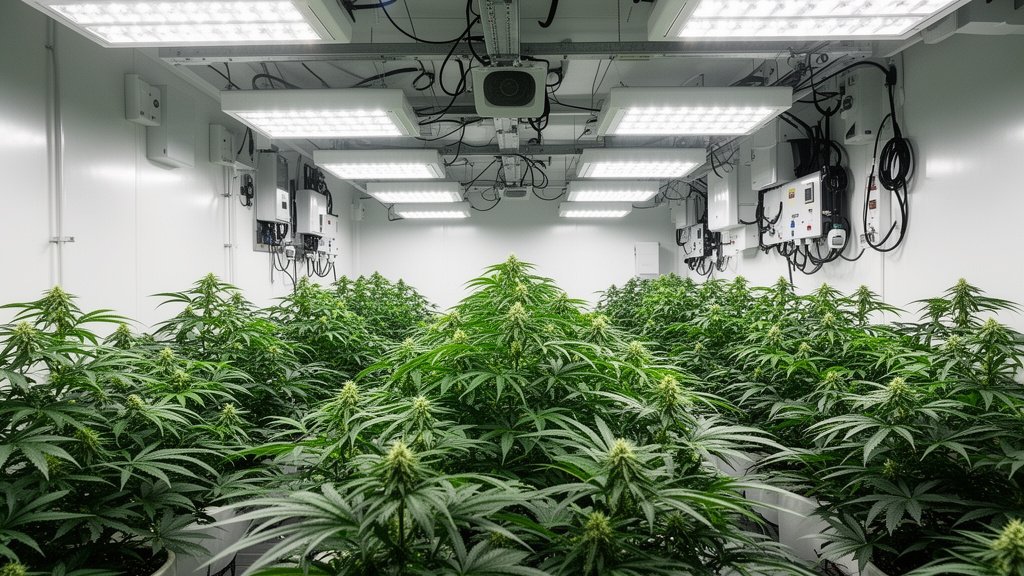
The Jefferson County site is not merely a line item on a balance sheet; it is a critical piece of Trulieve’s infrastructure. Cultivation facilities of this scale require significant ongoing investment, and by owning the asset free and clear of this specific mortgage, Trulieve reduces the operational overhead tied to its production chain. In the current economic climate, where interest rates remain relatively high, servicing debt on large industrial real estate can quickly become a drag on earnings. This repayment allows Trulieve to reinvest the capital that would have been diverted to interest payments back into R&D, retail expansion, or operational efficiencies, effectively lowering the company’s break-even point.
The 280E Headwind and Capital Allocation
One of the most persistent, silent killers of cannabis profitability is the IRS tax code 280E, which prevents state-legal cannabis businesses from deducting standard business expenses. This creates a high effective tax rate that leaves operators with thin margins compared to other industries. Because of the 280E constraint, managing debt is even more vital for MSOs like Trulieve. When cash is restricted by tax obligations, high interest payments on debt can create a liquidity squeeze. By paying down $65 million of debt, Trulieve is effectively hedging against this tax-driven liquidity crunch, ensuring that they retain more free cash flow to navigate potential market volatility.
Scaling for the Future: A Measured Approach
CEO Kim Rivers has consistently emphasized a philosophy of “near-term growth initiatives” balanced against financial hygiene. This move suggests that Trulieve is not looking to exit the market or pause development, but rather to “clean up” the balance sheet to prepare for potential future opportunities. In the cannabis sector, the companies that survive are those that can self-fund growth through operational cash flow rather than relying on predatory or expensive debt financing. As the U.S. regulatory environment potentially shifts, having a cleaner, less-leveraged balance sheet makes Trulieve a more agile player, capable of acquiring distressed assets or expanding into new markets without the crushing weight of high-interest debt.
FAQ: People Also Ask
Q: Why is debt reduction so critical for cannabis companies like Trulieve?
A: Unlike other industries, cannabis companies often face high costs of capital and cannot access standard federal banking support. High debt levels, combined with the burden of 280E taxes, can jeopardize cash flow. Paying down debt improves liquidity and profitability.
Q: Does this repayment mean Trulieve is cutting back on operations?
A: No. CEO Kim Rivers has stated that this is part of a strategy to bolster health and support growth. It is an optimization of the balance sheet rather than a reduction in operational scale.
Q: What is the significance of the Jefferson County, Florida location?
A: This facility is a key component of Trulieve’s vertical integration in Florida, one of the company’s most important markets. Removing the debt tied to this specific asset secures full ownership of a core production pillar, insulating it from potential interest rate volatility.