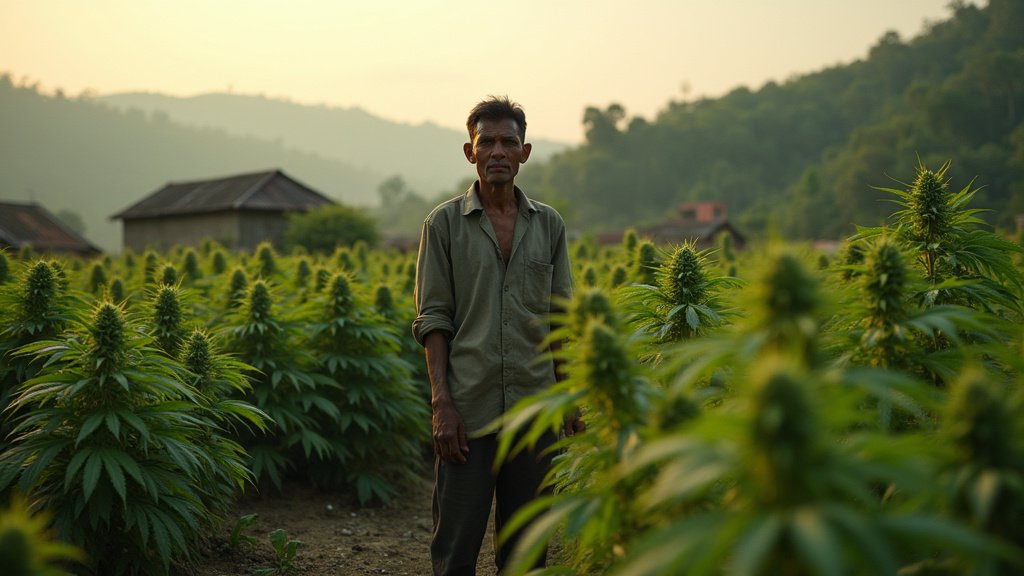
Cannabis cultivation is dramatically increasing. This trend is most notable in resistance-held areas of Myanmar’s Sagaing Region. Villages once focused on traditional crops are switching. This shift began in late 2022. High prices are the main driver. One viss (1.6 kg) of dried cannabis can fetch 800,000 to 1,000,000 kyat. Middlemen are actively buying directly from farmers’ fields. This development is significant news for the region.
The Rise of a New Crop
Villages in townships like Yinmabin and Ayadaw are now widely cultivating cannabis. Areas such as Min Ywar, Yatha, and Htein Kan are specifically mentioned. Previously, these places relied on seasonal produce. However, the lucrative market for cannabis changed this focus. The introduction of cannabis seeds and seedlings around 2023 spurred widespread planting. Farmers see it as a more profitable alternative. Some are even intercropping cannabis with their existing crops.
Economic Incentives Fueling Growth
The high prices create a strong economic incentive. Farmers can earn substantially more from cannabis. This is especially true given the economic instability in Myanmar. The country faces significant political and economic disruption. Many traditional livelihoods are struggling. Therefore, cannabis offers a viable income source. The demand for this particular strain of cannabis seems robust. Middlemen play a key role in this market. They ensure that harvested crops reach buyers quickly. This direct purchasing model benefits farmers. It removes some layers of intermediaries.
Local Governance and Inaction
Interestingly, local authorities have shown little response. Township People’s Defense Forces (PaKhaF) and administrative bodies are largely inactive. In some instances, local village committees are reportedly involved in the cultivation itself. This suggests a complex local dynamic. It highlights how the ongoing conflict impacts governance. It also shows how economic needs can supersede other concerns. This trend is increasingly trending across the region.
Broader Context of Conflict and Illicit Trade
The increase in cannabis cultivation is part of a larger picture. Myanmar has seen a surge in illicit crop production since the 2021 military coup. Opium cultivation, for instance, jumped significantly. This trend is linked to the country’s war-torn economy. Both the junta and rebel groups often rely on illicit trade for funding. Conflict disrupts formal economies. It leaves many farmers with few viable options. Therefore, they turn to profitable, albeit illegal, crops. This fuels organized crime networks. It also creates regional security risks. The drug trade has become deeply embedded in borderland economies. It finances ongoing conflicts.
Implications for Sagaing and Beyond
This new cannabis boom in Sagaing has several implications. It offers a critical lifeline for farmers facing hardship. However, it also contributes to the expansion of illicit economies. These economies are often intertwined with conflict. The lack of enforcement raises questions. It points to the challenges faced by resistance groups. They must balance supporting local economies with combating illicit activities. This situation is a stark reminder of the complex realities on the ground. It shows how conflict and economic desperation shape agricultural trends. The news from Sagaing reflects wider patterns across Myanmar. The dynamics of illicit markets are constantly shifting. The demand for various strains continues. This news highlights a specific trending development.
A Changing Agricultural Landscape
In conclusion, cannabis cultivation is on the rise in Sagaing Region. High prices and economic necessity are the driving forces. This trend occurs within a broader context of conflict and instability. Local governance structures appear unable to curb this growth. The situation underscores the intricate link between conflict and illicit economies. It is a complex issue with far-reaching consequences. The future of agriculture in these areas is increasingly tied to these new, lucrative crops.