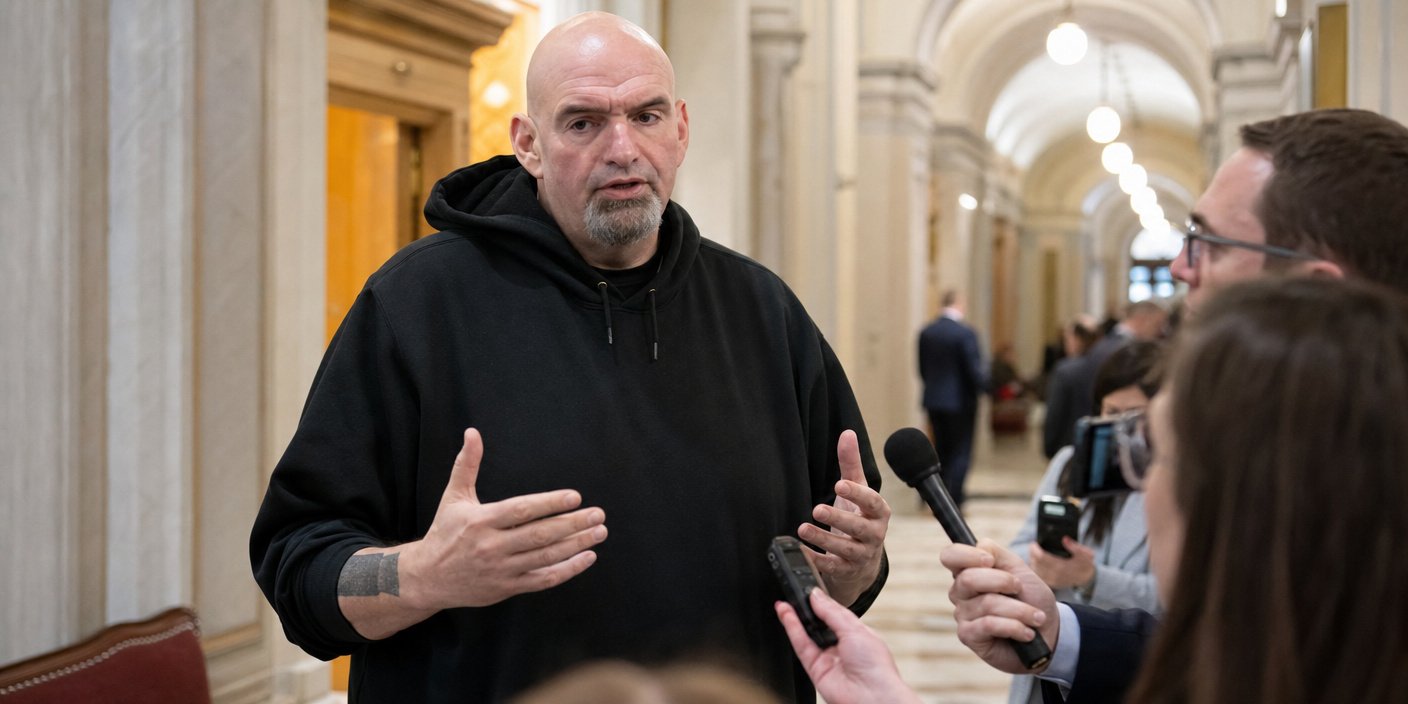
Senator John Fetterman is escalating the pressure on Capitol Hill to “make weed legal,” spearheading a renewed effort to dismantle federal cannabis prohibition. In a direct challenge to the legislative inertia currently defining the 118th Congress, the Pennsylvania Democrat is championing the reintroduction of the Cannabis Administration and Opportunity Act (CAOA). This aggressive push aims to transition the national cannabis policy from an archaic, prohibition-based model to a regulated, public health-centered marketplace. Fetterman’s urgency is not merely a rhetorical stance; it is a tactical pivot aimed at aligning federal law with the reality of the 24 states—representing over half of the U.S. population—that have already legalized recreational marijuana.
The Legislative Architecture: A New Approach
The Cannabis Administration and Opportunity Act is significantly more than a simple decriminalization bill. At its core, the legislation acknowledges that federal prohibition has failed to curb usage while simultaneously blocking the government from implementing essential safeguards. The legislation proposes the establishment of the “Center for Cannabis Products” under the regulatory umbrella of the Food and Drug Administration (FDA). This entity would be tasked with the monumental responsibility of creating industry-wide standards, effectively treating cannabis with the same regulatory seriousness as alcohol or tobacco.
By creating a Center for Cannabis Products, proponents argue that Congress can finally address the “Wild West” nature of the current state-by-state market. This would introduce mandatory labeling, potency restrictions, and rigorous testing for contaminants, which are currently handled inconsistently across state lines. The act seeks to provide federal guidance on cannabis-impaired driving, a significant hurdle that has long been a primary talking point for opponents of legalization.
Prioritizing Public Safety and Health
One of the most frequent arguments against federal legalization has been the lack of clear federal standards regarding public safety, particularly regarding impaired driving. The CAOA directly addresses these concerns. By tasking federal agencies with creating uniform guidelines for detecting impairment, the legislation attempts to move past the debate of “whether” to legalize and toward “how” to integrate cannabis into a modern society safely.
This shift in focus—from punitive prohibition to regulatory management—represents a significant evolution in Democratic messaging. Instead of focusing solely on social justice and expungement, which remain critical pillars of the CAOA, the strategy now emphasizes public safety and consumer health. This dual-track approach is designed to court moderate legislators who may be hesitant to endorse legalization on ideological grounds but are deeply concerned about the lack of control in the current, unregulated market.
Economic Realities and the Taxation Conundrum
Beyond public safety, the economic implications of the CAOA cannot be overstated. Currently, the multi-billion dollar cannabis industry operates in a bizarre legal limbo. Businesses are often forced to operate entirely in cash due to federal banking restrictions, making them targets for crime and complicating tax collection. Federal legalization would unlock the banking system for these entities, allowing for legitimate loans, insurance, and investment.
Furthermore, the taxation model proposed within the CAOA suggests a federal excise tax on cannabis products. This revenue could be directed toward community reinvestment programs, public health initiatives, and the administrative costs of the newly proposed Center for Cannabis Products. As states like Colorado, California, and New York continue to generate hundreds of millions in tax revenue, the federal government’s refusal to participate in this tax base is increasingly viewed as an economic inefficiency.
The Historical and Political Hurdles
To understand the magnitude of Fetterman’s current push, one must look at the historical context of the “War on Drugs.” For decades, federal policy has been rooted in the Controlled Substances Act of 1970, which classified cannabis as a Schedule I substance, ostensibly having no medical value and a high potential for abuse. The CAOA seeks to remove cannabis from the Controlled Substances Act entirely.
However, the legislative path remains fraught with obstacles. A divided Congress presents a formidable wall of opposition. While support for legalization is at an all-time high among the general public—often polling above 60%—the specific mechanisms of a federal bill often die in committee. The secondary angle here is the upcoming election cycle; for politicians, cannabis has transformed from a “third-rail” issue that could kill a career to a potent tool for mobilizing younger voters. Fetterman’s vocal support acts as a litmus test for the Democratic party, forcing the issue to the forefront of the national conversation.
Future Predictions: The Long Road to Reform
What are the chances of the CAOA actually reaching the President’s desk? In the immediate future, political analysts suggest the prospects are slim in the current Congress. However, legislative success is rarely an overnight phenomenon. The real victory for proponents lies in shifting the “Overton Window.” By repeatedly introducing the CAOA and forcing hearings on the Center for Cannabis Products, Fetterman and his colleagues are normalizing the legislative framework of legalization.
If the federal government does not act, the inevitable result is a deepening of the “patchwork” reality. Consumers will continue to navigate vastly different laws when crossing state lines, and businesses will continue to face uneven regulatory landscapes. The most likely future outcome, in the absence of a total sweep of federal legislation, is piecemeal reform—likely starting with banking legislation (like the SAFER Banking Act) before tackling full legalization. Yet, as Fetterman continues to apply pressure, the argument for a comprehensive, centrally regulated market becomes harder to ignore.
FAQ: People Also Ask
Q: What is the primary purpose of the Cannabis Administration and Opportunity Act?
A: The primary purpose is to remove cannabis from the federal Controlled Substances Act, ending federal prohibition while establishing a national regulatory framework for public safety and health.
Q: How would the ‘Center for Cannabis Products’ change the industry?
A: Similar to how the FDA regulates tobacco and alcohol, this Center would set national standards for product testing, labeling, potency, and safety, creating a uniform legal framework across all 50 states.
Q: Does the CAOA address driving while impaired?
A: Yes. A critical component of the bill is the establishment of federal research and guidelines to develop accurate standards for detecting and prosecuting cannabis-impaired driving, addressing a major public safety concern.
Q: Why is Senator Fetterman pushing for this now?
A: Fetterman is leveraging the growing disconnect between existing state laws and federal prohibition to advocate for modernization, arguing that a regulated market is safer and more economically sound than the current prohibitionist model.