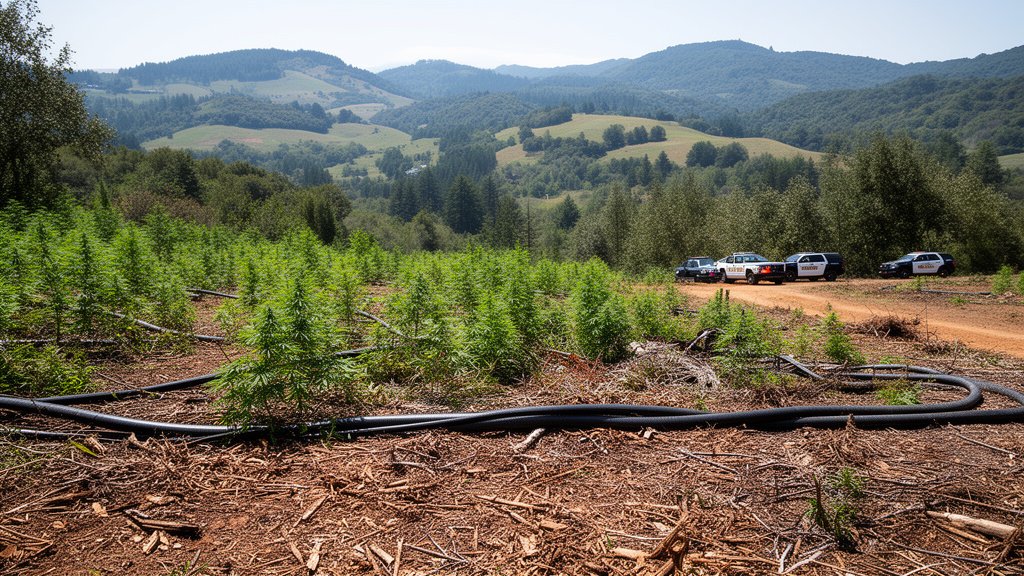
Law enforcement agencies operating within Mendocino County have concluded a sweeping enforcement operation that resulted in the eradication of 173,000 illegal cannabis plants and the seizure of 26 firearms. Spanning from July 1 to July 24, 2026, the initiative represents a significant escalation in efforts to dismantle unregulated cultivation sites that have long posed a threat to public safety, water security, and local environmental health. The operation, coordinated by the Mendocino County Sheriff’s Office (MCSO) alongside partner state and local agencies, focused on remote and rural areas where illicit grow operations frequently operate outside the framework of California’s legal cannabis market.
Key Highlights
- Operation Timeline: The enforcement sweep took place over a focused 24-day period, from July 1 through July 24, 2026.
- Total Seizures: 173,000 unregulated cannabis plants were eradicated during the operation.
- Weapon Recovery: Authorities confiscated 26 firearms, highlighting the intersection between illicit cultivation and organized criminal activity.
- Strategic Objectives: The mission prioritized the mitigation of severe risks to local water quality, environmental preservation, and public safety.
The Mendocino Enforcement Offensive: Addressing the Illicit Market
The scale of this recent enforcement sweep underscores the persistent challenges California faces in curbing the illicit cannabis market. For years, the rugged topography of Mendocino County has provided a haven for unregulated cultivation, often leading to severe environmental consequences. The 173,000 plants destroyed in this operation are not merely agricultural products; they represent complex, often clandestine infrastructures that frequently utilize diverted water streams, prohibited pesticides, and fertilizers that leach into the watershed.
Environmental Remediation and Watershed Protection
One of the primary drivers for this interagency operation was the protection of California’s vital water resources. Illegal grow sites are notorious for unauthorized water diversion, which depletes local aquifers and streams during the critical summer months. The Mendocino County Sheriff’s Office, in conjunction with the California Department of Fish and Wildlife (CDFW) and the State Water Resources Control Board, conducted environmental impact assessments at the targeted sites.
The chemicals used in these unauthorized operations often go unchecked. Fertilizers, rodenticides, and unapproved pesticides have been found to contaminate the soil and runoff into sensitive waterways. By eradicating these 173,000 plants, authorities have effectively halted the daily water usage required for such a large-scale agricultural operation, a significant reprieve for the local ecosystem struggling under the strain of drought and ecological degradation.
The Intersection of Public Safety and Illicit Cultivation
The seizure of 26 firearms during this operation provides stark evidence of why these locations are considered high-risk for local communities. The presence of weaponry at these sites is rarely coincidental; it is often an indicator of organized criminal enterprises protecting their investment from theft or law enforcement interdiction.
Law enforcement personnel, including the MCSO, have frequently reported that these sites operate as fortified encampments. The removal of these weapons is a crucial step in de-escalating the potential for violence in the rural regions where these farms are established. This enforcement action serves to reassert the rule of law in areas where public safety has been compromised by the presence of armed, unregulated entities.
Economic and Regulatory Implications
Critics of the illicit market often point to the direct threat it poses to the state’s regulated, legal cannabis industry. Licensed cultivators in California are subject to rigorous permitting, environmental compliance standards, and significant tax obligations. When illicit operators ignore these regulations, they not only cause environmental damage but also undercut the legal market. This enforcement sweep acts as a market correction, signaling that the state remains committed to shutting down those who bypass legal channels and compromise the integrity of the cannabis industry.
Moving forward, the challenge for Mendocino County remains the persistence of these operations. While 173,000 plants have been removed, the root causes—geographic isolation and market demand for lower-cost, illicit product—remain. Future efforts will likely focus on utilizing satellite surveillance and more aggressive on-the-ground intelligence to prevent these sites from re-establishing themselves in the coming seasons.
FAQ: People Also Ask
What are the main environmental dangers of illegal cannabis grows?
Illegal cannabis operations often rely on unauthorized water diversion, which creates water scarcity for local wildlife and agriculture. Furthermore, the use of banned or unregulated pesticides and fertilizers can lead to toxic chemical runoff into watersheds, harming native aquatic life and potentially contaminating local groundwater supplies.
Why does the MCSO seize firearms during cannabis enforcement operations?
Firearms are seized because they indicate the presence of organized criminal activity and pose a direct safety threat to law enforcement and the surrounding community. Illicit grow sites are often guarded by individuals who may use force to protect the crops, necessitating a tactical approach by authorities to ensure public safety.
How does this affect the legal cannabis market in California?
These enforcement actions help ensure a level playing field for legally permitted growers. By dismantling the illicit market, the state protects consumers from untested, potentially contaminated products and supports the economic viability of legitimate businesses that adhere to state-mandated environmental and safety regulations.
What happens to the eradicated cannabis plants after they are seized?
Following documentation and forensic evidence collection, the seized plants are typically removed from the site and disposed of in accordance with environmental regulations, often through chipping and composting or transport to specialized waste facilities to ensure that no contaminated plant matter enters the local environment.