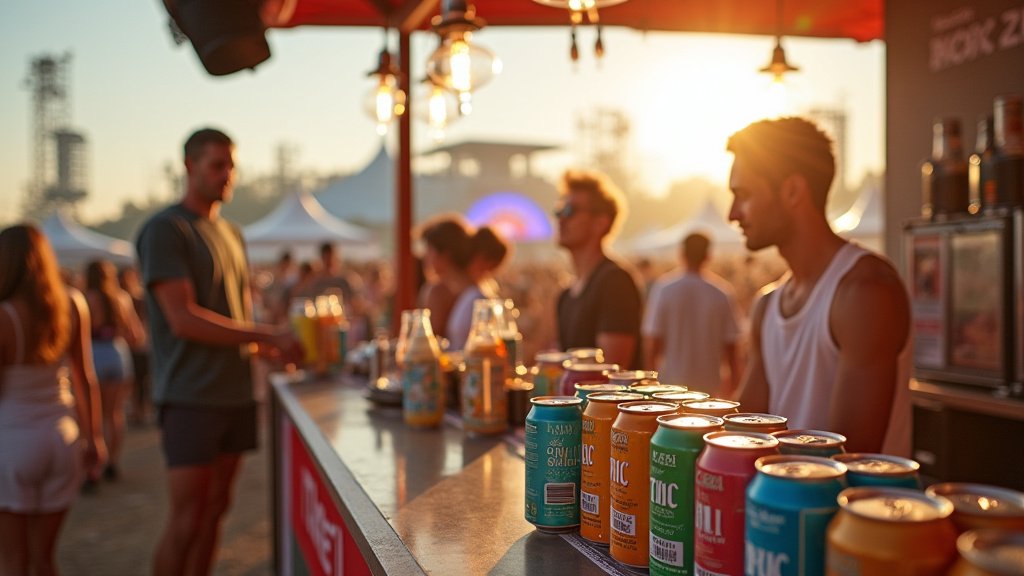
The U.S. Senate has initiated a pivotal move to delay the federal ban on hemp-derived THC products—a measure that had been looming over the industry with a deadline of November 2026. This legislative reprieve offers a crucial buffer for the festival circuit, where low-dose THC beverages have rapidly transformed from a fringe experiment into a staple, high-margin amenity. As the regulatory waters remain murky, this decision provides a temporary stay of execution for the nascent hemp beverage sector, preventing a sudden collapse of a rapidly expanding market segment that has become deeply integrated into the modern concert-going experience.
Key Highlights
- Legislative Delay: The Senate has moved to push back the impending federal ban on hemp-derived cannabinoids, currently targeted for November 2026.
- Festival Impact: Music festivals, which have increasingly pivoted toward ‘sober-curious’ or low-dose THC options, gain significant runway for operational planning.
- 2018 Farm Bill Context: The industry currently operates under a legal framework established by the 2018 Farm Bill, which unintentionally created the ‘hemp loophole’ now under intense scrutiny.
- Economic Stabilization: The delay provides time for manufacturers and distributors to transition toward potential new federal standards without facing an immediate market cliff.
Navigating the Regulatory Crossroads
The intersection of federal policy and the consumer packaged goods (CPG) market has rarely been as volatile as it is regarding hemp-derived THC. Since the 2018 Farm Bill legalized hemp—defined as cannabis with less than 0.3% Delta-9 THC by dry weight—the beverage industry has innovated around the lack of strict federal oversight regarding total THC concentration. This innovation gave birth to the ‘hemp-derived’ beverage market, a category that includes seltzers, sodas, and mocktails, all offering a regulated buzz without the traditional alcohol hangover.
For the festival industry, this category has been a goldmine. Promoters and venue operators, facing rising alcohol costs and a demographic shift toward the ‘sober-curious’ movement, have embraced these products. They offer a lower liability profile than high-proof spirits while providing a new revenue stream that appeals to Gen Z and Millennial attendees. The Senate’s move to delay the November 2026 ban is, in essence, a recognition of the significant economic weight this sector has accrued in a remarkably short time.
The ‘Sober-Curious’ Economic Engine
Data indicates that the interest in alcohol-alternative beverages is not merely a trend but a structural shift in consumer behavior. In the festival circuit, alcohol sales have historically faced high operational overhead due to security, insurance, and liability issues related to over-consumption. Hemp-derived THC beverages, typically dosed at 2.5mg to 5mg of Delta-9 THC, provide a more controlled consumption experience.
However, the legal precariousness of these products has created a ‘Sword of Damocles’ scenario for event organizers. Booking a multi-state tour or a three-day music festival requires months of supply chain logistics. Without legislative clarity, the risk of a product line being suddenly declared illegal mid-season would have been catastrophic. The Senate’s decision to delay the ban allows organizers to continue these contracts with a higher degree of confidence, ensuring that the ‘wellness-aligned’ bar experience remains a consistent feature of the summer circuit through 2026 and beyond.
The Legal Quagmire: 2018 Farm Bill vs. Federal Oversight
The crux of the issue lies in the interpretation of the 2018 Farm Bill. While the bill was intended to spur the industrial hemp and CBD industry, its broad language created a market for intoxicating hemp products. Federal agencies, including the FDA, have signaled ongoing concern regarding the lack of a comprehensive regulatory framework for these products, specifically regarding safety, labeling, and age-gating.
By postponing the ban, the Senate is effectively kicking the can down the road, likely hoping that a new legislative cycle can draft more nuanced regulations that distinguish between industrial hemp products and these intoxicating beverages, rather than issuing a blunt, industry-wide prohibition. This is a critical development for stakeholders, as it transitions the discussion from ‘prohibition’ to ‘regulation.’
Future Outlook: What Happens Next?
While the delay is a win for the immediate future, industry analysts suggest that manufacturers cannot afford to become complacent. The move is a reprieve, not a permanent pardon. The coming years will likely be characterized by intense lobbying for an ‘Age-Gated’ framework rather than a total ban. This would mirror alcohol regulations, requiring strict ID verification at festivals—a shift that many major event organizers are already preparing for to ensure longevity. The Senate’s action signals that while the ‘wild west’ era of hemp beverages may be drawing to a close, the sector has demonstrated enough economic value to warrant a seat at the table in the legislative process.
FAQ: People Also Ask
1. Does this delay mean these products are fully safe from federal action?
No. The delay is a regulatory pause, not an endorsement. While the ban is deferred, federal agencies like the FDA maintain their authority to issue guidance or warnings regarding safety, labeling, and marketing.
2. How does this impact consumers at festivals?
For the immediate future, attendees can expect continued access to hemp-infused beverages at venues that have adopted them. The availability remains stable, as distributors have more security to continue their supply chains.
3. Is there a difference between ‘Hemp-derived’ and ‘Marijuana-derived’ THC?
Chemically, the final molecule (Delta-9 THC) is identical. The distinction is purely legal, based on the source plant and its THC concentration levels at the time of harvesting, as defined by the 2018 Farm Bill.
4. What is the next major deadline for this industry?
While the specific November 2026 ban has been delayed, the industry is closely monitoring the next Farm Bill reauthorization process, which will be the primary arena for setting long-term federal policy on hemp cannabinoids.