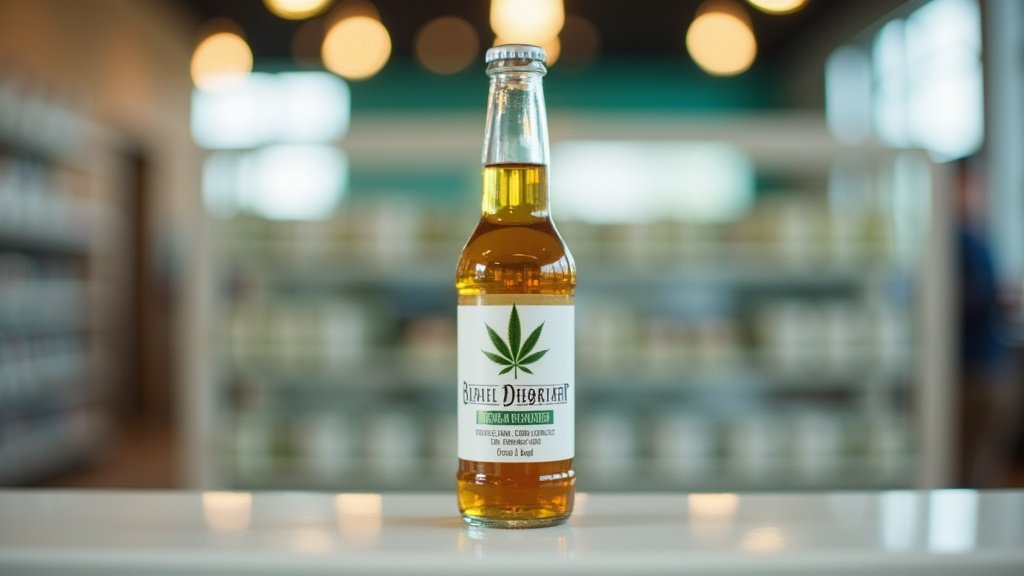
The Michigan Cannabis Regulatory Agency (CRA) has issued an official public health and safety advisory, triggering a voluntary recall of ‘Nuggz Nectar Infused Drinks.’ This regulatory action comes following rigorous quality control testing which revealed that the products in question fail to meet state safety standards, specifically regarding THC concentration levels and inaccurate labeling of serving counts. Consumers are advised to immediately cease consumption of any affected products and return them to the original place of purchase. This recall underscores the complexities of the rapidly evolving cannabis beverage market and the ongoing necessity for strict compliance protocols within the state’s legal framework.
Key Highlights
- Primary Concern: Products have been found to exceed maximum allowable THC concentration limits, potentially leading to unintended consumption effects.
- Labeling Failure: Discrepancies were identified regarding the stated serving counts on the packaging, which misleads consumers about the potency of the product.
- Consumer Action: The CRA strongly urges consumers who have purchased these drinks to check batch numbers, avoid consumption, and facilitate a return or disposal.
- Regulatory Oversight: This action is a direct result of the CRA’s mandate to ensure safety, accuracy, and accountability within the Michigan cannabis industry.
Understanding the Regulatory Breach: Why Precision Matters
The recall of ‘Nuggz Nectar Infused Drinks’ highlights a critical intersection between product innovation and consumer safety. In the regulated Michigan cannabis market, manufacturers are required to adhere to strict guidelines regarding THC concentrations—the psychoactive component of cannabis—and clear, accurate labeling of serving sizes. When these margins are missed, it is not merely a bureaucratic error; it is a significant public health risk.
The Mechanics of THC Concentration Violations
THC concentration limits are established to prevent over-intoxication and ensure a predictable experience for the consumer. Beverages, specifically, pose a unique challenge for formulators. Unlike edibles or flower, infused drinks require emulsification techniques that must maintain consistency throughout the shelf life of the product. When a product exceeds the state-mandated THC limit, it typically indicates a failure in the homogenization process or a miscalculation during the manufacturing phase. For the consumer, a drink that exceeds its labeled potency can result in adverse effects, such as increased anxiety, sedation, or an unexpectedly intense intoxication, which can be particularly dangerous for novice users or those with low tolerance levels.
The Danger of Inaccurate Serving Counts
Equally problematic is the issue of inaccurate serving counts. Regulatory frameworks require that the label accurately reflects the milligrams of THC per serving. This is the cornerstone of responsible cannabis consumption. When a package claims a certain serving count but contains a different concentration, it effectively strips the consumer of their ability to ‘start low and go slow.’ This lack of transparency undermines the informed consent necessary for legal cannabis use, making regulatory intervention like this recall an essential tool for market integrity.
The Role of the Michigan CRA
The Michigan Cannabis Regulatory Agency (CRA) functions as the primary gatekeeper for the state’s legal industry. By enforcing these recalls, the agency is actively validating the importance of its testing and compliance protocols. The Michigan cannabis market is one of the most robust in the United States, and maintaining that status requires zero tolerance for products that jeopardize the safety of residents. This recall serves as a stern reminder to all licensed processors and producers that batch testing is not merely a formality—it is a non-negotiable legal requirement. The CRA’s intervention process involves pulling samples from the market, verifying testing data against production records, and mandating corrective actions to ensure that products returning to shelves meet the stringent requirements of the Michigan Regulation and Taxation of Marihuana Act.
Secondary Angles: Examining the Broader Impact
1. The Compliance-Innovation Balancing Act: The cannabis beverage industry is in a ‘gold rush’ phase, with companies constantly experimenting with new formulas and faster-acting delivery methods. This rapid innovation often outpaces the development of stable production processes. This recall acts as a cooling mechanism, forcing manufacturers to slow down and prioritize the scalability of their compliance infrastructure before their production volume.
2. The Economics of Recall Culture: For a brand, a voluntary recall is a financial hit, involving the destruction of inventory, logistical costs of return programs, and potential damage to reputation. However, in the long term, these recalls are often viewed as a maturity marker for the industry. Companies that handle recalls transparently and cooperate fully with regulators are more likely to retain consumer trust compared to those that attempt to obfuscate safety failures.
3. Consumer Trust and the ‘Legal Market’ Advantage: One of the strongest arguments for the legal, regulated market is safety testing. While illicit market products are never tested for potency, heavy metals, or mold, the legal market catches these errors through systemic recalls. This specific incident reinforces why, despite the inconvenience of a recall, consumers are exponentially safer purchasing through licensed dispensaries where a chain of custody and accountability exists.
FAQ: People Also Ask
Q: I have Nuggz Nectar Infused Drinks at home. How do I know if they are affected?
A: You should immediately cross-reference the batch number on your product packaging with the official recall notification provided by the Michigan Cannabis Regulatory Agency (CRA). You can find this list on the official CRA website. If your batch matches, do not consume it.
Q: What should I do if I have already consumed the recalled product?
A: If you have consumed the product and are experiencing adverse symptoms, seek medical advice. While the risk of long-term harm from a single ingestion of a higher-than-expected THC dose is generally low, it can cause significant temporary distress. Contact a healthcare provider if you are concerned.
Q: Can I get a refund for the recalled product?
A: Yes. You should return the product to the dispensary or retail location where it was originally purchased. Most retailers are obligated to provide a refund or exchange for recalled items under the guidance of the CRA. Be sure to bring your receipt if you have it, though many retailers will work with you regardless.
Q: Why do these recalls happen so often?
A: As the Michigan cannabis market grows, the volume of testing has increased, and the CRA has become more proficient at catching discrepancies. What might seem like ‘frequent’ recalls is actually a sign of a robust regulatory system successfully identifying and removing non-compliant products before they cause widespread public harm.