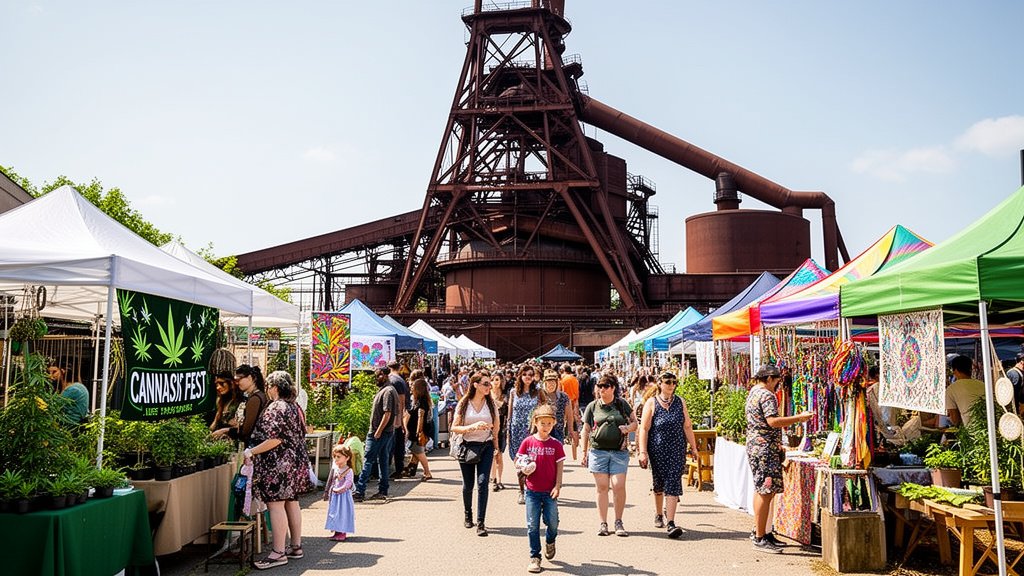
The sixth annual Pittsburgh Cannabis Fest has officially moved past the stereotypical image of a consumption-focused gathering, instead positioning itself as a cornerstone of the regional lifestyle and arts community. Held at the historic Carrie Blast Furnace, this year’s event emphasized a comprehensive cultural experience, blending advocacy, entrepreneurship, and family-friendly programming. By integrating local craft markets, wellness workshops, and regional music, the festival organizers successfully signaled that the future of cannabis events in Pennsylvania is rooted in community integration rather than just the industry itself.
Key Highlights
- Beyond Consumption: The 6th annual event shifted the narrative from product consumption to a broad, lifestyle-centered cultural experience.
- Community and Arts: A significant expansion in the number of local artisans, plant sellers, and independent vendors created a marketplace atmosphere reminiscent of traditional city street fairs.
- Family-Inclusive Programming: Organizers successfully transitioned the event into a family-friendly environment, featuring all-ages music stages, non-infused educational workshops, and interactive community art installations.
- Economic Impact: The festival served as a tangible incubator for small businesses, providing a platform for local hemp-derived product makers to connect directly with regional consumers.
The Evolution of the Cannabis Festival Experience
Redefining the Cannabis Experience
For years, the public perception of events like the Pittsburgh Cannabis Fest was inextricably linked to the act of consumption. However, the 6th annual edition of the festival, situated against the industrial backdrop of the Carrie Blast Furnace, marked a definitive turning point. The organizers opted for a holistic approach, designing the festival grounds to prioritize accessibility and diverse engagement. By structuring the event into distinct zones—ranging from musical stages featuring local bands to craft vendor alleys—the festival catered to a wider demographic that included curious onlookers, wellness enthusiasts, and casual supporters of the legalization movement. This shift effectively destigmatized the environment, allowing for a more inclusive atmosphere that mirrors other prominent Pennsylvania cultural festivals.
The Economic Pulse: Local Artisans and Small Businesses
One of the most profound secondary angles of this year’s event was its undeniable role in local economic development. Far from being just a stage for large corporate entities, the Pittsburgh Cannabis Fest served as a vital storefront for local artisans. Vendors selling handcrafted pottery, local hemp-derived wellness products, botanical artwork, and vintage clothing were given premier placement. This strategy supported the regional creative economy, proving that cannabis-adjacent events can drive significant traffic to independent small businesses. The influx of local vendors not only provided a richer experience for attendees but also created a sustainable economic ecosystem where local makers could bypass traditional retail hurdles and connect directly with their customer base.
Wellness, Education, and Advocacy
Education remained a central pillar of the event’s programming. Several panels and booths were dedicated specifically to the intersection of plant-based wellness and legal advocacy. Experts in the field of Pennsylvania cannabis legislation provided updates on the current status of legalization and medical programs, offering attendees a clear roadmap of the legal landscape. This focus on advocacy provided a ‘community-first’ sentiment, positioning the festival as a hub for policy discussion and patient rights. The presence of non-infused wellness vendors furthered this goal, demonstrating that the plant-based lifestyle involves more than just THC, encompassing a wide array of holistic health practices, organic agriculture, and botanical education.
The Future of Regional Festivals
Looking forward, the success of the 6th annual festival provides a blueprint for how similar events might be structured in a post-prohibition world. By emphasizing the ‘community’ aspect—local food trucks, children’s activities, and communal art projects—the Pittsburgh Cannabis Fest has effectively normalized the industry’s presence within the broader public sphere. This approach creates a ‘future-proof’ model; even if regulatory frameworks shift, the festival has established itself as an essential cultural entity that offers value beyond the legal status of the product. It is no longer just about the cannabis; it is about the environment that surrounds it, setting a high bar for event organizers across the Commonwealth to emulate in the coming years.
FAQ: People Also Ask
Q: What is the significance of the Carrie Blast Furnace venue?
A: The Carrie Blast Furnace provides a historic, sprawling industrial backdrop that adds a unique ‘Pittsburgh’ identity to the festival. Its massive size allows for distinct zoning, enabling organizers to separate adult-only consumption areas from the family-friendly, all-ages arts and vendor sections.
Q: Is the Pittsburgh Cannabis Fest accessible to families?
A: Yes, in its recent iterations, the event has actively pivoted to be family-friendly. It includes dedicated spaces for arts, crafts, local food vendors, and musical performances that cater to a general public audience rather than strictly adult consumers.
Q: How does this event impact local businesses?
A: The festival acts as a significant economic incubator, providing a high-traffic marketplace for local artisans, small-business owners selling hemp-derived products, and regional artists. It allows these businesses to gain direct exposure to thousands of attendees, often facilitating sales and brand growth that would be difficult to achieve in traditional retail environments.