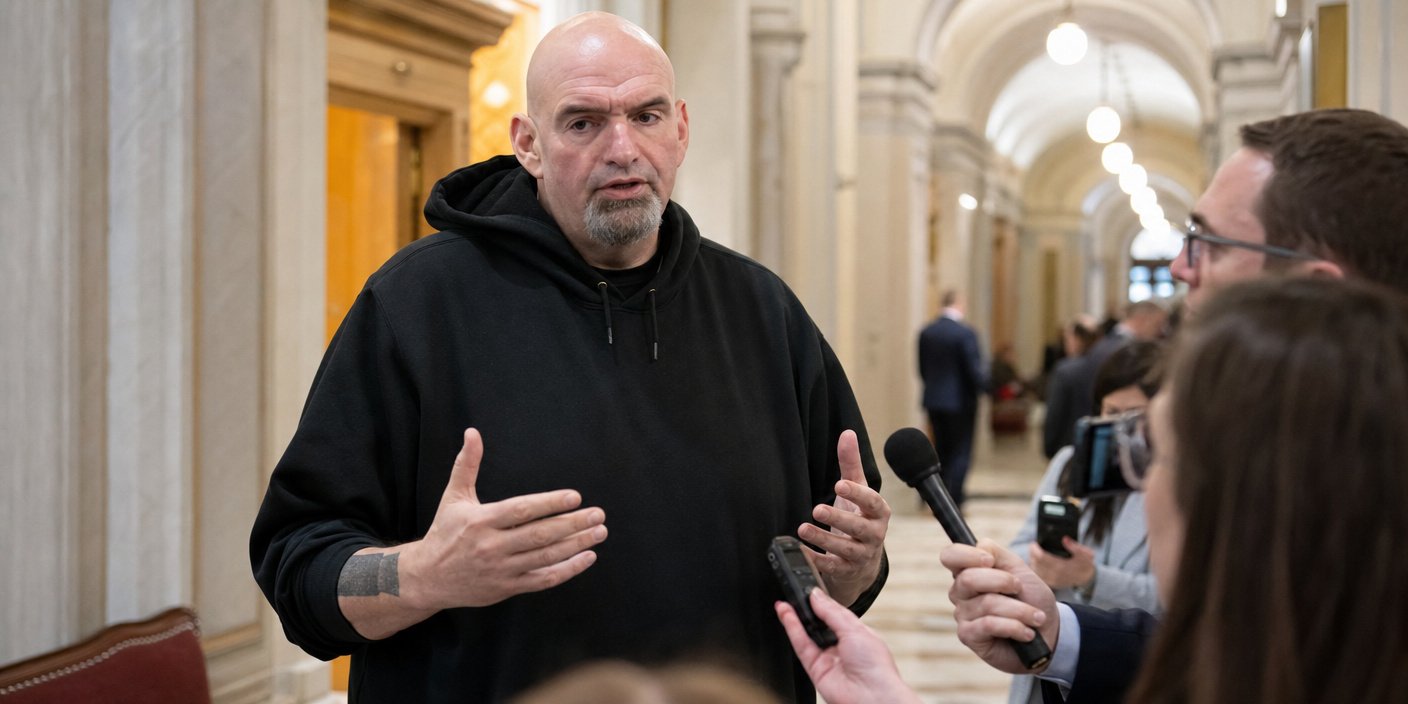
Senator John Fetterman (D-PA) has reignited the national conversation surrounding cannabis policy, issuing a direct call to Congress to prioritize the passage of the Cannabis Administration and Opportunity Act (CAOA). This legislative push marks a pivotal shift in the Senate’s approach to drug policy, moving beyond the patchwork of state-level legalization toward a comprehensive federal framework. Fetterman’s advocacy is not merely about decriminalization; it is structured around a rigorous public safety strategy designed to soothe concerns regarding impaired driving and state compliance.
Key Highlights
- Comprehensive Reform: Senator Fetterman is calling for the immediate advancement of the Cannabis Administration and Opportunity Act to end federal prohibition.
- DOT Safety Mandate: The legislation compels the Department of Transportation to establish national, scientific standards for cannabis-impaired driving, addressing a primary concern of legalization opponents.
- Regulatory Incentives: The proposal includes financial and legislative incentives for states to adopt standardized cannabis open-container laws, mirroring alcohol-related road safety regulations.
- Modernizing Drug Policy: The move positions cannabis as a regulated commodity rather than a prohibited substance, aiming to harmonize federal law with the reality of widespread state-level legalization.
Modernizing Federal Cannabis Oversight and Public Safety
Senator Fetterman’s recent appeal to his colleagues in the Senate represents a sophisticated pivot in the strategy to pass federal cannabis legislation. Rather than relying on incremental banking reforms—which have stalled repeatedly—Fetterman is championing the Cannabis Administration and Opportunity Act (CAOA) as the primary vehicle for total reform. This strategy acknowledges the existing friction between state-sanctioned markets and the outdated federal Controlled Substances Act.
The Intersection of Policy and Road Safety
One of the most persistent arguments against federal legalization has been the ambiguity surrounding impaired driving. Without a standardized, recognized test for cannabis impairment—comparable to a blood-alcohol concentration (BAC) limit—federal lawmakers have expressed hesitation. Fetterman’s legislative framework directly tackles this by mandating that the Department of Transportation (DOT) develop and implement evidence-based standards for cannabis-impaired driving. By integrating the DOT into the regulatory structure, the proposal seeks to establish a credible, scientific baseline that can be applied nationwide.
Harmonizing State and Federal Regulations
The proposal does not aim to strip states of their sovereignty but rather to create a cohesive regulatory floor. A key component of this legislative push is the introduction of federal incentives for states to adopt open-container laws specifically tailored for cannabis. Similar to the federal highway funding incentives used to standardize alcohol open-container laws across the United States, this framework encourages states to adopt uniform safety practices. This effectively bridges the gap between varying local statutes, creating a predictable legal environment for both consumers and law enforcement.
The Economic and Societal Pivot
From an economic perspective, the CAOA is designed to remove the federal barriers that have plagued the cannabis industry since its inception. By descheduling cannabis, the legislation would allow businesses to access traditional banking services, file tax returns without the constraints of 280E of the Internal Revenue Code, and engage in interstate commerce. However, Fetterman’s focus remains anchored in the societal shift—moving cannabis from a criminal justice issue to a consumer protection and public safety issue. This represents a nuanced understanding that legalization is unlikely to succeed without addressing the pragmatic concerns of suburban and moderate voters who are generally supportive of cannabis but wary of public safety implications.
Assessing the Path to 60 Votes
The political reality of the Senate requires 60 votes to overcome a filibuster, meaning this legislation must attract bipartisan support. Fetterman’s emphasis on DOT-led safety standards and state-incentivized open-container laws is a strategic maneuver designed to peel away votes from moderate Republicans and hesitant Democrats. By framing legalization as a “safety-first” policy rather than a radical social experiment, the Senator is attempting to rebrand the issue. Whether this approach is sufficient to overcome deeply entrenched opposition remains the central question of this legislative session. The inclusion of these safety-conscious stipulations suggests a tactical retreat from the “all-or-nothing” absolutism of previous years, opting instead for a regulated, controlled, and data-driven transition.
FAQ: People Also Ask
Q: What is the primary goal of the Cannabis Administration and Opportunity Act?
A: The primary goal is to deschedule cannabis from the federal Controlled Substances Act, effectively legalizing it at the federal level while creating a regulatory framework for taxation, interstate commerce, and public safety.
Q: How does this legislation address impaired driving concerns?
A: The proposal mandates the Department of Transportation (DOT) to develop standardized scientific metrics for cannabis impairment, ensuring that law enforcement has uniform criteria for assessing driver safety, similar to alcohol intoxication standards.
Q: Will states lose their authority to regulate cannabis under this plan?
A: No, the bill relies on an incentive-based structure. It encourages states to adopt uniform “open-container” laws for cannabis to meet federal safety standards, similar to existing federal highway funding incentives for alcohol regulations.
Q: Does this proposal address the taxation of cannabis?
A: Yes, the CAOA includes provisions for federal taxation and regulatory oversight, aiming to legitimize the industry and generate tax revenue, which is a major component of the economic argument for federal legalization.