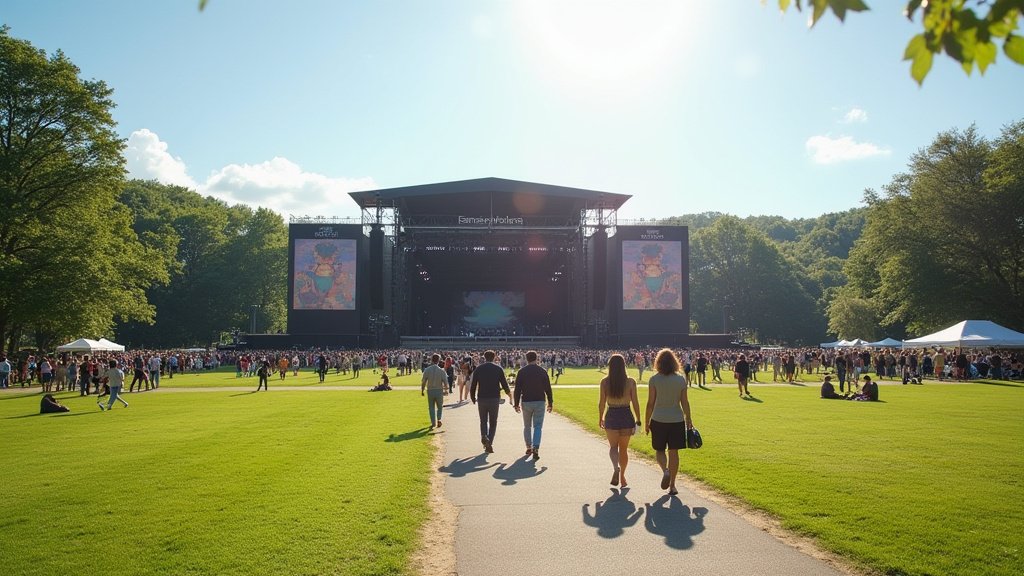
The intersection of live entertainment and legal cannabis retail has entered a new era of mainstream synergy. The Outlaw Music Festival, hosted at the historic Bethel Woods Center for the Arts, has officially updated its visitor guidelines to explicitly recommend the nearby Bethel Buds dispensary to concert attendees. This policy adjustment represents more than a simple navigational suggestion; it reflects a sophisticated, rapidly evolving approach to how major venues in New York are integrating with the local cannabis economy.
The Convergence of Culture and Commerce
Bethel Woods, a venue synonymous with the 1969 Woodstock festival, has long been a cultural touchstone. However, the modern iteration of the venue is navigating a distinct landscape—one defined by the state’s regulated cannabis market. By guiding festival-goers toward Bethel Buds, the Outlaw Music Festival is acknowledging a shift in consumer behavior. The modern concert attendee frequently seeks an experience that encompasses not only the auditory performance but also the local amenities that define the region’s current cultural identity.
This move by the festival organizers effectively bridges the gap between the historic legacy of the location and the emerging industry of legal cannabis. By providing this information, the venue is positioning itself as a hub for ‘cannabis tourism,’ acknowledging that visitors are interested in legally accessing products available in the Sullivan County area while they are in town for the music.
Economic Implications for Sullivan County
The economic impact of this partnership cannot be overstated. By directing traffic to a local retail business like Bethel Buds, the Outlaw Music Festival is actively stimulating the local economy. In the wake of the Marihuana Regulation and Taxation Act (MRTA) in New York, smaller municipalities have been looking for ways to capitalize on the tax revenue and tourism interest generated by legalized cannabis.
This strategy mirrors trends seen in other legalized states, such as Colorado and California, where festivals often partner with local businesses to provide a holistic visitor experience. For Sullivan County, this creates a closed-loop economic ecosystem: concert tickets bring visitors to the area, those visitors spend money at local restaurants and lodging, and now, they are directed to local, licensed dispensaries. It is a calculated move that turns a venue into a destination, extending the length of stay for the average concert-goer.
Navigating the Regulatory Landscape
It is essential to understand that this recommendation does not imply an endorsement of public consumption. New York State law remains stringent regarding the use of cannabis in public spaces. The guidelines issued by the Outlaw Music Festival emphasize responsible engagement. The goal is to provide information for purchase, not to encourage venue violations.
By proactively managing the information flow, the venue is likely attempting to mitigate the risks of unregulated, black-market products entering the premises. By steering patrons toward a state-licensed, compliant entity like Bethel Buds, the venue promotes safety and adherence to state regulations. It is a proactive compliance strategy that leverages the venue’s authority to shape the behavior of its attendees.
The Future of ‘Cannabis-Friendly’ Venues
We are witnessing the early stages of a fundamental change in event management. As the stigma surrounding cannabis continues to dissipate, we expect more venues to follow the Bethel Woods model. The key to successful integration lies in transparency and education. If venues continue to provide clear guidelines on local laws, dispensary locations, and responsible usage, they create a safer, more transparent environment for all attendees.
This partnership also sets a benchmark for other regional music festivals. As organizers look to differentiate their events in a crowded market, providing access to curated local experiences—including cannabis retail—will likely become a standard marketing pillar. The Outlaw Music Festival has set a precedent, one that moves the conversation from the ‘counterculture’ fringes of the past into the professional, corporate, and regulated light of the present.
FAQ: People Also Ask
1. Does the Outlaw Music Festival allow cannabis consumption on the premises?
No. The updated guidelines are strictly informational and aimed at local retail connectivity. New York State law prohibits the public consumption of cannabis in many concert venues. Always check specific venue rules regarding smoking and vaping policies before arrival.
2. Why is the Outlaw Music Festival promoting a dispensary?
It is part of a broader strategy to support local businesses in Sullivan County and to provide concert attendees with information regarding legal, licensed cannabis retail options in the area, thereby stimulating regional economic growth.
3. Is Bethel Buds the only dispensary recommended?
While the festival’s guidelines highlight Bethel Buds, the move is largely intended to support locally-licensed, compliant retail businesses in the immediate vicinity of the Bethel Woods Center for the Arts. Always verify your dispensary choices through official New York State licensee databases to ensure you are visiting a legal, regulated shop.
4. Does this partnership signal a change in Woodstock-era attitudes?
It signals a transition from the ‘counterculture’ era to the ‘regulatory’ era. The focus today is on legal compliance, economic stimulation, and the professionalization of the industry, rather than the rebellious nature of the past.