As interest in personal cannabis cultivation continues to grow, particularly in regions where it is legally permissible, mastering the techniques for successful indoor growing has become a focus for many aspiring cultivators. For beginners looking ahead to 2025, understanding the fundamental steps is crucial for establishing a thriving indoor garden.
This guide, drawing on insights into effective practices, outlines the key considerations for individuals embarking on the journey of cultivating cannabis within a controlled environment.
Establishing the Cultivation Space
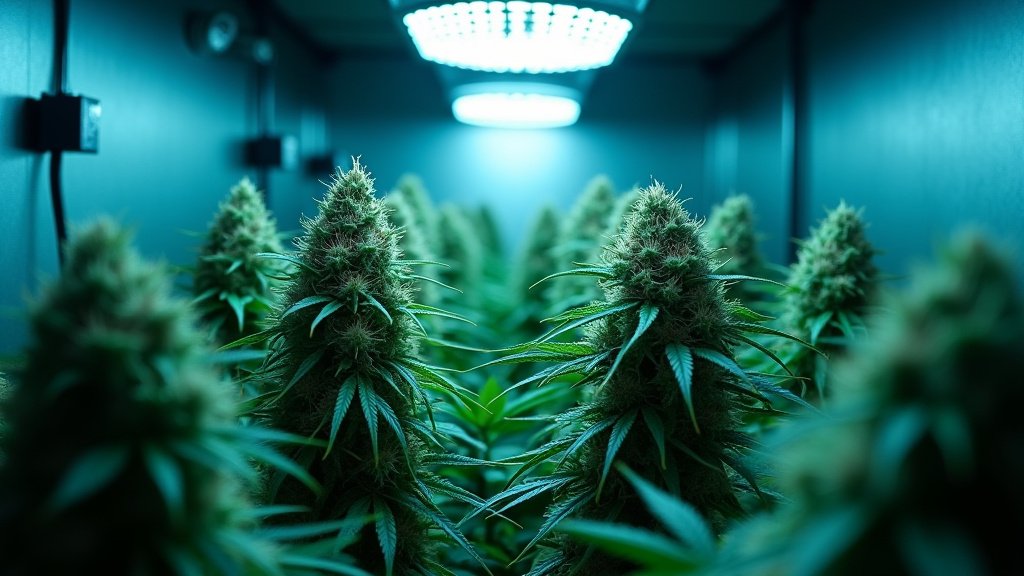
The initial step involves selecting an appropriate cultivation space. This could range from a dedicated grow tent to a converted closet or spare room. The chosen area must be secure, controllable, and allow for the installation of necessary equipment without causing undue disruption or potential legal issues, depending on local regulations. Proper ventilation is a critical factor from the outset to manage air exchange and temperature.
Optimizing Lighting Conditions
Lighting is perhaps the single most important factor influencing plant growth indoors. The guide emphasizes the importance of optimizing lighting for cannabis plants. A key recommendation for beginners heading into 2025 is the use of energy-efficient LED grow lights. These modern lighting systems offer several distinct advantages over older technologies.
Notably, LED lights produce cooler temperatures, which simplifies environmental management within the grow space. Furthermore, many LED systems provide adjustable spectrums, allowing cultivators to tailor the light wavelengths provided to the plants to match different stages of their growth cycle, from vegetative to flowering, thereby promoting healthier and more vigorous development.
Managing Environmental Factors
Controlling the environment is paramount for healthy indoor cannabis cultivation. The guide details the necessity of managing environmental conditions closely. Maintaining the correct temperature is vital; a suitable range is generally considered to be between 70°F and 85°F (equivalent to 21°C to 29°C) during the plants’ light cycle, with slightly lower temperatures acceptable during darkness.
Equally important is controlling humidity levels. The ideal humidity will vary depending on the specific cannabis strain being grown and its current growth stage, from seedling to late flowering. Proper air circulation, often achieved with oscillating fans, helps prevent mold and strengthens stems, contributing to overall plant health.
Implementing Plant Training Methods
To maximize the efficiency and productivity of an indoor setup, particularly in limited spaces, plant training methods are highly recommended. The guide introduces two effective techniques for beginners: Low-Stress Training (LST) and topping.
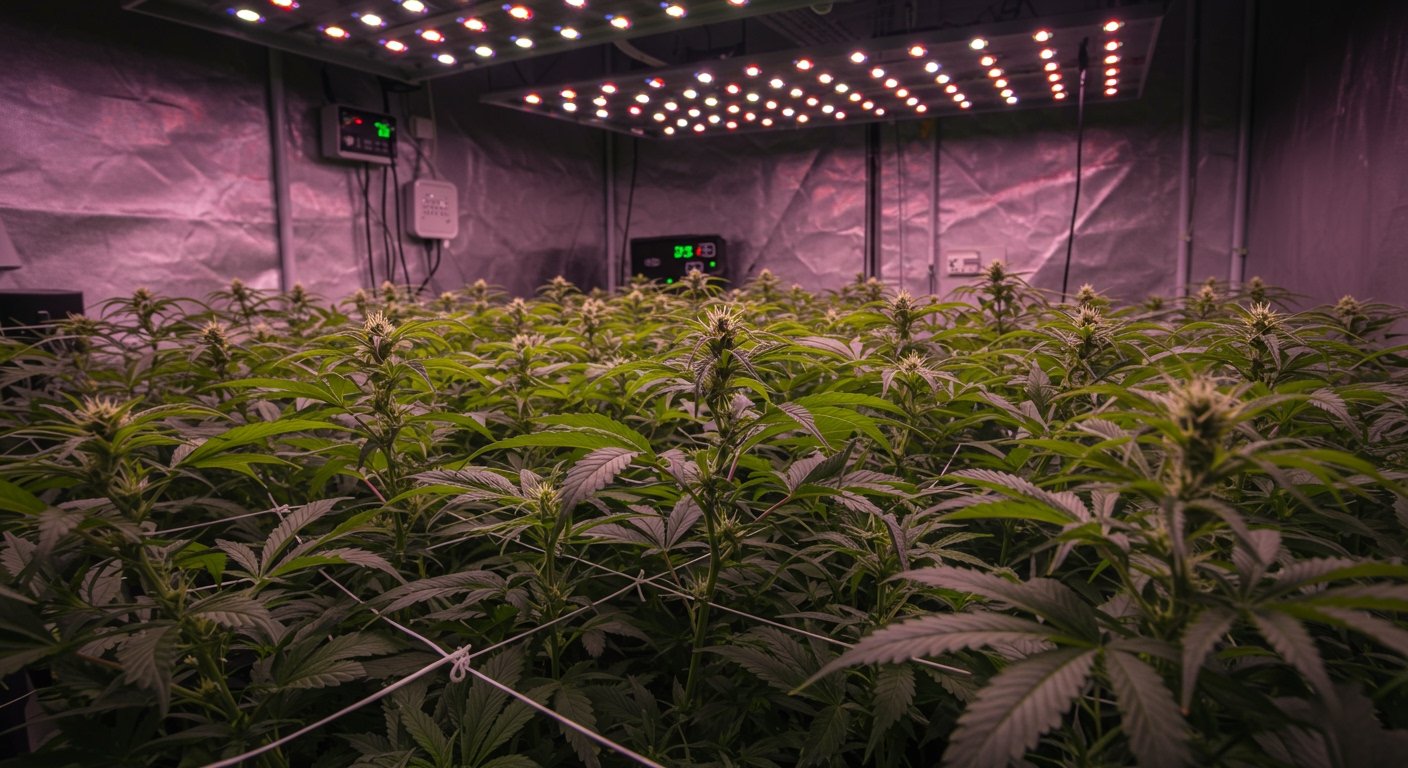
Low-Stress Training (LST) involves gently bending and securing the plant’s stems to encourage more horizontal growth. This technique avoids causing significant stress to the plant while creating a more even canopy. A flat canopy ensures that more potential bud sites receive adequate light, rather than just the central stalk.
Topping is a high-stress training technique that involves cutting off the main growth tip of the plant. This action encourages the plant to develop two new main stems from the point of the cut, effectively helping to promote multiple main colas. By removing apical dominance, topping redirects energy into developing more flower clusters.
The primary aim of employing these training methods is twofold: maximizing space within the indoor environment and significantly improving yields by creating a larger number of well-lit flowering sites.
Understanding the Basics and Sourcing Resources
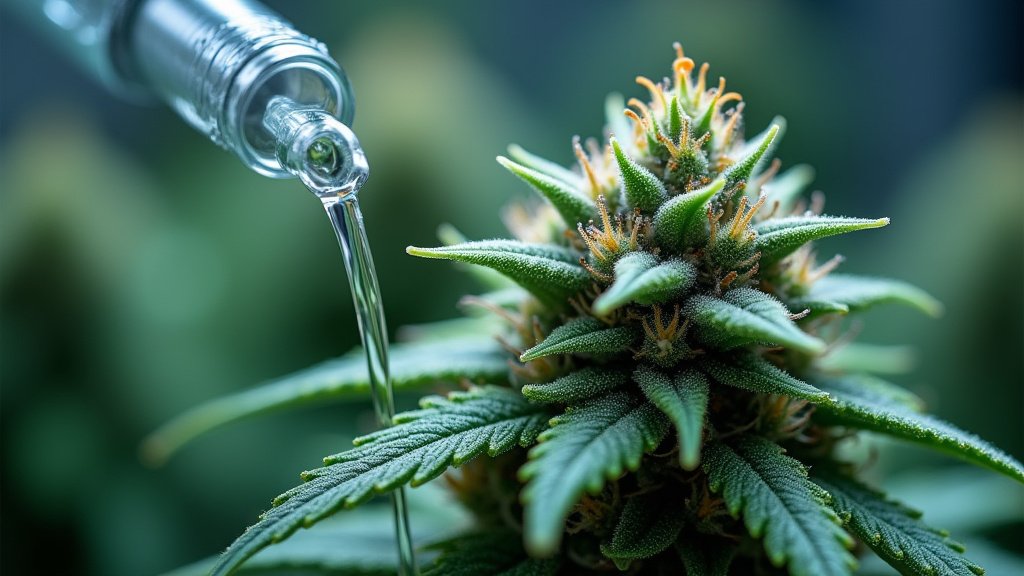
The guide also touches upon basic information on cannabis, including the primary cannabinoids of interest, THC (Tetrahydrocannabinol), known for its psychoactive effects, and CBD (Cannabidiol), recognized for various non-intoxicating properties. Understanding these components can help cultivators choose strains aligned with desired outcomes.
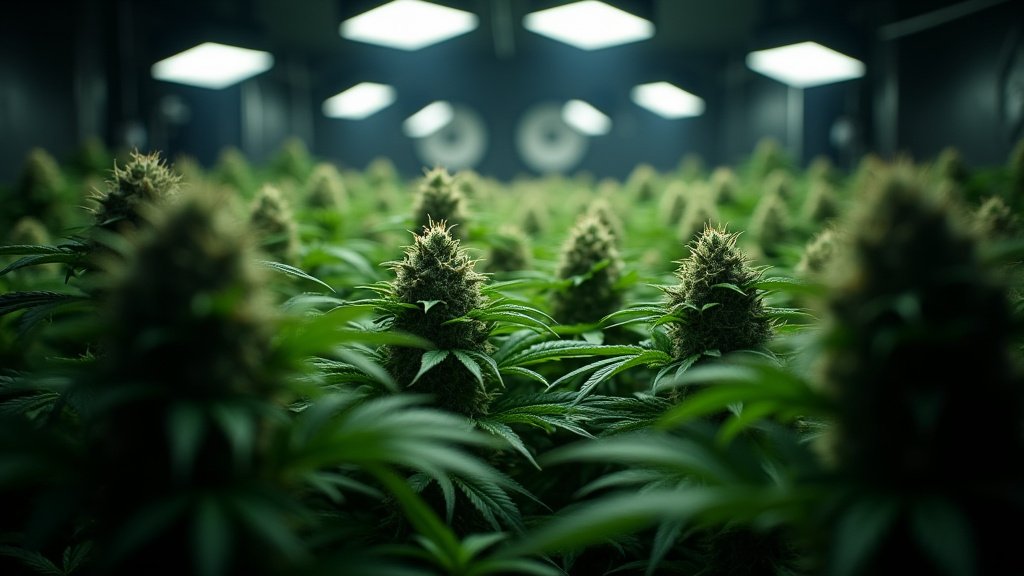
The advantages of indoor growing are highlighted, including unparalleled environmental regulation, which allows for precise control over temperature, humidity, and light cycles, independent of external weather conditions. Indoor environments also offer reduced pest exposure compared to outdoor grows, simplifying pest management significantly.
Finally, the article indicates that it provides information on where to acquire quality cannabis seeds. Sourcing genetics from reputable suppliers is a foundational step for ensuring healthy plants and successful yields, as the genetic potential of the seed dictates much of the plant’s growth characteristics and cannabinoid profile.
For beginners venturing into indoor cannabis cultivation in 2025, a systematic approach covering space selection, lighting, environmental control, and plant training, combined with a basic understanding of the plant and reliable sourcing, lays a solid foundation for a rewarding cultivation experience.