Precision farming is ushering in a new era of agricultural efficiency, with advancements in data analytics, automation, and sustainable practices set to redefine crop yields and resource management. These innovations promise significant environmental benefits and economic advantages for farmers worldwide.
Key Highlights:
- Integration of AI and machine learning for predictive analytics.
- Rise of autonomous machinery for planting, harvesting, and spraying.
- Enhanced soil health monitoring and targeted nutrient application.
- Development of advanced sensor technology for real-time crop management.
- Focus on water conservation through smart irrigation systems.
The Digital Revolution in Agriculture
The agricultural sector is undergoing a profound transformation driven by the rapid integration of digital technologies. From the tractor cabin to the cloud, data is becoming the most crucial input for modern farming. This digital revolution, often termed ‘Precision Agriculture’ or ‘AgTech,’ is not merely about adopting new gadgets; it’s about a fundamental shift in how farmers approach crop management, resource allocation, and operational efficiency. The goal is to move from a one-size-fits-all approach to highly individualized crop care, optimizing every square meter of arable land.
Data-Driven Decision Making
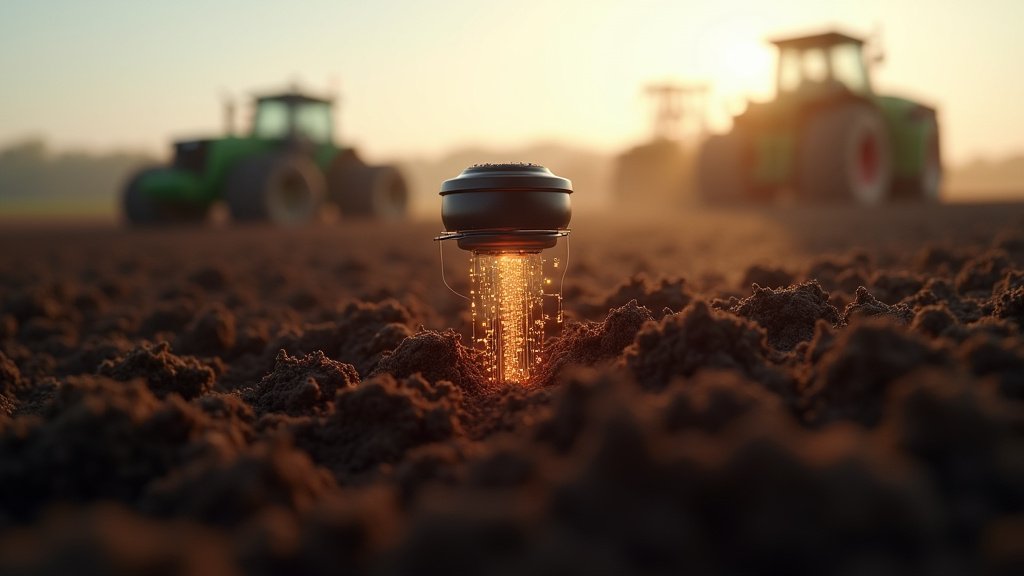
At the heart of precision farming is the sophisticated collection and analysis of data. Drones equipped with multispectral sensors, ground-based IoT devices monitoring soil moisture and nutrient levels, and advanced weather forecasting models all contribute to a comprehensive picture of farm conditions. This wealth of information is then processed using AI and machine learning algorithms to provide actionable insights. Farmers can predict disease outbreaks, optimize irrigation schedules, and determine the precise amount of fertilizer or pesticide needed for specific areas, thereby reducing waste and minimizing environmental impact. This data-driven approach moves farming from an art based on experience to a science informed by real-time, granular information.
Automation and Autonomy on the Farm
Automation is another cornerstone of precision agriculture. Self-driving tractors, robotic weeders, and automated harvesting systems are no longer futuristic concepts but are increasingly becoming standard tools on large-scale farms. These autonomous machines can operate 24/7 with remarkable precision, reducing labor costs and addressing labor shortages. They execute tasks like planting seeds at exact depths and spacing, applying crop protection products with pinpoint accuracy, and harvesting ripe crops efficiently. This level of automation not only boosts productivity but also enhances safety for farm workers by removing them from potentially hazardous tasks.
Enhanced Soil Health and Sustainability
Beyond yield optimization, precision farming places a strong emphasis on soil health and environmental sustainability. Advanced sensors can continuously monitor soil composition, pH levels, and microbial activity. This allows for highly targeted nutrient application, preventing over-fertilization which can lead to nutrient runoff and water pollution. Techniques like variable rate application (VRA) ensure that fertilizers, seeds, and water are applied only where and when they are needed, in the exact quantities required. Furthermore, practices like cover cropping and reduced tillage, guided by data analytics, help in preserving soil structure, increasing organic matter, and improving water retention, contributing to long-term farm viability and ecological balance.
The Future Landscape of AgTech
The evolution of precision farming is far from over. The ongoing development of new sensor technologies, more sophisticated AI algorithms, and increasingly capable robotics promises even greater efficiencies and sustainability. The integration of blockchain for transparent supply chains and the use of gene-editing technologies to develop more resilient crops are also on the horizon. As these technologies mature and become more accessible, they will empower farmers to meet the growing global demand for food in a more efficient, sustainable, and environmentally responsible manner.
FAQ: People Also Ask
What are the main technologies in precision farming?
Precision farming leverages technologies such as GPS, drones, IoT sensors, AI and machine learning, variable rate technology (VRT), and automated machinery like self-driving tractors and robotic harvesters.
How does precision farming improve crop yields?
It improves crop yields by enabling precise application of resources like water, fertilizers, and pesticides based on real-time data and site-specific needs, optimizing planting and harvesting, and enabling early detection and management of pests and diseases.
What are the environmental benefits of precision farming?
The environmental benefits include reduced use of water, fertilizers, and pesticides, which minimizes pollution of soil and water bodies, lowers greenhouse gas emissions through optimized machinery use, and promotes soil health for long-term sustainability.
Is precision farming expensive to implement?
The initial investment in precision farming technologies can be substantial. However, the long-term benefits of increased yields, reduced input costs, and improved efficiency often lead to a positive return on investment. Government grants and leasing options can also help mitigate upfront costs.
How is AI used in precision agriculture?
AI is used in precision agriculture for analyzing large datasets from sensors and drones to predict crop yields, detect diseases or pest infestations, optimize irrigation and fertilization plans, and enhance the capabilities of autonomous farming equipment.