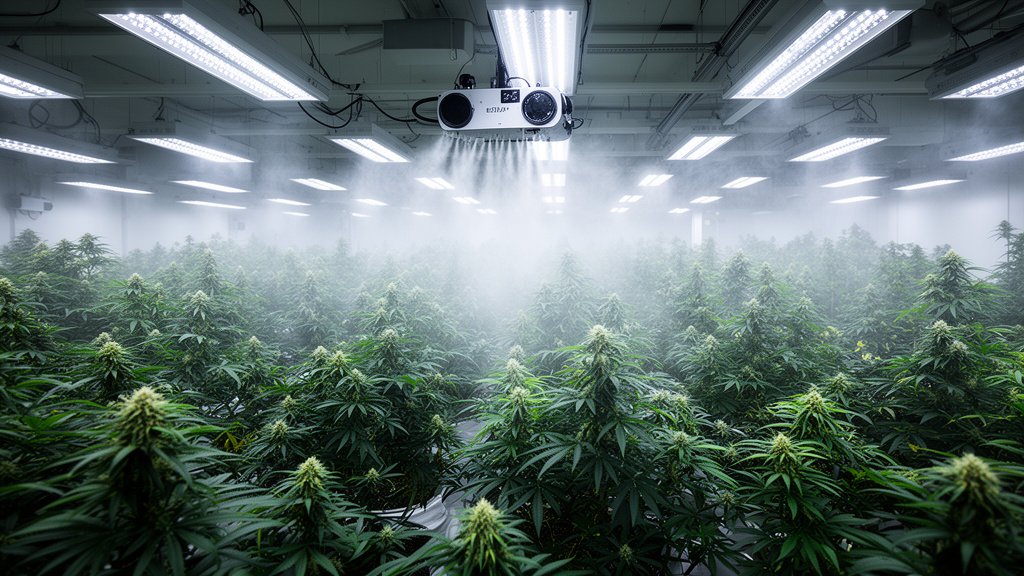
TOMI Environmental Solutions, Inc. has officially marked a watershed moment for the agricultural technology sector by securing unconditional EPA registration for its SteraMist (BIT) – AgriMist solution. This regulatory clearance authorizes the use of the company’s proprietary ionized Hydrogen Peroxide (iHP) technology in cannabis and hemp cultivation, specifically allowing for application up to the day of harvest. This advancement provides growers with a powerful, residue-free tool to combat aggressive pathogens, effectively removing the traditional barriers associated with post-harvest decontamination and chemical safety protocols.
Key Highlights
- Unconditional EPA Registration: The approval grants SteraMist (BIT) – AgriMist full status for use on cannabis and hemp, validating the safety and efficacy profile of the iHP technology in a high-value commercial setting.
- Pathogen Control: The technology is engineered to neutralize destructive agricultural threats, specifically targeting powdery mildew, Botrytis (gray mold), and Fusarium, which are among the leading causes of crop failure in greenhouse and indoor cultivation.
- Day-of-Harvest Application: Unlike traditional fungicides that require a long pre-harvest interval (PHI) or rinsing/wiping to meet consumer safety standards, SteraMist allows for treatment right up until the harvest date.
- Zero-Residue Technology: The iHP mist leaves no chemical residue behind, ensuring that the end product maintains its purity, terpene profile, and market value, which is critical for the cannabis and hemp industries.
The New Standard in Cultivation Safety and Yield Protection
The cannabis and hemp industries have long faced an existential struggle: the balancing act of protecting crops from pervasive fungal threats while adhering to increasingly strict consumer safety and residual chemical standards. Traditional pest management often relies on heavy chemical fungicides, which necessitate labor-intensive washing and extensive waiting periods, or worse, render the product unsaleable due to safety regulations. The introduction of SteraMist (BIT) – AgriMist represents a tectonic shift in how commercial growers manage this risk.
By leveraging Ionized Hydrogen Peroxide (iHP), TOMI Environmental Solutions has bypassed the necessity for toxic chemical residues. The technology works by ionizing a dilute hydrogen peroxide solution, which is then dispersed as a fine mist. This mist aggressively attacks the cell walls of pathogens on contact, effectively neutralizing them. Because the technology converts into oxygen and water vapor upon decomposition, it leaves no toxic footprint on the flower or leaf surface. This is a game-changer for high-value crops where every percentage point of yield loss directly translates to significant revenue impact.
The Science of iHP in High-Value Crops
Understanding the mechanism of SteraMist is crucial for stakeholders. The ‘BIT’ stands for Binary Ionization Technology. Unlike passive sprays, which can miss nooks, crannies, and the dense, cola-like structures of a cannabis plant, the iHP process creates a dry fog. This fog is scientifically designed to circulate through, over, and under plant structures, achieving a comprehensive, 360-degree coverage that standard applicators cannot replicate.
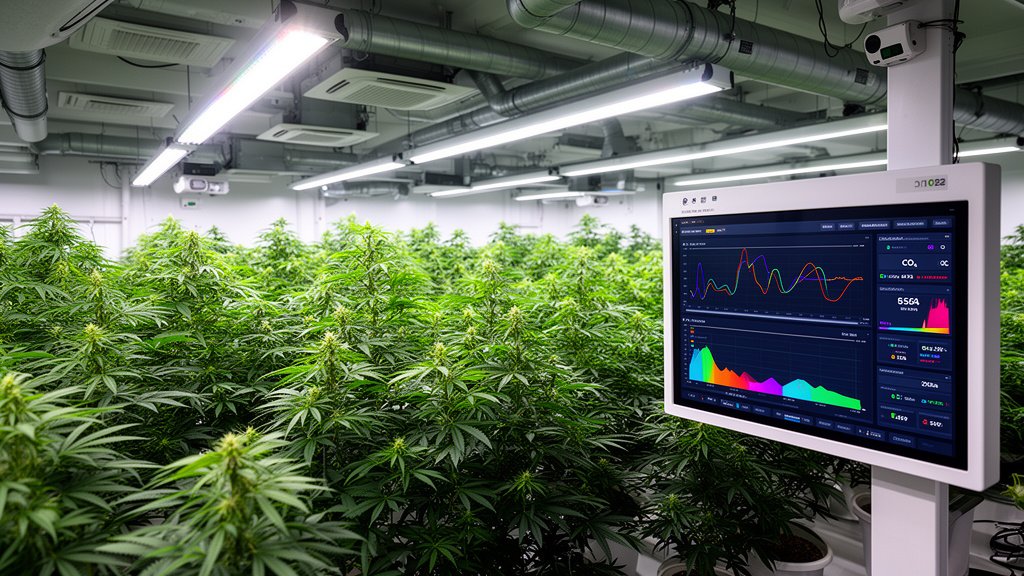
For a cultivator managing a large-scale indoor facility, the threat of Botrytis or powdery mildew is not just a nuisance; it is a financial crisis. Botrytis, often called ‘bud rot,’ can devastate a facility’s entire harvest in a matter of days if left unchecked. Previously, growers might have had to discard thousands of pounds of product to avoid contamination. With this EPA registration, the facility manager now has an intervention tool that can be deployed even when the crop is nearing maturation. This unprecedented flexibility allows for a more responsive, rather than reactive, approach to integrated pest management (IPM).
Economic Implications and Market Dynamics
The economic ripples of this registration extend far beyond simple crop maintenance. Firstly, it drastically reduces labor costs. The ‘rinse or wipe’ requirement of older methods was not only time-consuming but also introduced moisture, which paradoxically can encourage more mold growth if not dried perfectly. Removing this step streamlines the entire post-harvest workflow. Furthermore, the ability to treat crops up to the day of harvest protects the integrity of the trichomes—the delicate resin glands where cannabinoids like THC and CBD reside. If a grower can save a harvest from late-stage mold without damaging these resin glands, the financial delta is measured in millions of dollars across large-scale operations.
Secondly, this approval sets a new benchmark for professionalization in the cannabis sector. As the industry moves toward tighter federal oversight and increased consumer scrutiny, the reliance on scientifically validated, EPA-registered equipment will likely become a competitive differentiator. Investors in cannabis and hemp operations are increasingly prioritizing facilities that utilize ‘clean’ tech, viewing it as a hedge against catastrophic crop failure and regulatory non-compliance.
Strategic Challenges: The Path Forward
While the technology offers immense benefits, the path forward requires rigorous standard operating procedures (SOPs). Implementing SteraMist isn’t merely about buying a machine; it requires training staff to understand the physics of iHP, optimizing airflow in the facility to ensure the mist reaches all surfaces, and integrating this into existing IPM plans. The challenge for TOMI will be scalability and education. As they roll out AgriMist to more facilities, they must ensure that the transition to iHP is seamless, providing the technical support necessary for growers to maximize the efficacy of the registration.
Looking ahead, this EPA registration could serve as a case study for other agricultural sectors. If the technology proves successful in the diverse and demanding environment of cannabis cultivation—which is often characterized by high density, specific humidity requirements, and extreme sensitivity to chemical residues—it could easily find adoption in the high-end vegetable and fruit markets, such as organic berries or leafy greens, where similar ‘residue-free’ requirements are becoming the gold standard for premium pricing.
FAQ: People Also Ask
Q: What is the primary difference between SteraMist and traditional fungicides?
A: Traditional fungicides often leave chemical residues that require washing or pose safety risks. SteraMist (BIT) utilizes Ionized Hydrogen Peroxide (iHP), which breaks down into oxygen and water, leaving no toxic residue and eliminating the need for rinsing.
Q: Does this EPA registration cover all cannabis and hemp cultivation methods?
A: The registration is specifically for use in cultivation environments. The unconditional EPA registration validates the product’s safety and efficacy for commercial use, but operators must still follow the specific product labeling and safety guidelines provided by TOMI Environmental Solutions.
Q: How does iHP handle the sensitive terpene profiles of cannabis?
A: Because iHP is a gas-like fog and not a heavy liquid spray, it does not coat the plant in a film or wash off the essential oils and trichomes. This allows growers to protect their crop without compromising the chemical composition (terpenes and cannabinoids) that defines the product’s quality.
Q: Are there specific training requirements for using AgriMist?
A: While the system is designed for ease of use, TOMI Environmental Solutions emphasizes the importance of proper application protocols to ensure the mist reaches the target areas. Facilities adopting this technology typically integrate it into their existing IPM (Integrated Pest Management) training programs.