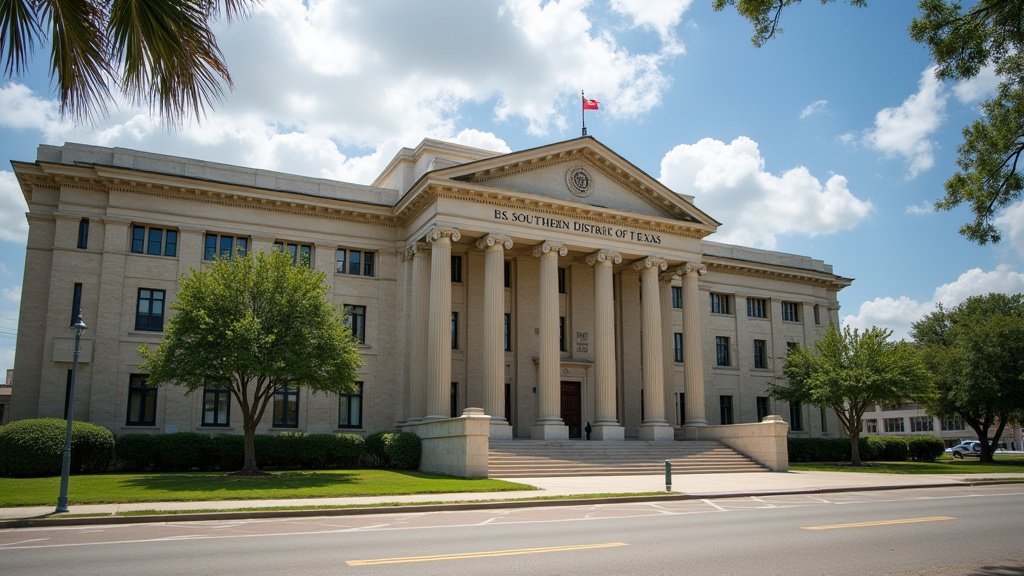
The Texas hemp industry’s effort to secure an immediate halt to state-level enforcement of its new ban on intoxicating hemp-derived THC products has hit a judicial roadblock. In a ruling issued from the U.S. District Court for the Southern District of Texas, Galveston Division, Judge Jeffrey V. Brown denied an emergency motion for a temporary restraining order (TRO) that sought to block the Texas Department of State Health Services (DSHS) from enforcing recently enacted restrictions.
The Judicial Reasoning: Why the TRO Failed
The central issue in the motion was the legal standard of ‘irreparable harm.’ To obtain a temporary restraining order, plaintiffs—in this case, groups representing hemp growers and retailers—must demonstrate that they will suffer harm that cannot be remedied by monetary damages alone while the lawsuit moves through the discovery and trial phases. Judge Brown’s order indicated that the industry plaintiffs failed to sufficiently carry this ‘heavy burden.’
Legal analysts suggest that while the court acknowledged the potential financial distress of hemp businesses, it stopped short of finding that this distress constitutes the type of immediate, constitutional, or structural injury required to pause the implementation of a state regulatory rule. The court emphasized that a TRO is an extraordinary remedy, not a standard mechanism for resolving regulatory disputes in their early stages. Consequently, the state’s enforcement regime, which reclassifies many popular Delta-8 and Delta-9 products as ‘intoxicating’ and subject to strict new limitations, remains in effect while the underlying lawsuit proceeds toward a merit-based hearing.
The Regulatory Conflict: Farm Bill vs. State Authority
This legal battle highlights an escalating conflict between the federal 2018 Agriculture Improvement Act (the ‘2018 Farm Bill’) and state-level regulatory authority. The federal legislation explicitly legalized hemp, defined as cannabis with a Delta-9 THC concentration of 0.3% or less by dry weight. However, the legislation did not explicitly limit the concentration of isomers or synthetically derived cannabinoids created in the processing of hemp extract.
Texas authorities have argued that they possess the police power to regulate products they deem ‘intoxicating’ to protect public health, particularly regarding products that mimic the effects of marijuana. Plaintiffs argue that the Texas DSHS rules are preempted by federal law, effectively creating a state-level prohibition on products that were legally authorized under the federal framework. This case is shaping up to be a critical test of how much latitude states have to categorize hemp products differently from their federal definitions.
Economic and Industry Consequences
The denial of the TRO leaves hundreds of Texas retailers, manufacturers, and distributors in a state of high uncertainty. Since the enforcement began, businesses have been forced to navigate a complex patchwork of compliance requirements. For many retailers, the ambiguity has already resulted in the pull-back of inventory, supply chain disruptions, and loss of revenue, as they attempt to reconcile local enforcement actions with their interpretation of federal legal protections.
Industry leaders argue that this represents a direct threat to the nascent hemp economy, which has generated significant jobs and tax revenue in Texas since the state legalized hemp cultivation in 2019. Conversely, supporters of the Texas DSHS restrictions contend that the rules are necessary to curb the proliferation of products marketed to minors and to address rising concerns about product potency and safety testing in the unregulated market.
Looking Ahead: The Path of the Lawsuit
While the TRO denial is a significant win for the state of Texas at this early juncture, it is not a final ruling on the merits of the lawsuit. The court has cleared the way for the litigation to move forward, meaning the industry will have the opportunity to present full arguments during a preliminary injunction hearing or a eventual trial. The burden of proof will shift, but the plaintiffs will need to present much more compelling, granular evidence regarding the irreparable nature of the harm caused by the enforcement to convince the court to intervene in the state’s regulatory powers.
For now, the status quo holds: the enforcement of the Texas THC restrictions continues, and businesses must comply or risk citations and potential closures. The legal community will be watching this case closely, as it may set a national precedent for how states can restrict cannabinoids that exist in a gray area of federal law.
FAQ: People Also Ask
Is the sale of all hemp-derived THC products now illegal in Texas?
No. The ruling does not equate to a blanket ban on all hemp products. It allows the Texas Department of State Health Services to continue enforcing its specific, contested regulations regarding what constitutes an ‘intoxicating’ hemp product. Retailers must review current state guidelines to ensure their specific inventory is compliant.
Why was the emergency motion denied?
The court found that the plaintiffs did not sufficiently demonstrate ‘irreparable harm’—a specific legal threshold required for a temporary restraining order. The judge determined that the harm described could not be categorized as immediate and unfixable to the degree necessary to pause a government enforcement action before the full case is heard.
What happens next in the lawsuit?
The lawsuit will proceed through the standard litigation process. This includes discovery, where both sides will gather evidence, followed by motions for preliminary or permanent injunctions. The court will eventually rule on the merits of the claims, specifically whether the state’s regulatory rules violate the federal 2018 Farm Bill.
How does this affect consumers in Texas?
Consumers may continue to see fluctuations in product availability at local smoke shops and retailers. Because enforcement remains active, some businesses may choose to remove certain products from shelves to avoid legal risk, while others may continue to operate while waiting for further judicial clarification.